Rhine city · Basel-Stadt
Basel
Switzerland's third most populous city, set on both banks of the Rhine where the river turns north and leaves the country.
Basel occupies both banks of the Rhine at the point where the river leaves the Swiss Plateau for the Rhine graben and turns north. The left bank carries the old town, whose minster stands at 277 metres above sea level, above a river whose mean level is 248 metres. The lowest point of the commune, 244 metres, is also where the Rhine leaves Swiss territory, at the Dreiländereck, between France and Germany. Fourteen bridges cross the Rhine and the Birsig.
The commune counts 177,571 inhabitants in 2024 over 23.91 square kilometres, which makes it the third most populous city in Switzerland, after Zurich and Geneva, and the capital of the canton of Basel-Stadt. Its medieval outline stayed legible for a long time: the ramparts were not pulled down until 1859, and industrial growth only began in 1880. The old centre keeps half-timbered houses and nineteenth-century town mansions; the marl of the neighbouring hills, quarried for building since Roman times, gives the buildings their particular look.
Much of what happens here comes from the river and from the border. The Rhine is navigable from its mouth as far as Basel and no further: the city's port, the only merchant port in Switzerland, is the country's single access to the sea for freight. The built-up area does not stop at the border either, and continues into French Alsace and German Baden-Württemberg.
The city is also a place of study and of collections. The university, founded in 1460, is the oldest in Switzerland; Erasmus of Rotterdam, Paracelsus, Friedrich Nietzsche and Karl Jaspers all attended it. The Kunstmuseum, the largest art museum in the country, descends from a collection opened to the public as early as 1661; the canton holds some forty more. The Basel carnival is inscribed on UNESCO's list of intangible cultural heritage, and the Art Basel fair holds here each year one of the world's most important contemporary art events.
Why this place is remarkable
Few Swiss cities sit so entirely on a border: the Rhine leaves the country here, the built-up area carries on into France and Germany, and the port where river navigation stops is Switzerland's only outlet to the sea. To that position add a density of learning and of collections unusual for a commune of 177,571 people: the country's oldest university, opened in 1460, and some forty museums in the canton of Basel-Stadt alone.
History and origin
Basel sits at the southern end of the Rhine graben, between the Jura and the Black Forest, on Tertiary sediments 500 to 1,000 metres thick laid over Mesozoic strata. A fault crosses the east of the city, from Sankt-Jakob to the German village of Tüllingen, and brings it regular tremors. The strongest on record goes back to 1356: nine to ten degrees on the macroseismic scale. Until the seventeenth century a quake of at least seven degrees occurred on average every hundred years; since then the activity has eased, with maxima of six degrees.
What to do and see
- Observe from the cathedral, at 277 metres, the Rhine turning north and leaving Switzerland at the Dreiländereck.
- Cross one of the fourteen bridges spanning the Rhine and the Birsig between the two banks of the city.
- Visit the Kunstmuseum, the country's largest art museum, descended from a collection open to the public since 1661.
- Stroll through the old town, among timber-framed houses and 19th-century mansions, within the former line of ramparts demolished in 1859.
Coming with family: what to know
- The fourteen bridges and the banks of the Rhine allow for long, flat urban walks, suited to a family outing.
As a couple
- Walk along the Rhine at the point where the river leaves the country, between the two banks linked by fourteen bridges.
- Linger in the old town with its timber-framed houses, around the cathedral at 277 metres.
- Devote some time to the Kunstmuseum, whose collection goes back to 1661.
Location
Loads an interactive Google Maps view on demand, from the place's verified coordinates.
The embedded map will be enabled once an authorized Google Maps key is configured. Use the link above in the meantime.
The map could not load. Check your connection or use the link above to open the place in Google Maps.
Related places
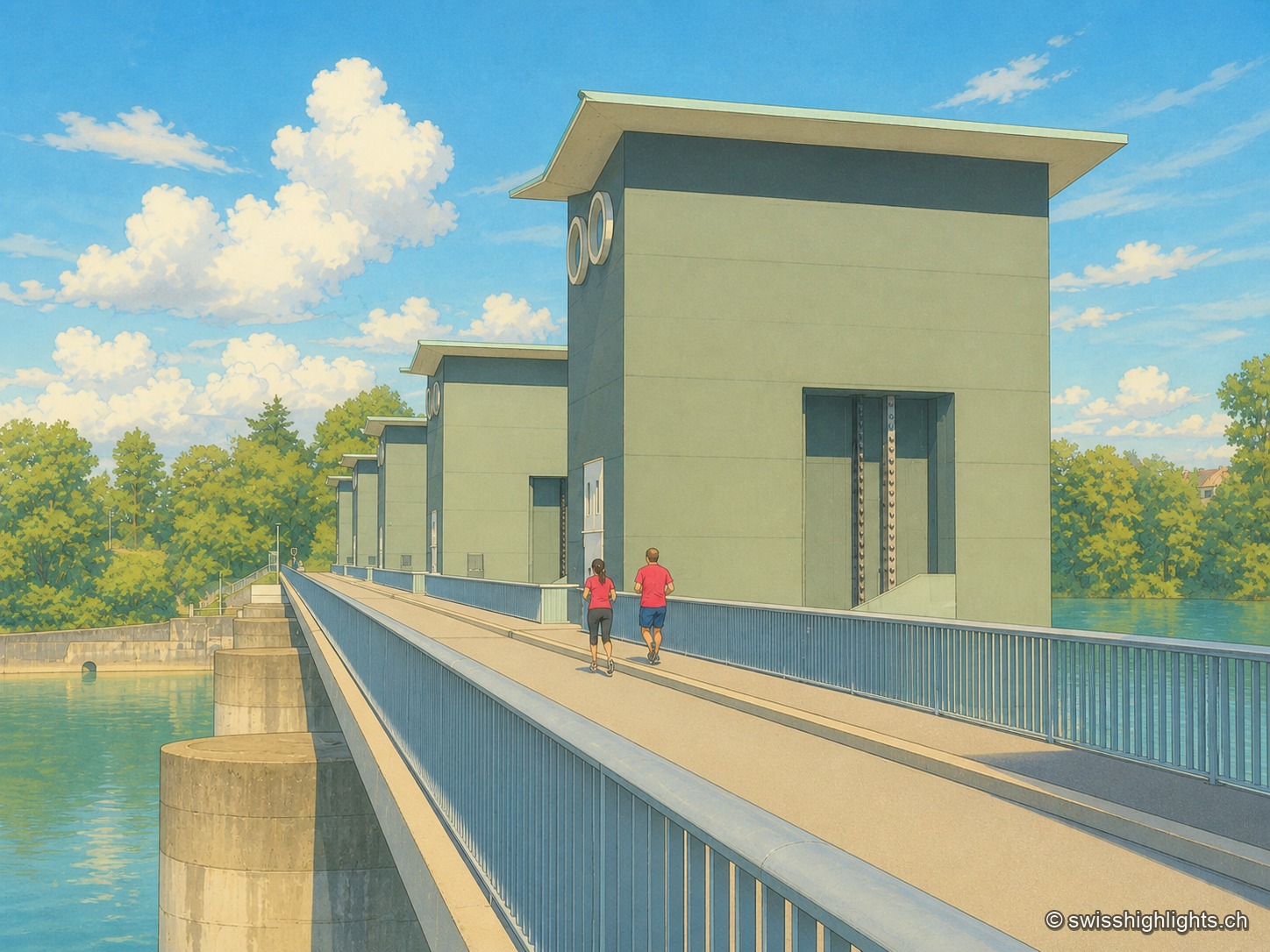
Run-of-river plant · Rhine · 3 km as the crow flies
Birsfelden power station
Four Kaplan turbines under a 12-metre head, two locks for the barges, and over the whole thing a path open to walkers and cyclists. Between 2006 and 2015 the plant produced an average of 570 GWh a year.
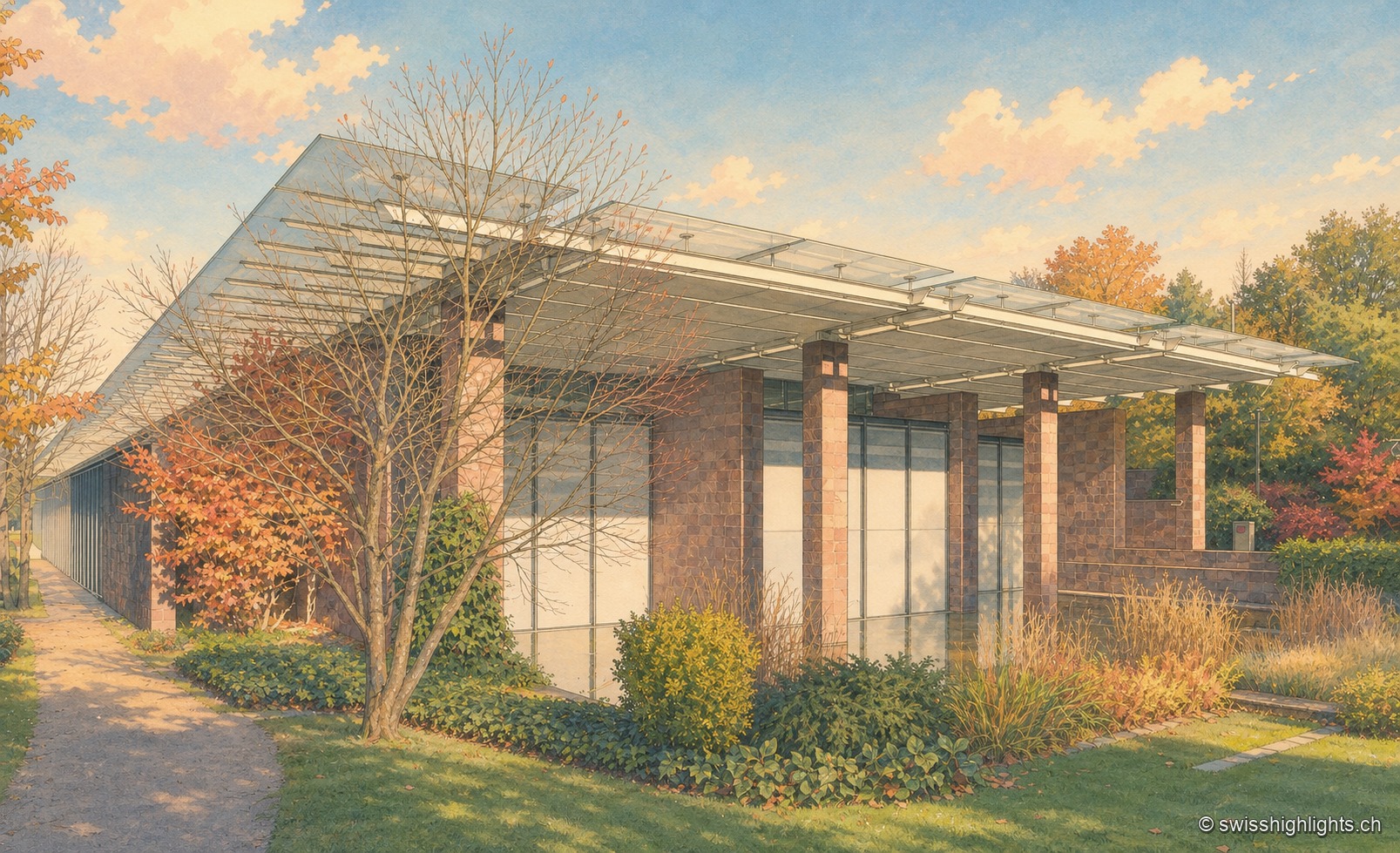
Border commune · Basel-Stadt · 5 km as the crow flies
Riehen
22,534 inhabitants on 10.86 km², a quarter woodland and a quarter farmland, a German border curling around it to the north: Riehen is as much a large village as a suburb of Basel.
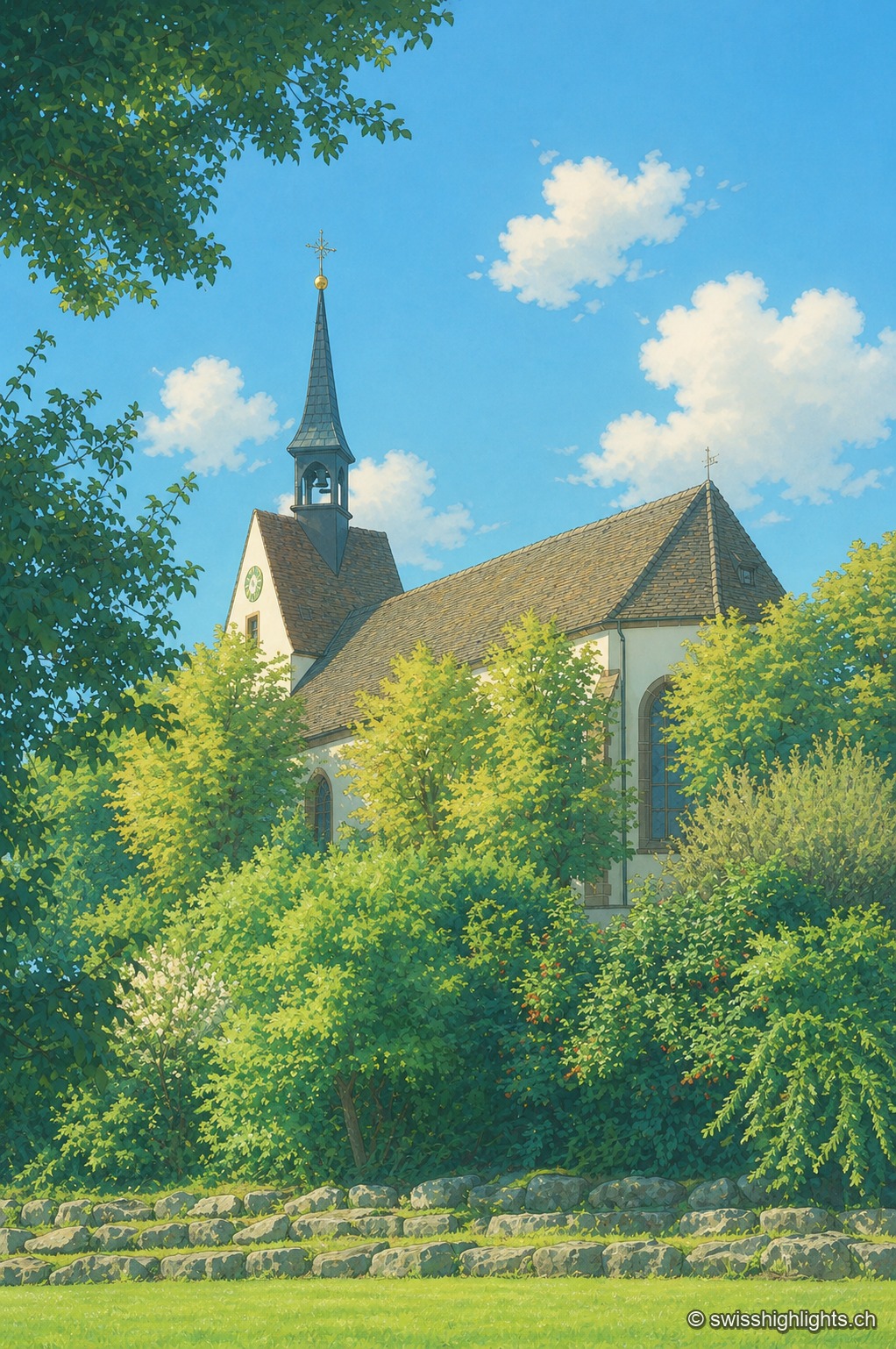
Religious site · Basel-Stadt · 7 km as the crow flies
Sankt Chrischona
On the Dinkelberg, at 522 metres, the highest church in canton Basel-Stadt stands over a walled cemetery and mission buildings founded in 1840; its tower platform, up 71 steps, opens a panorama over the Vosges, the Black Forest, the Jura and the Alps.