Border commune · Basel-Stadt
Riehen
A Basel-Stadt commune wrapped from the north by Germany, six kilometres from Basel, home to the most visited art museum in Switzerland.
Riehen occupies the north-eastern corner of the canton of Basel-Stadt, on the right bank of the Rhine, six kilometres as the crow flies from the centre of Basel. The commune covers 10.86 km² and the German border wraps around almost all of it to the north: beyond begins Baden-Württemberg, and the border post stands on the road to Lörrach. The Wiese, which rises in the Black Forest and gives its name to the German valley it cuts, crosses the communal territory.
The 2013-2018 land survey measures a place half built over: 48.6% housing and infrastructure, 25.2% forest, 24.2% farmland, 2.2% unproductive ground. The old centre keeps the look of a large village, and yet Riehen is among the most populous communes of north-western Switzerland, with 22,534 inhabitants on 31 December 2024, a density of 2,075 inhabitants per square kilometre.
The name is first written down in 1113. Riehen belongs to the Bishopric of Basel in 1270, and the city of Basel then buys the village from the bishopric in 1522; the great estates become the country residences of wealthy Basel burghers. When the canton splits into half-cantons in 1833, the commune falls to Basel-Stadt. Around 1900 the tramway changes everything: the population rises fast, developers parcel out the land, the estates are broken up and the village becomes a suburb.
From that past remain the Reformed church of St Martin, the church of St Francis, the Reformed Kornfeld church, the Meierhof, the Klösterli, the bailiffs' house and the Wettstein houses, which hold the toy museum. But the building that draws the most people is recent: the Fondation Beyeler, the most visited art museum in Switzerland, whose rooms bring together Monet, Cézanne, Van Gogh, Picasso, Bacon and Warhol. Leonhard Euler, born in Basel in 1707, spent part of his childhood here.
Why this place is remarkable
The border runs right around Riehen to the north: the commune reaches into Baden-Württemberg and holds on to Switzerland only by its southern flank, against Basel. On these 10.86 km², half built over, half woodland and fields, an old centre has kept the look of a village — and it is here that the country's most visited art museum stands, the Fondation Beyeler, where Monet, Cézanne, Van Gogh, Picasso and Bacon are gathered.
History and origin
The name Riehen is first written down in 1113. The village belongs to the Bishopric of Basel in 1270; the city of Basel buys it from the bishopric in 1522, and its great estates pass to the Basel bourgeoisie, who build their country houses there. After the canton splits into half-cantons in 1833, Riehen comes under Basel-Stadt. The break comes around 1900 with the tramway: the new service turns a landscape of estates into a parcelled suburb. During the Second World War the commune, north of the Rhine and without natural defences, is closely controlled by the Swiss army, and part of its wealthy population moves inland.
What to do and see
- Visit the Fondation Beyeler, Switzerland's most visited art museum, whose galleries bring together Monet, Cézanne, Van Gogh, Picasso, Bacon and Warhol.
- Explore the old centre, which has kept the feel of a large village despite a density of 2075 inhabitants per square kilometre.
- Note the Wettstein houses, which hold the toy museum, and the Meierhof, remnants of the former great Basel estates.
- Follow the border that wraps around the commune to the north, up to the border crossing on the road to Lörrach.
Coming with family: what to know
- The toy museum, housed in the Wettstein houses, may interest children as a complement to the Fondation Beyeler.
- No other indication of accessibility or particular caution is given in the source for this commune.
As a couple
- Spend a moment in the galleries of the Fondation Beyeler, before canvases by Monet, Cézanne or Van Gogh.
- Stroll through the old centre, which has kept a village scale despite the proximity of Basel.
- Walk along the Wiese, which rises in the Black Forest, as it crosses the commune's territory up to the nearby German border.
Location
Loads an interactive Google Maps view on demand, from the place's verified coordinates.
The embedded map will be enabled once an authorized Google Maps key is configured. Use the link above in the meantime.
The map could not load. Check your connection or use the link above to open the place in Google Maps.
Related places
Religious site · Basel-Stadt · 2 km as the crow flies
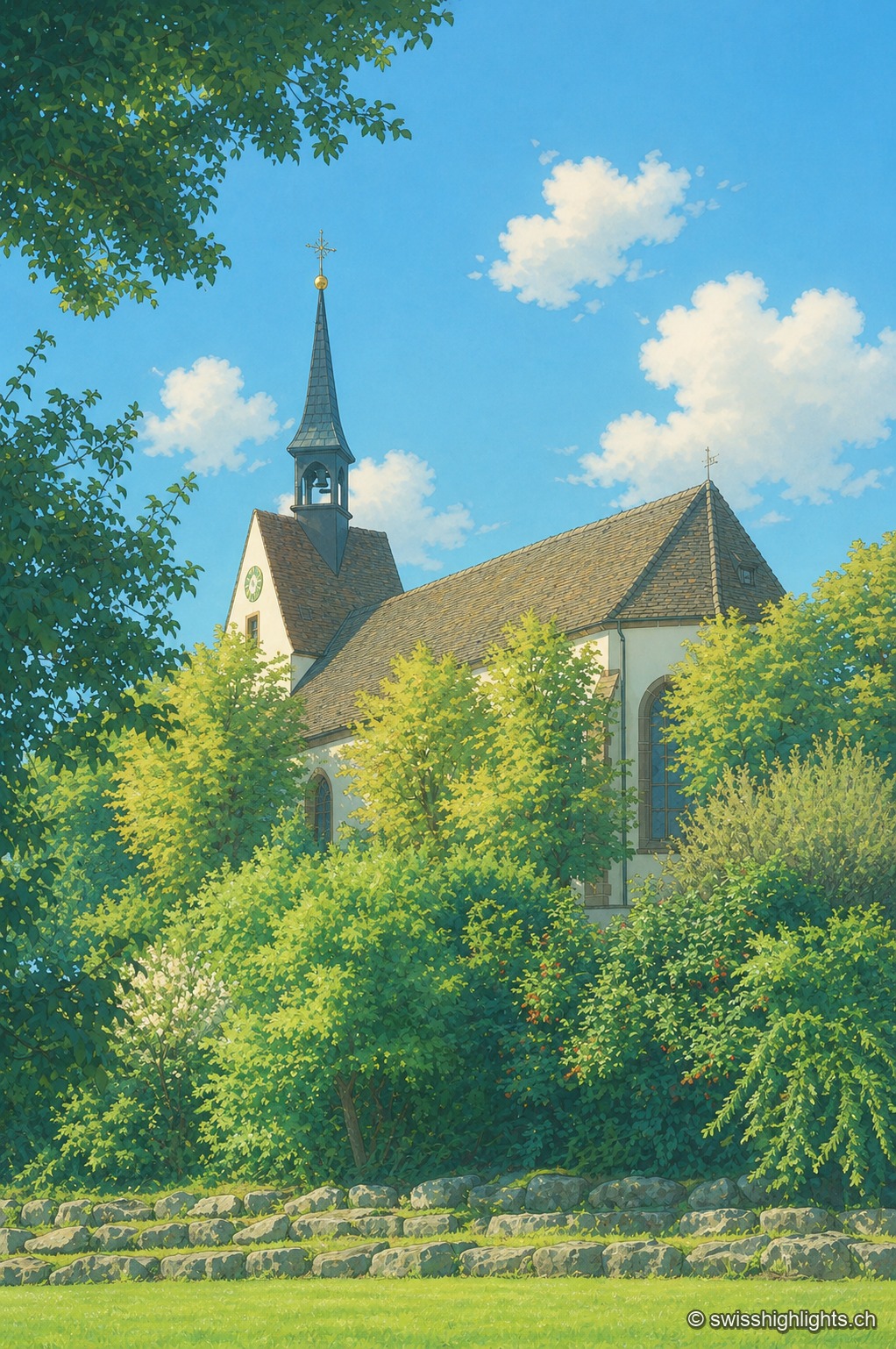
Sankt Chrischona
On the Dinkelberg, at 522 metres, the highest church in canton Basel-Stadt stands over a walled cemetery and mission buildings founded in 1840; its tower platform, up 71 steps, opens a panorama over the Vosges, the Black Forest, the Jura and the Alps.
Run-of-river plant · Rhine · 3 km as the crow flies
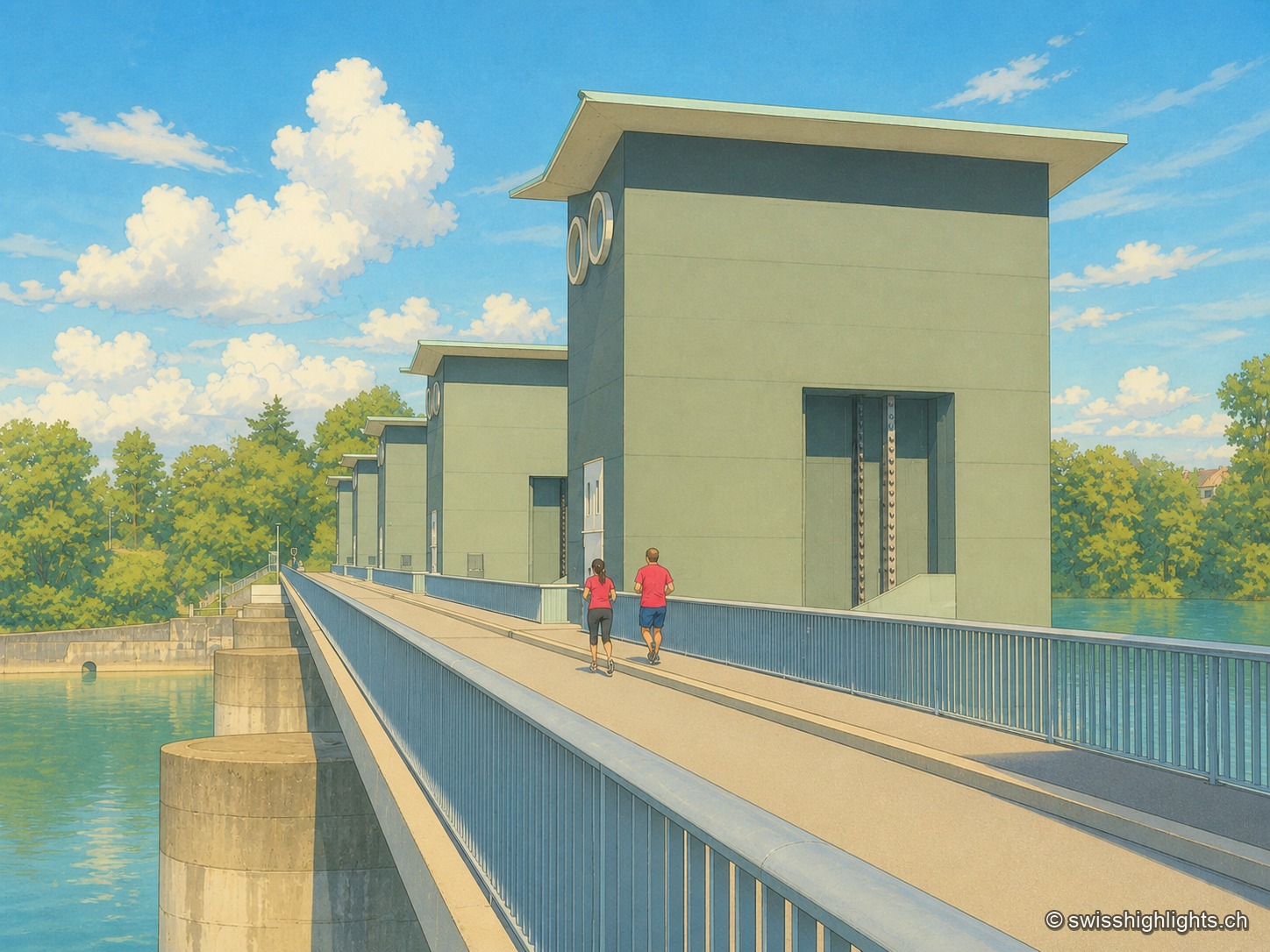
Birsfelden power station
Four Kaplan turbines under a 12-metre head, two locks for the barges, and over the whole thing a path open to walkers and cyclists. Between 2006 and 2015 the plant produced an average of 570 GWh a year.
Rhine city · Basel-Stadt · 5 km as the crow flies
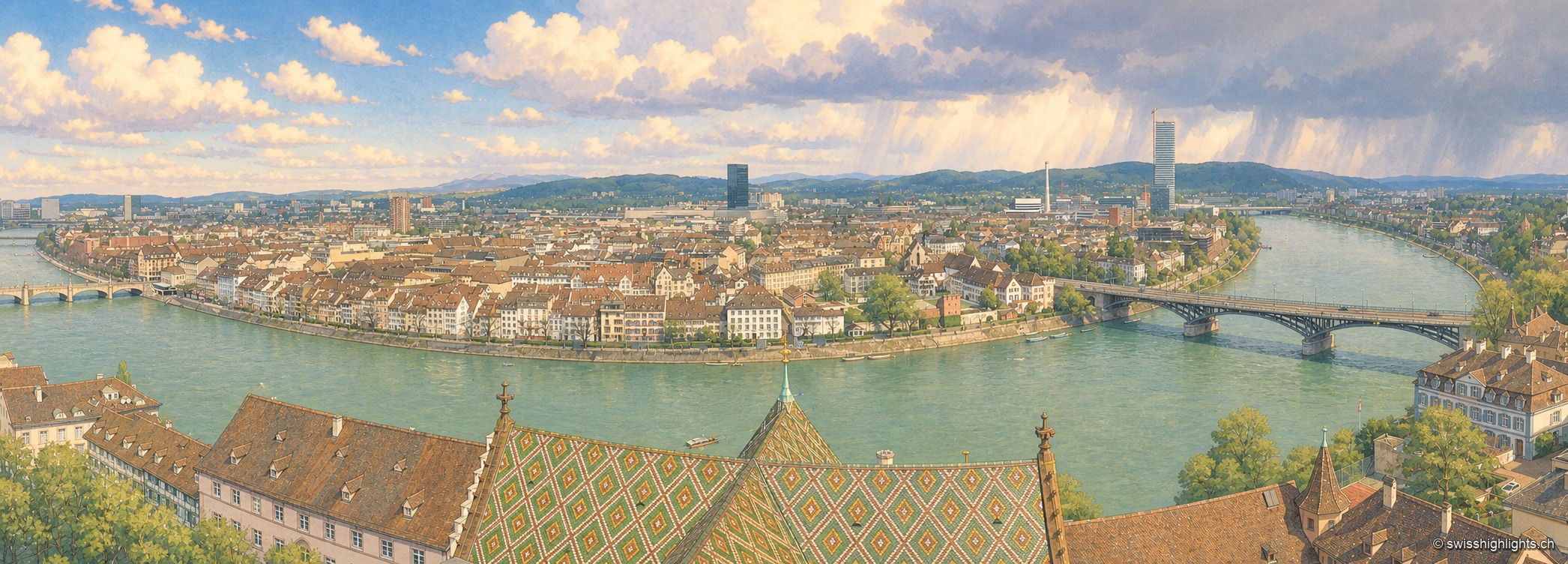
Basel
The Rhine bends here before leaving Switzerland; the city spans it and touches France and Germany. A university founded in 1460, some forty museums in the canton, a carnival on UNESCO's intangible heritage list.