Religious site · Basel-Stadt
Sankt Chrischona
A late-Gothic church atop the Dinkelberg, the highest point in canton Basel-Stadt, a pilgrimage site that became in 1840 the seat of an evangelical mission.
The church of Sankt Chrischona stands on the Dinkelberg, in the commune of Bettingen, at 522 metres — the highest point in canton Basel-Stadt. The late-Gothic building, its west tower from 1450-1460, choir from 1503-1509 and nave from 1513-1516, occupies the walled former communal cemetery, surrounded by mission buildings built between 1860 and 1929. The tower's viewing platform, reached by 71 steps, opens on clear days onto a panorama of the Vosges, the Black Forest, the Jura and the Alps.
Legend traces the sanctuary to the virgin Christiana, who died returning from a pilgrimage to Rome and is buried here; the legend only takes shape in the 13th-14th centuries and earns Christiana a canonisation in 1504, which launches a popular pilgrimage. A Romanesque church already stood here from the 11th century, with a churchyard where the commune of Bettingen already buried its dead; older place names suggest an earlier building was dedicated to Saint Brictius of Tours. The Reformation of Basel, in 1529, turns Sankt Chrischona into a Reformed church.
Ransacked by Swedish troops during the Thirty Years' War, the church declines until it is used as a stable in 1818. Christian Friedrich Spittler obtains permission to restore it in 1839 and founds, the following year, in its sacristy, the Pilgrim Mission of Sankt Chrischona, still active today. His successor Carl Heinrich Rappard establishes there, from 1869, the first evangelical school in the German-speaking world. The city of Basel gives the church to Chrischona International in 1965, on condition that it be renovated and stay open to the public — which the 1974-1975 restoration delivers.
Why this place is remarkable
The highest point in canton Basel-Stadt, this late-Gothic church saw a medieval pilgrimage, then a stable in 1818, before becoming in 1840 the cradle of an evangelical mission that still occupies its former cemetery and the buildings around it.
History and origin
A first building may already have stood on this height in the 7th century, enlarged in the 8th-9th centuries and then rebuilt in Romanesque style around the year 1000. The legend of the virgin Chrischona only takes shape in the 13th-14th centuries, ahead of the 1504 canonisation. The current building, tower from 1450-1460, choir from 1503-1509 and nave from 1513-1516, passes to the Reformation in 1529; a bell cast in 1625 by Martin Hofmann in Basel still rings in its tower.
What to do and see
- Climb to the bell tower platform via the 71 steps for a panorama over the Vosges, the Black Forest, the Jura and the Alps.
- Observe the late Gothic church, its tower from 1450-1460, choir from 1503-1509 and nave from 1513-1516.
- Picture the building's transformation, ransacked during the Thirty Years' War and then a stable in 1818, into the cradle of an evangelical mission from 1840.
Coming with family: what to know
- The climb to the bell tower platform is via a stairway of 71 steps.
As a couple
- Climb together to the bell tower via the 71 steps, for the highest point of the canton of Basel-Stadt.
- Look for the bell cast in 1625 by Martin Hofmann, still in use in the tower.
- Set off together to explore the mission buildings built between 1860 and 1929 around the old communal cemetery.
Location
Loads an interactive Google Maps view on demand, from the place's verified coordinates.
The embedded map will be enabled once an authorized Google Maps key is configured. Use the link above in the meantime.
The map could not load. Check your connection or use the link above to open the place in Google Maps.
Related places
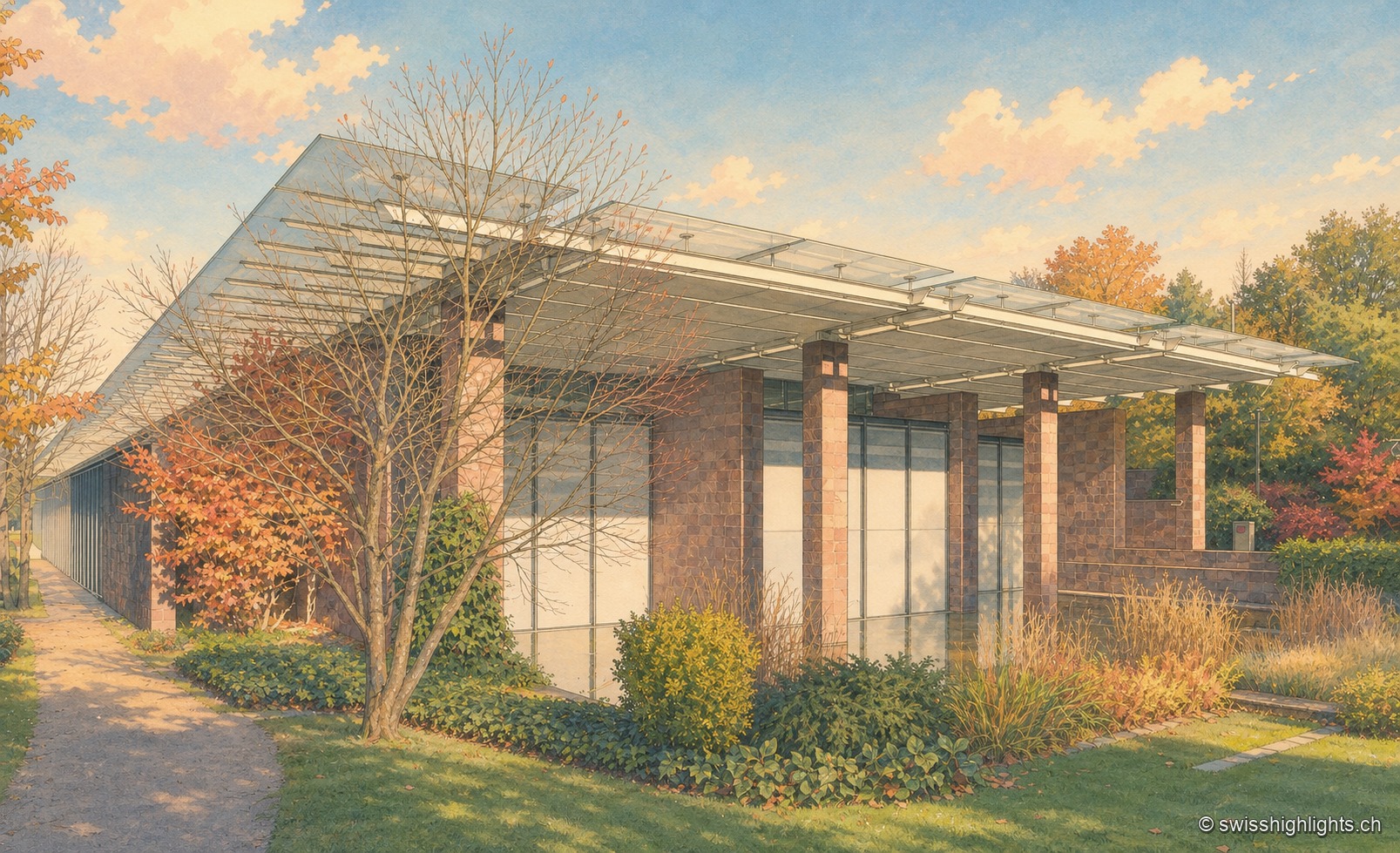
Border commune · Basel-Stadt · 2 km as the crow flies
Riehen
22,534 inhabitants on 10.86 km², a quarter woodland and a quarter farmland, a German border curling around it to the north: Riehen is as much a large village as a suburb of Basel.
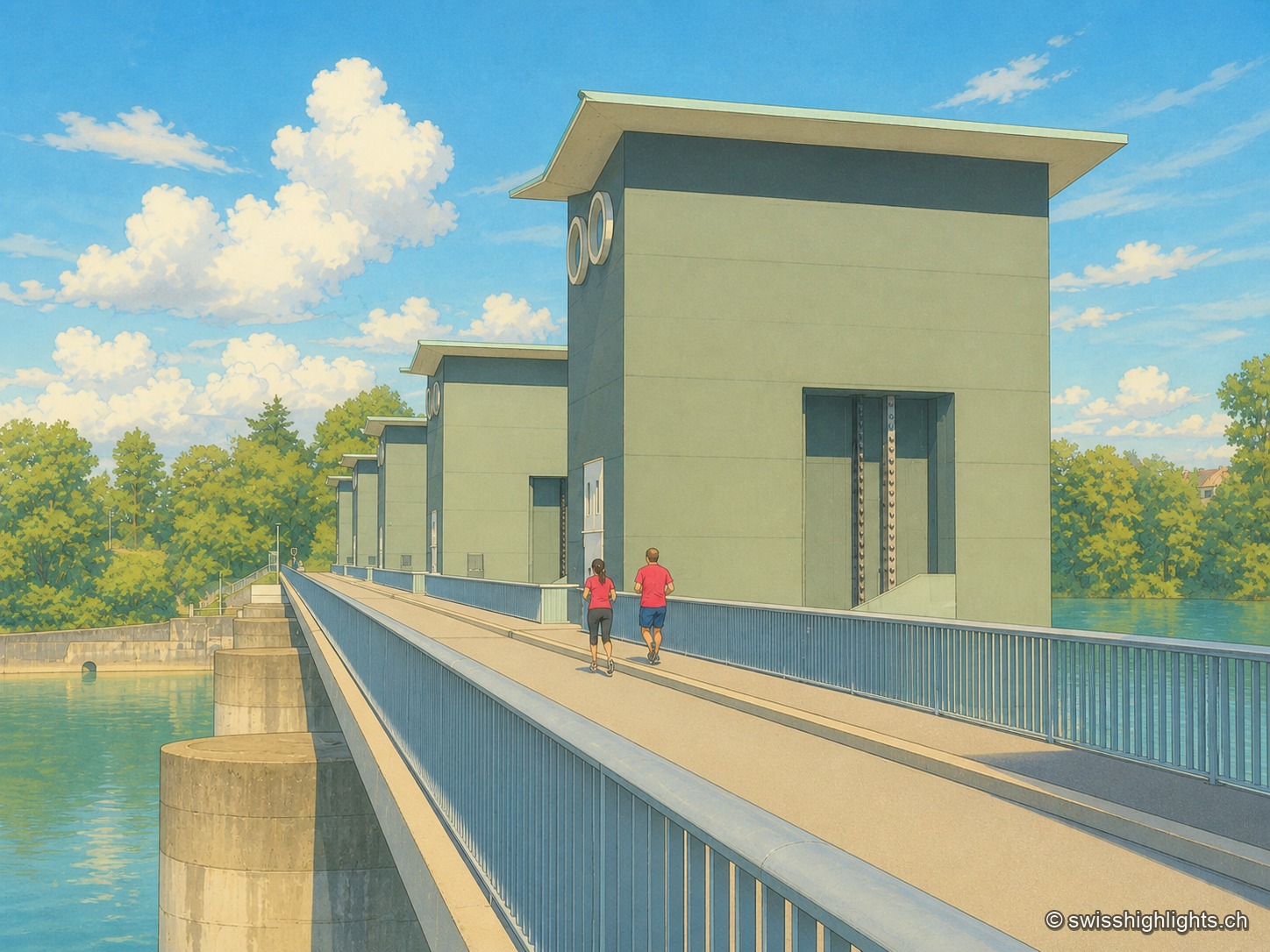
Run-of-river plant · Rhine · 4 km as the crow flies
Birsfelden power station
Four Kaplan turbines under a 12-metre head, two locks for the barges, and over the whole thing a path open to walkers and cyclists. Between 2006 and 2015 the plant produced an average of 570 GWh a year.
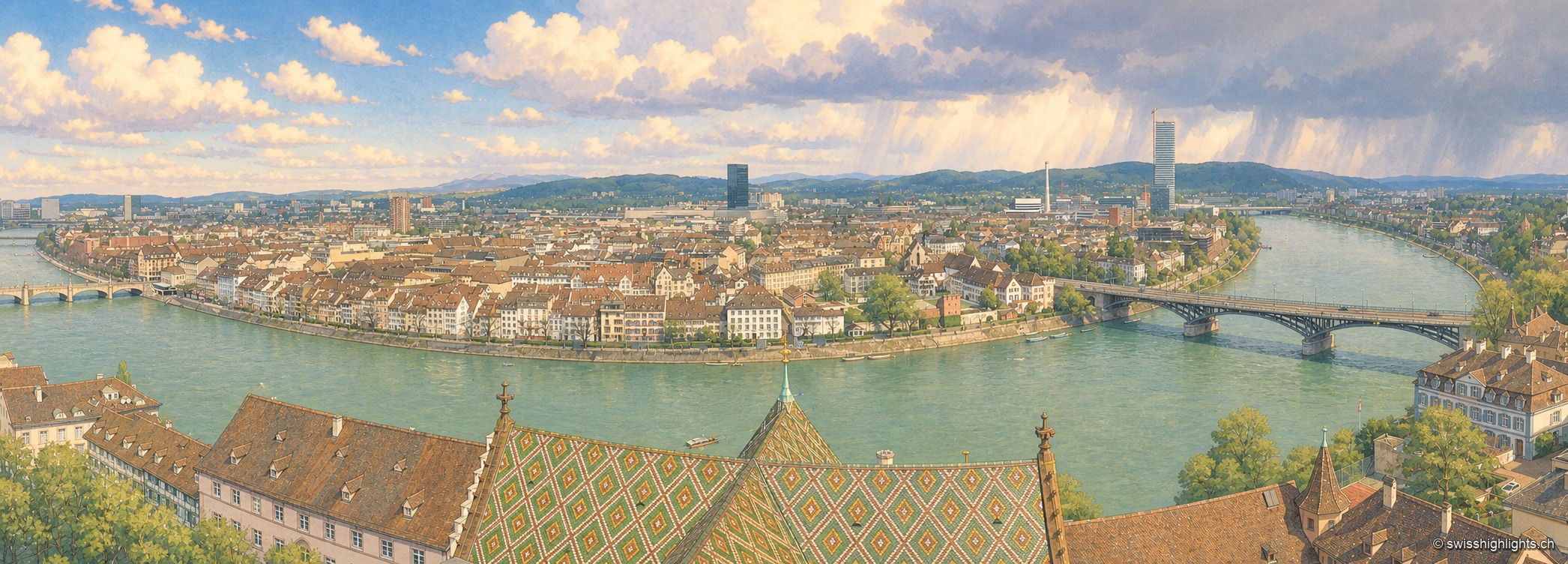
Rhine city · Basel-Stadt · 7 km as the crow flies
Basel
The Rhine bends here before leaving Switzerland; the city spans it and touches France and Germany. A university founded in 1460, some forty museums in the canton, a carnival on UNESCO's intangible heritage list.