Gothic frescoes, birthplace of the Amish
Erlenbach im Simmental
Erlenbach's Romanesque church, recorded from 1228, keeps wall paintings from the 14th-16th century; Jakob Amman, founder of the Amish, was born there in 1644.
Erlenbach im Simmental is a municipality in the canton of Bern, in the administrative district of Frutigen-Bas-Simmental. Its church, recorded from 1228, is Romanesque in architecture, dating to the 11th and 12th centuries. It is chiefly known for its interior decoration: wall paintings spanning the late 14th century, through the 15th, to the early 16th century, considered an exceptional painted heritage of the late Gothic period.
These paintings were covered with whitewash at the Reformation, in 1527 and 1528 — a move that paradoxically preserved them until a first restoration in 1931-32. In the early 19th century, music regained its place in Bernese Reformed churches: in 1812 the Bernese organ builder Johannes Stölli (1760-1833), based in Habstetten, built an organ for Erlenbach whose case survives to this day; the instrument was restored and rebuilt in 1966-67 by the Kuhn organ workshop.
The village is the birthplace, in 1644, of Jakob Amman, the Swiss reformer who founded the very small Anabaptist movement known as the Amish.
Why this place is remarkable
Erlenbach im Simmental owes its singularity to two legacies out of proportion for a Bernese village of its size: a church whose late-Gothic wall paintings, saved by the chance of a Reformation-era whitewashing, rank among the best-preserved painted ensembles in the region, and the 1644 birth of Jakob Amman, whose small reform movement would spread as far as the Amish communities of North America.
History and origin
Erlenbach's Romanesque church, attested from 1228, received a cycle of wall paintings between the late 14th and early 16th centuries. The Bernese Reformation of 1527-28 had them covered with whitewash, which protected them until they were uncovered during a restoration in 1931-32. Jakob Amman, born in the village in 1644, grew up there before founding the Anabaptist Amish movement.
What to do and see
- Discover in the Romanesque church, mentioned as early as 1228, the cycle of mural paintings from the late 14th to early 16th century, saved by whitewash applied during the Reformation and then restored in 1931-32.
- See the organ built in 1812 by Johannes Stölli, whose case survives, restored and rebuilt in 1966-67 by the Kuhn organ works.
- Remember, in this Bernese village, the 1644 birth of Jakob Amman, founder of the Amish Anabaptist movement.
As a couple
- Take time in front of the Gothic mural paintings of the church, an ensemble preserved for centuries by the chance of a coat of whitewash.
- Listen, if the opportunity arises, to the 1812 organ case restored by the Kuhn organ works.
- As you walk through the village, tell each other about the fate of Jakob Amman, born here in 1644 before founding a movement that would spread all the way to North America.
Location
Loads an interactive Google Maps view on demand, from the place's verified coordinates.
The embedded map will be enabled once an authorized Google Maps key is configured. Use the link above in the meantime.
The map could not load. Check your connection or use the link above to open the place in Google Maps.
Related places

Alpine lake · Bernese Oberland · 13 km as the crow flies
Lake Thun
Fed by the Kander and 18 km long, Lake Thun carries the castles of Spiez and Oberhofen on its shores. Between 1945 and 1964 the army sank up to 4,600 tonnes of munitions into it, whose effect on the lake's fish remains unexplained.
Railway line · Vaud–Bern · 18 km as the crow flies
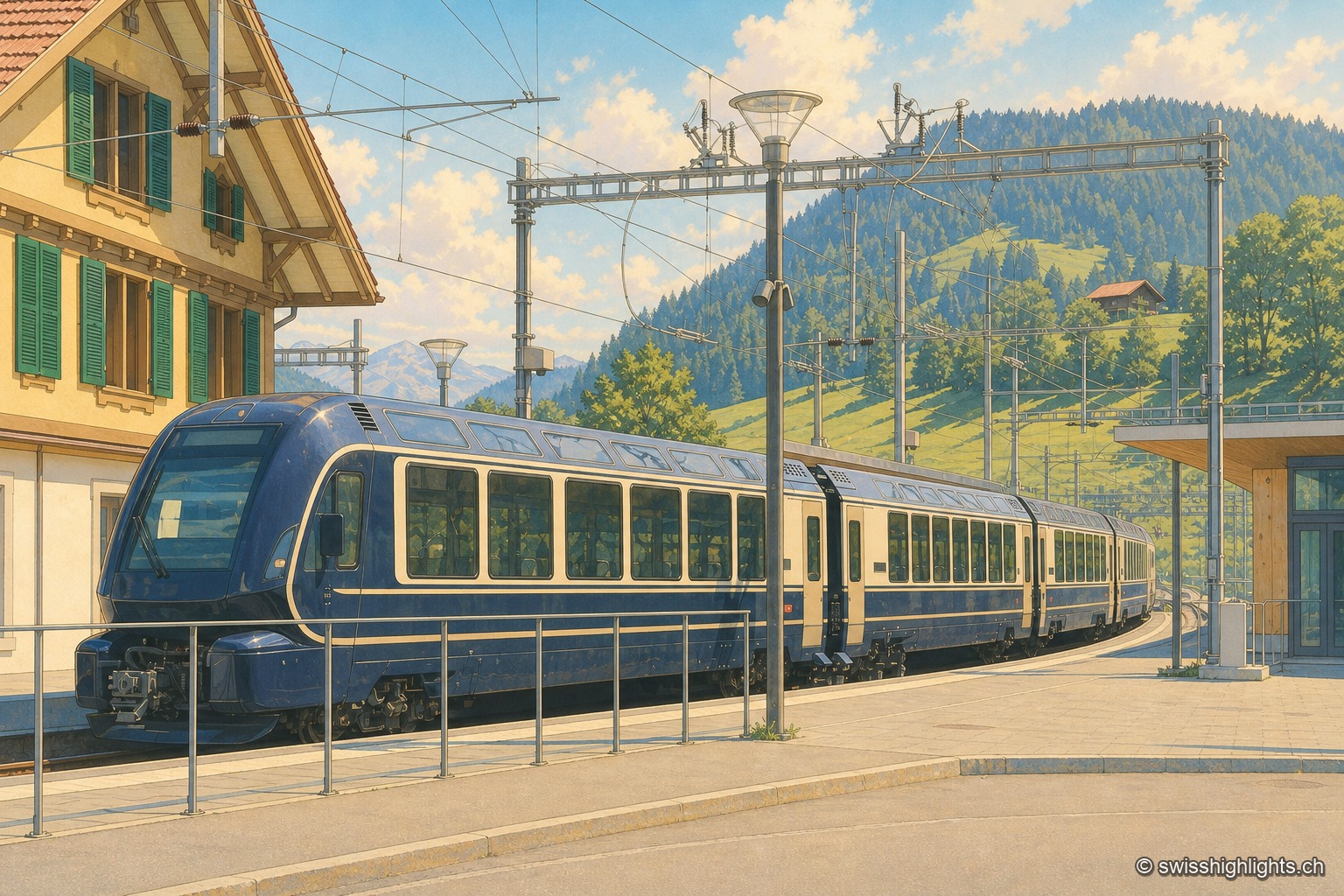
GoldenPass Express
Between Lake Geneva and the Bernese Oberland the train moves from 1,000-millimetre track to 1,435: the wheels spread apart and the body adjusts to platforms that rise from 300 to 560 millimetres.
Village and Cluniac priory · Bern · 20 km as the crow flies
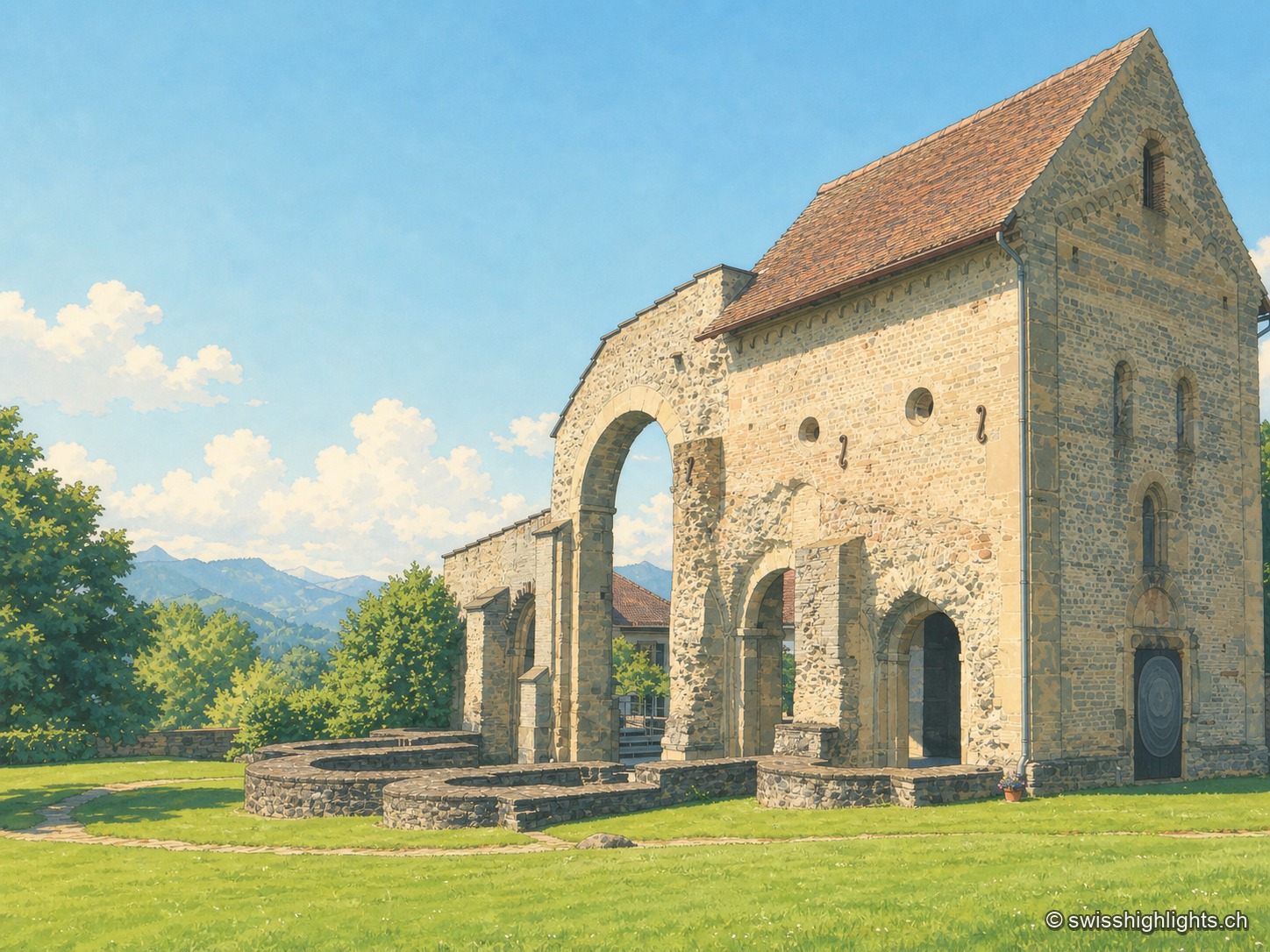
Rüeggisberg
Founded around the mid-11th century by two monks sent by Abbot Hugues de Cluny, the priory of Rüeggisberg, attested as early as 1075, was never completed to its planned five-apse design before being suppressed in 1484.