Former abbey · Lucerne
Saint Urban's Abbey
Founded in 1194 by monks from Lucelle, this Cistercian abbey was rebuilt in baroque form from 1711 to 1715 and suppressed in 1848.
Saint Urban's stands on the territory of Pfaffnau, in the Rot valley, at the north-western corner of the canton of Lucerne — the boundary stone where Aargau, Bern and Lucerne meet is some 250 metres away. What one sees today dates from the 18th century: a twin-tower facade seven bays wide, articulated by Tuscan pilasters and pierced by three portals, continued by the long white conventual ranges. Church and monastery were rebuilt from 1711 to 1715 by Franz Beer, a master builder from the Vorarlberg, on the initiative of abbot Malachias Glutz.
The abbey is far older. Monks from Lucelle founded it in 1194 at the instigation of the barons of Langenstein, within the filiation of Morimond. In the late 13th century the monastery produced bricks in quantity: plain rectangular ones for walls, moulded and ornamented pieces for door surrounds, arches, window sills, lintels and cornices, besides floor tiles. A workshop for hand-made bricks was in fact re-established within the walls in 1991. The baroque fittings followed the rebuilding: a chapel of 1690 raised by abbot Ulrich Glutz for the chasuble of St Ulrich, a 10th-century relic; choir stalls carved from 1700 to 1707 under the direction of Johann Peter Frölicher of Solothurn; an organ of 1721 by Joseph and Victor Ferdinand Bossard, whose 1717 contract specified three manuals and 2,637 pipes, all of tin except the double bass.
On 13 April 1848, after the death of abbot Friedrich Pfluger, the canton of Lucerne decreed the suppression of the monastery and the sale of its property to pay the war tribute owed to the victors of the Sonderbund. The works of art and the library, with the Gatterer collection, passed to the state; the stalls were sold in 1853 to a banker from St Gallen, then to an Irishman, and ended up in Scotland. The Gottfried Keller Foundation bought them back in 1911 on the express condition that they return to their place: they were reinstalled in the church that same year. The buildings themselves had taken another purpose from 1873, that of a cantonal psychiatric institution; they house today the largest clinic of Lucerne psychiatry and its headquarters, while the parish still celebrates in the abbey church.
Why this place is remarkable
Saint Urban's holds two histories within one precinct. That of a workshop: the 13th-century brickworks, whose moulded pieces served as surrounds and cornices, then the rebuilding of 1711-1715 by Franz Beer, with its stalls, its organ of 2,637 pipes and its twin-tower front. And that of a dispossession: suppressed on 13 April 1848, the abbey watched its library and its stalls leave — the latter as far as Scotland, before their repurchase in 1911. Since 1873 the monastery has cared for the sick instead of praying.
History and origin
Founded in 1194 by monks from Lucelle at the instigation of the barons of Langenstein, the abbey belongs to the filiation of Morimond. Its conventual school is attested around 1470; under abbot Benedikt Pfyffer, from 1768 to 1781, it became a model school and in 1780 housed the first teachers' seminary in Switzerland, directed by Nivard Krauer. The suppression of 13 April 1848 ended that continuity: the canton sold the property, the state took in the library and the Gatterer collection, and in 1873 the premises became a psychiatric institution.
What to do and see
- Observe the baroque facade with two towers and seven bays, built from 1711 to 1715 by Franz Beer, with its three portals and Tuscan pilasters.
- Spot in the masonry the moulded 13th-century bricks that once adorned doors, arches and cornices, one of whose hand-making workshops was reinstalled in 1991.
- Look for the carved stalls of 1700-1707, brought back from Scotland in 1911, and picture the 1721 organ said to have had 2,637 tin pipes.
- Situate the abbey in the Rot valley, some 250 metres from the point where Aargau, Bern and Lucerne meet.
As a couple
- Admire together the two-towered facade by Franz Beer and its carved pediment, away from the main tourist routes.
- Retrace, in front of the stalls bought back in 1911, the story of their sale in 1853 and their exile as far as Scotland before their return.
- Pause at the nearby marker where three cantons touch, Aargau, Bern and Lucerne.
The conventual buildings house the largest clinic of Lucerne psychiatry and its headquarters: this is not a freely visitable site, and discretion is called for on the approaches.
The conventual buildings house the largest psychiatric clinic in Lucerne canton and its headquarters: this is not a freely visitable site, and discretion is required nearby.
Location
Loads an interactive Google Maps view on demand, from the place's verified coordinates.
The embedded map will be enabled once an authorized Google Maps key is configured. Use the link above in the meantime.
The map could not load. Check your connection or use the link above to open the place in Google Maps.
Related places
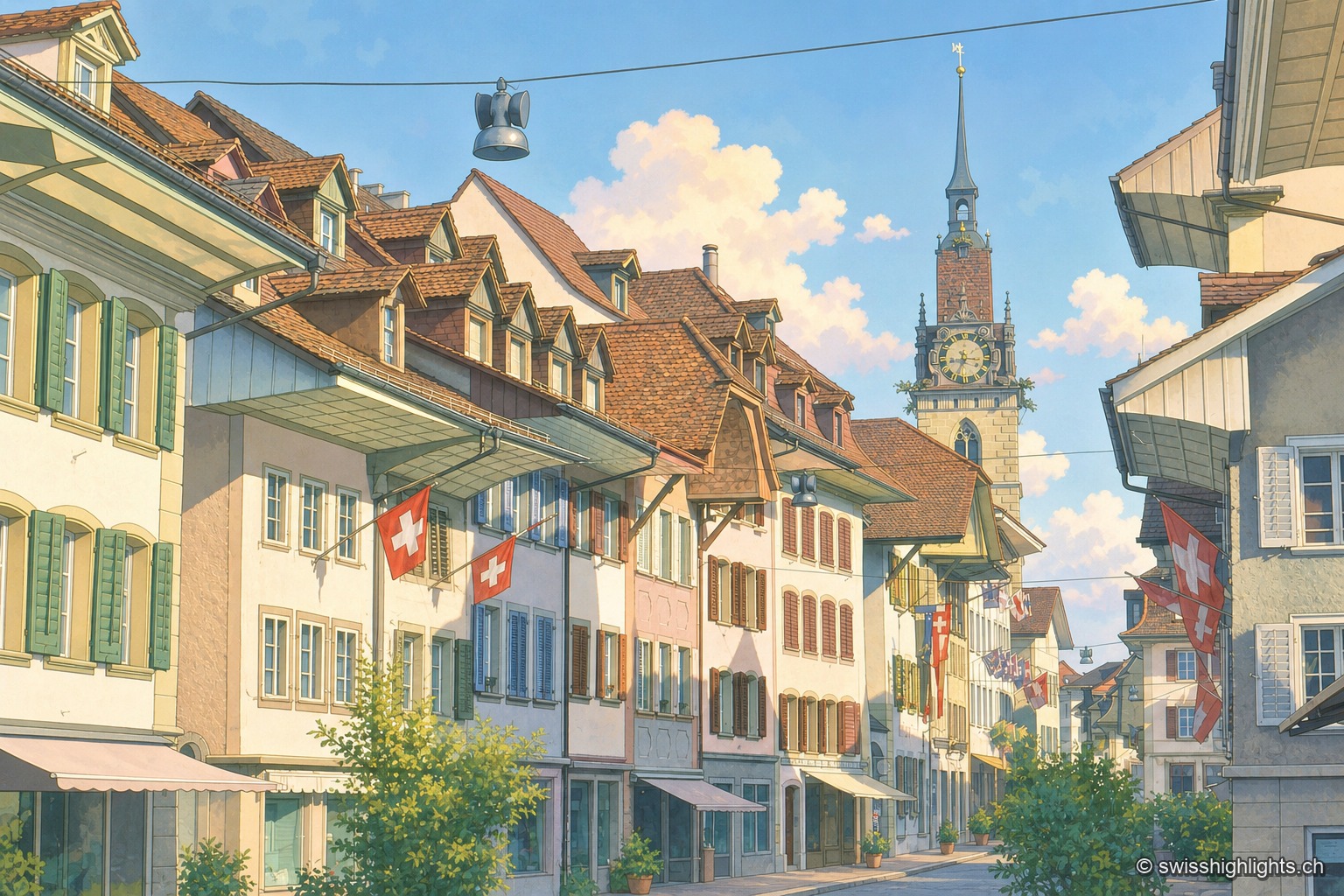
Medieval small town · Aargau · 10 km as the crow flies
Zofingen
Founded by the Froburgs at the end of the twelfth century, the town narrowly missed the great railway junction, which formed at Olten instead. Ten of its monuments are cultural property of national significance.
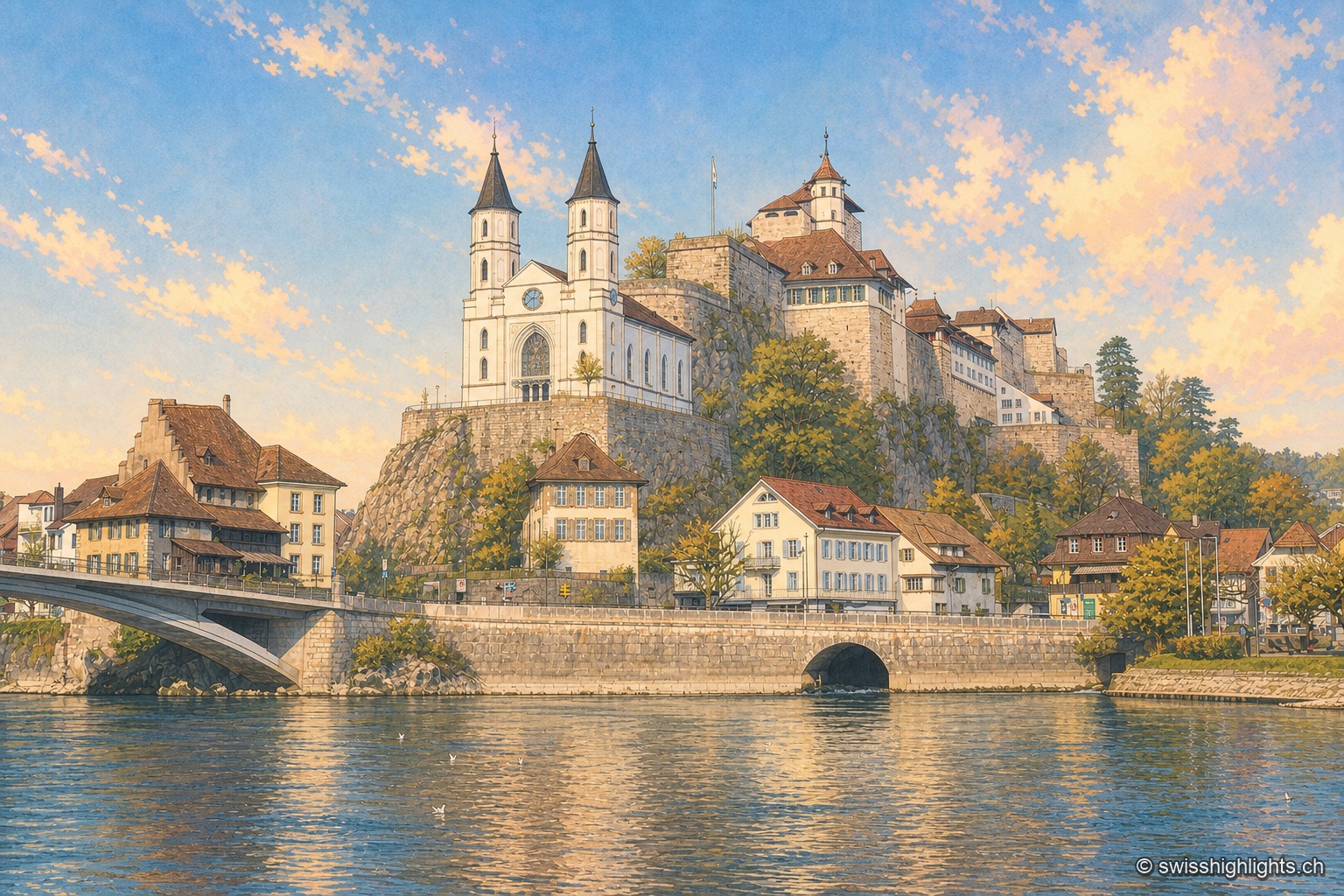
Fortified small town · Aargau · 11 km as the crow flies
Aarburg
Bern took the town on 20 April 1415 and turned the castle into a fortress. It still holds the spur commanding the valley, above an old town rebuilt after the fire of 4 May 1840.
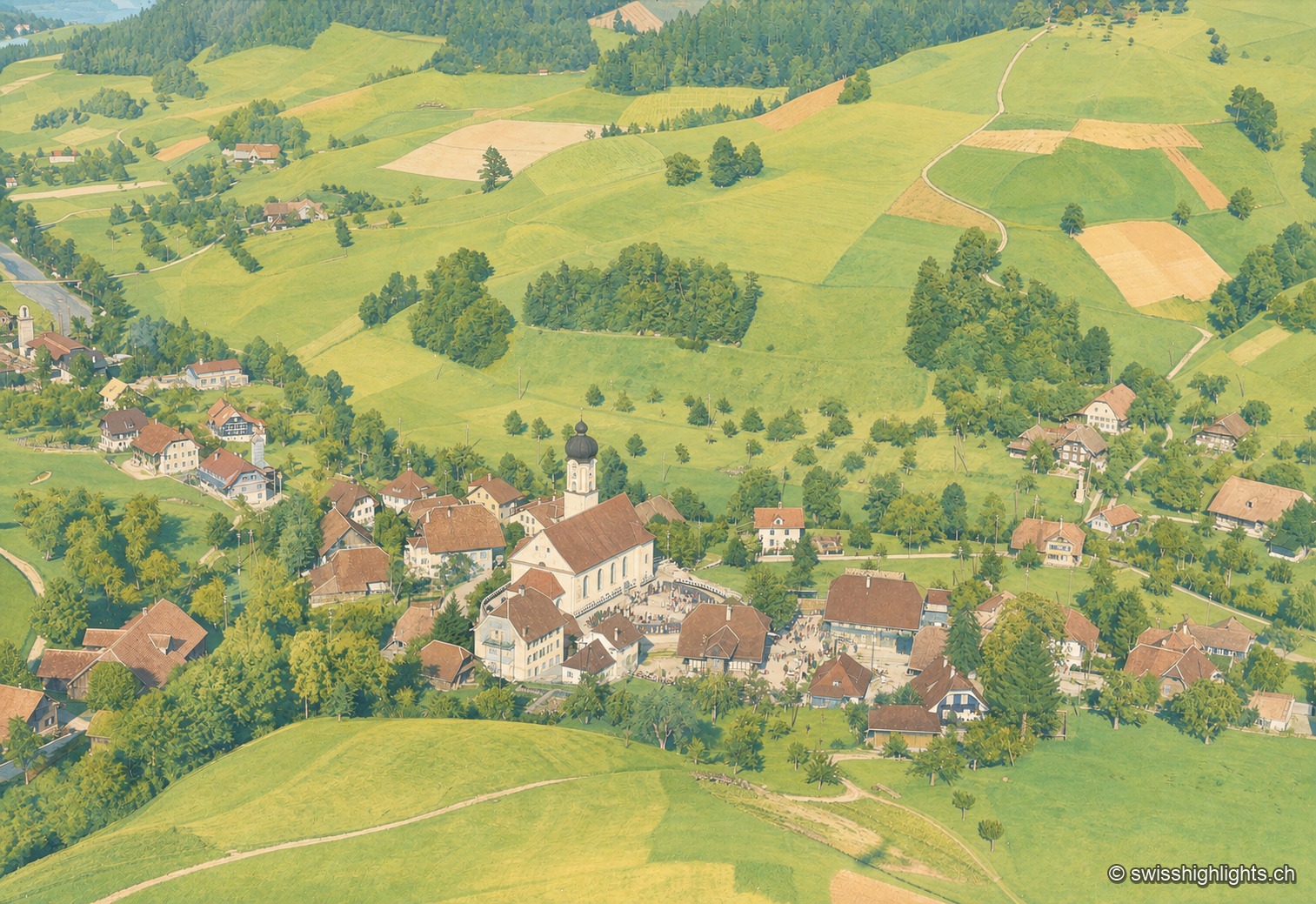
Pilgrimage village · Lucerne · 20 km as the crow flies
Luthern
The church of St Ulrich and the buildings around it form a core raised in one movement between 1752 and 1781. Four kilometres higher up, a spring and its chapel of 1583 still draw pilgrims.