Historic mill · Stallikon, Zurich
Aumüli
The only stone mill in the Knonauer Amt to keep its water right, wheel and sawmill, recorded from 1328 and restarted since 1999 after 117 years of silence.
The Aumüli is a hamlet in the municipality of Stallikon, in the Affoltern district of the canton of Zurich, at the southern foot of the Albis, east of Stallikon, between the hamlets of Gamlikon and Tägerst, on the Reppisch. It takes its name from the historic mill at its centre: listed in 1993 together with its outbuildings among objects of cantonal and national protected significance, it is the only stone mill in the Knonauer Amt (Affoltern district) to have kept its ancestral water right, wheel and sawmill. The Federal Office of Culture added it to the federal inventory of sites worth protecting (ISOS) in late 2012.
The first mill at Aumüli probably dates from the 9th century, which would make it one of the oldest in the canton of Zurich; deeds record it from 1328 in any case. It originally supplied the mills of Stallikon, Wettswil, Bonstetten, Aeugst am Albis, the Aeugst valley with the Obertal, and Buechenegg, linked by direct paths — a cart track still crossed the property between Bonstetten and Langnau until the road was built in 1860. At its peak it had two water wheels for one or two grinding mechanisms and a dehusking wheel, plus a saw wheel; a little higher up, the Vormühle drove, with two further wheels, a millstone, a hemp grinder and two feed stampers.
The double barn, built in 1852 in the Bernese farming style brought by Bernese immigrants, replaced an older, smaller stable building; it received a raised cart entrance in 1892. In 1872, the Bernese immigrant Johann-Ulrich Weyermann acquired the estate with 24 hectares of land and 5.5 hectares of forest; the Weyermanns traded in grain and timber, kept livestock, ran a carting business and bred horses there. Left to decay, the mill has been restored since 1999 by the Pro Aumüli foundation and association, largely through volunteer work: the centuries-old water channel and the Reppisch weir were rebuilt in 2007, and the wheel again drives, after 117 years of silence, the spelt-milling and the frame saw. In 2012, the two-storey timber-framed granary was restored and the estate's plum-brandy distillery brought back into use.
Why this place is remarkable
The Aumüli is the only stone mill in the Knonauer Amt to have kept, as a single working set, its ancestral water right, wheel and sawmill: a complete mechanism, recorded from 1328 and probably built in the 9th century, silenced by neglect for 117 years before a volunteer foundation set it running again from 1999. The water wheel once more mills spelt and drives the saw, in a hamlet that once supplied six neighbouring localities by direct paths.
History and origin
The mill, recorded from 1328 and probably built in the 9th century, served Stallikon, Wettswil, Bonstetten, Aeugst am Albis and Buechenegg until the 1860 road changed local traffic patterns. Listed in 1993 and added to the ISOS register in late 2012, it has been restored since 1999 by the Pro Aumüli foundation and association: the water channel and the Reppisch weir, rebuilt in 2007, let the wheel regain, after 117 years of silence, its milling and sawing function.
What to do and see
- Observe the Aumüli waterwheel, restarted in 1999 after 117 years of standstill, which once again drives the spelt milling and the frame saw.
- Spot the water supply canal redone in 2007 with the Reppisch weir, and the double barn of 1852 in Bernese agricultural style.
- Look for the two-storey timber-framed granary restored in 2012 and the plum brandy distillery back in service.
- Situate the hamlet between Gamlikon and Tägerst, at the southern foot of the Albis, on the Reppisch.
Coming with family: what to know
- Watching a waterwheel restarted after 117 years of standstill can interest children curious about old mechanisms.
As a couple
- Watch together as the waterwheel turns again after more than a century of standstill, milling spelt as it once did.
- Wander along the Reppisch as far as the supply canal redone in 2007.
- Linger in front of the 1852 Bernese barn and the timber-framed granary restored in 2012.
Location
Loads an interactive Google Maps view on demand, from the place's verified coordinates.
The embedded map will be enabled once an authorized Google Maps key is configured. Use the link above in the meantime.
The map could not load. Check your connection or use the link above to open the place in Google Maps.
Related places
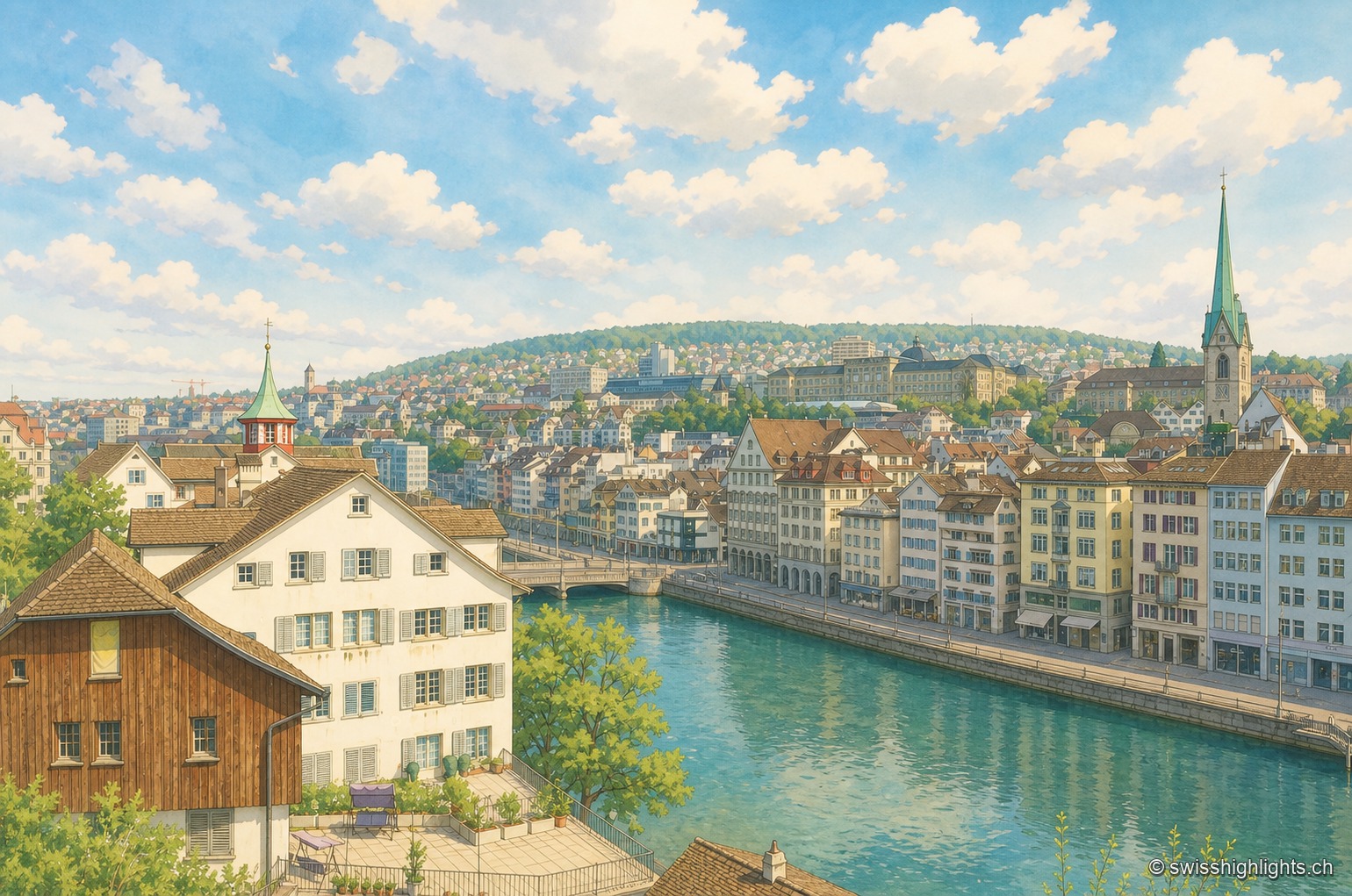
Cantonal capital · Zurich · 9 km as the crow flies
Zurich
433,989 inhabitants in December 2023, a river people swim across in summer, a 869-metre summit at the end of a train line: Zurich fits into a corridor three to four kilometres wide.
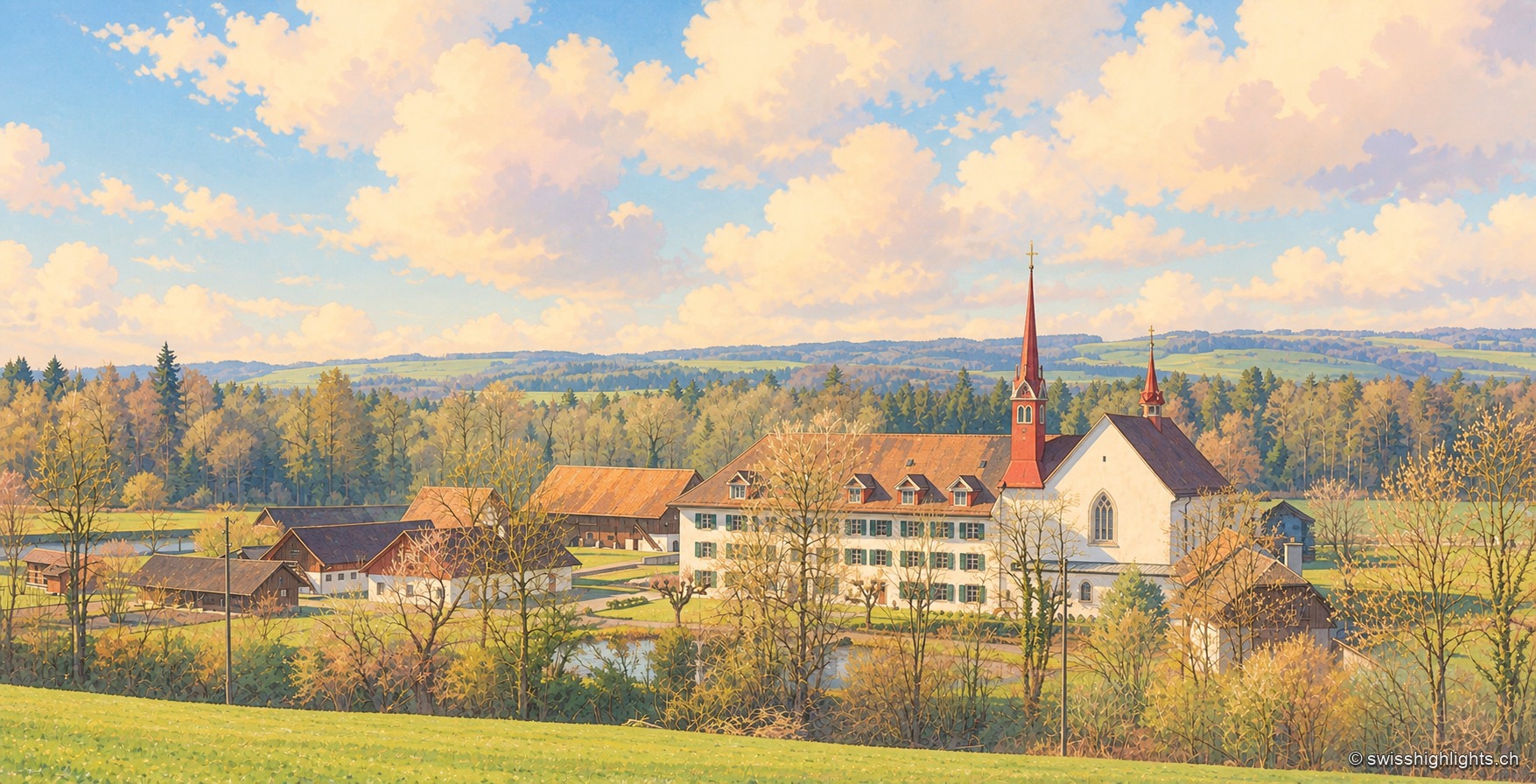
Cistercian abbey · Zug · 11 km as the crow flies
Frauenthal Abbey
Traditionally founded in 1231, with no surviving charter, the abbey went through the 1528 Reformation before being restored by Abbess Anna von Fulach in 1552. Since 2021 it has been a civil-law foundation, still home to a community of nuns.
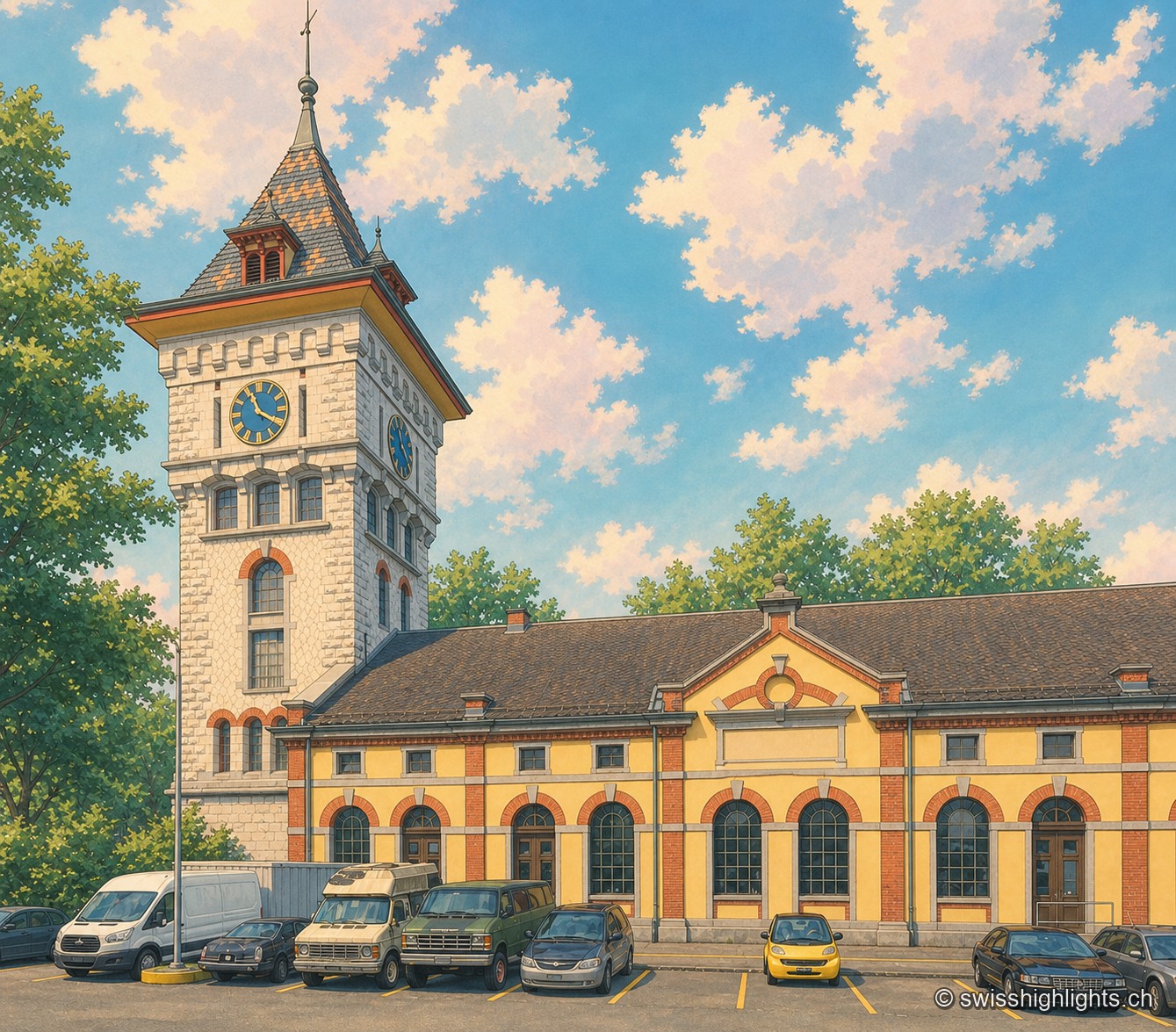
Former gasworks · Zurich · 11 km as the crow flies
Schlieren Gasworks
Opened in 1898 and expanded through 1909, the Schlieren gasworks produced up to 250,000 m³ of gas a day before closing in 1974. Its gasometer now houses a museum and a working steam engine.