Former gasworks · Zurich
Schlieren Gasworks
Switzerland's largest gasworks operated in Schlieren from 1898 to 1974; its protected gasometer and steam power station can be visited today.
The Schlieren gasworks, the largest in Switzerland when it opened, entered service in 1898 and stopped coal-gas production in May 1974. The site is listed in the federal inventory of townscapes worthy of protection (ISOS, no. 5666) and classified as a Swiss class A cultural property of national significance (reference 07651).
The plant had four gasometers built at different periods and sixty-three chamber ovens arranged in seven blocks, with a coal storage capacity of about 14,000 tonnes. Its initial output of 50,000 m³ of gas per day rose to 250,000 m³ after renovations carried out from 1928 to 1933.
Gasometer No. 1 is preserved as a monument; the power station and its water tower house a working steam engine and the gas museum. Former industrial buildings have been converted, including into a climbing hall, and the workers' housing remains occupied. Having become the owner of the site, the canton of Zurich entrusted the gasometer to the Gasometer Schlieren Foundation in 2001.
Why this place is remarkable
In 1898 Schlieren gained Switzerland's largest gasworks, built far from central Zurich for its flat, level ground and rail links — two qualities that allowed the coal needed for production to be delivered by rail. Since its closure in 1974 the site has combined uses rarely found together elsewhere: a steam engine still in working order, a gas museum, a climbing hall installed in former industrial buildings, and workers' housing that is still lived in.
History and origin
Zurich ran a first gasworks at the Platzspitz from 1856, moved in 1867 to the industrial quarter on Limmatstrasse, then supplemented in 1873 by a smaller plant at Riesbach. The new Schlieren works, whose residential buildings were designed by Zurich city architect Arnold Geiser in 1900-1901, underwent a major expansion from 1903 to 1909; the contractor Eduard Züblin built the coal silo, a second example of which was designed in 1909 by the Munich firm Gebrüder Rank.
What to do and see
- See gasholder no. 1, preserved as a monument, the sole survivor of the four original gasholders.
- Discover the working steam engine and the gas museum, housed in the power plant and its water tower.
- Spot the former industrial buildings converted to new uses, including a climbing hall, next to the still-inhabited workers' housing.
- Gauge the scale of the site: sixty-three chamber furnaces and 14,000 tonnes of coal storage capacity.
Coming with family: what to know
- The site combines a museum, a working steam engine and a climbing hall in former industrial buildings.
As a couple
- Discover together the working steam engine in the former power plant.
- Stroll between the preserved gasholder and the still-inhabited workers' housing.
- Compare the plant's original scale, the largest in Switzerland in 1898, with its current conversions.
Location
Loads an interactive Google Maps view on demand, from the place's verified coordinates.
The embedded map will be enabled once an authorized Google Maps key is configured. Use the link above in the meantime.
The map could not load. Check your connection or use the link above to open the place in Google Maps.
Related places
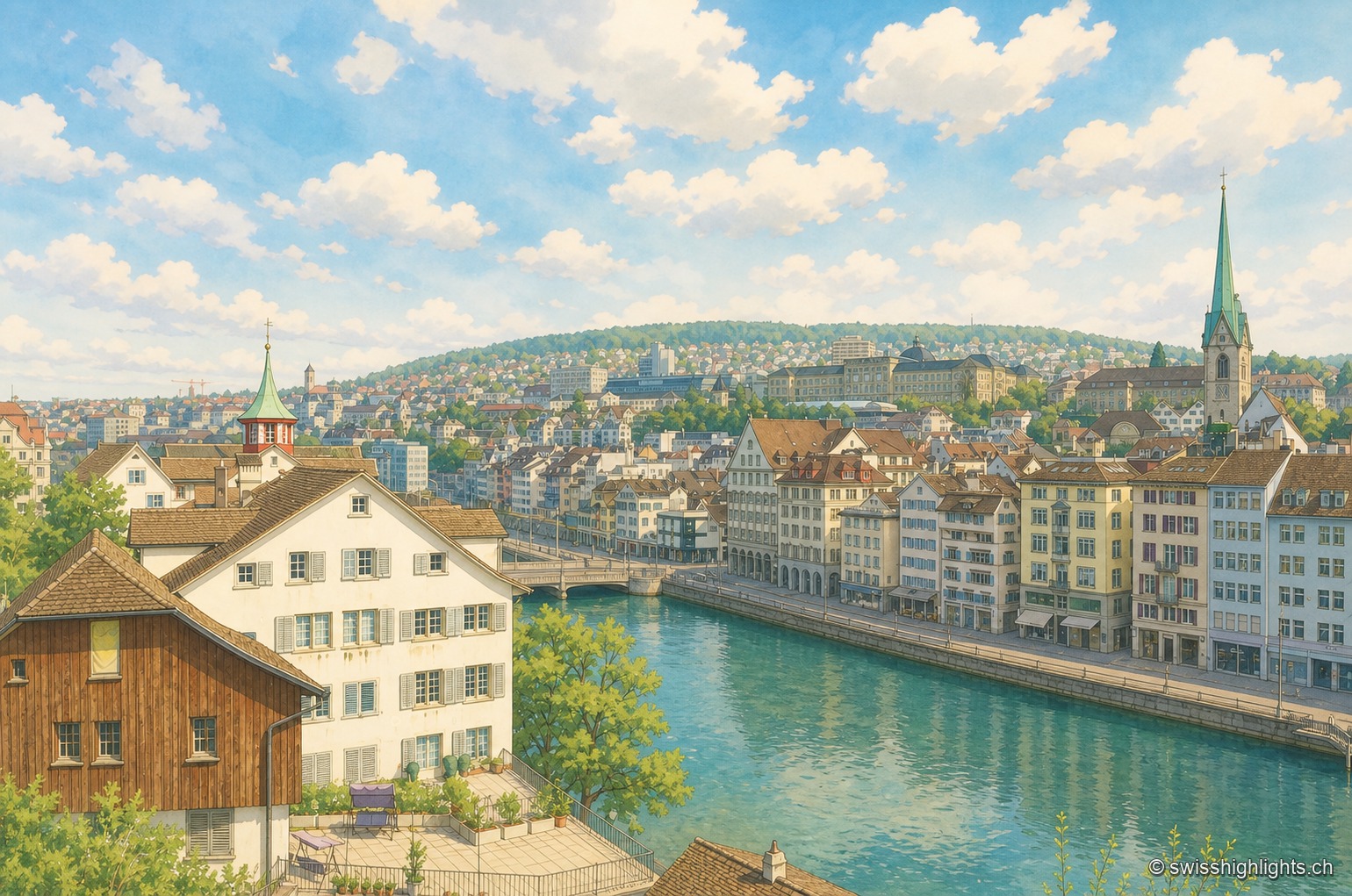
Cantonal capital · Zurich · 7 km as the crow flies
Zurich
433,989 inhabitants in December 2023, a river people swim across in summer, a 869-metre summit at the end of a train line: Zurich fits into a corridor three to four kilometres wide.
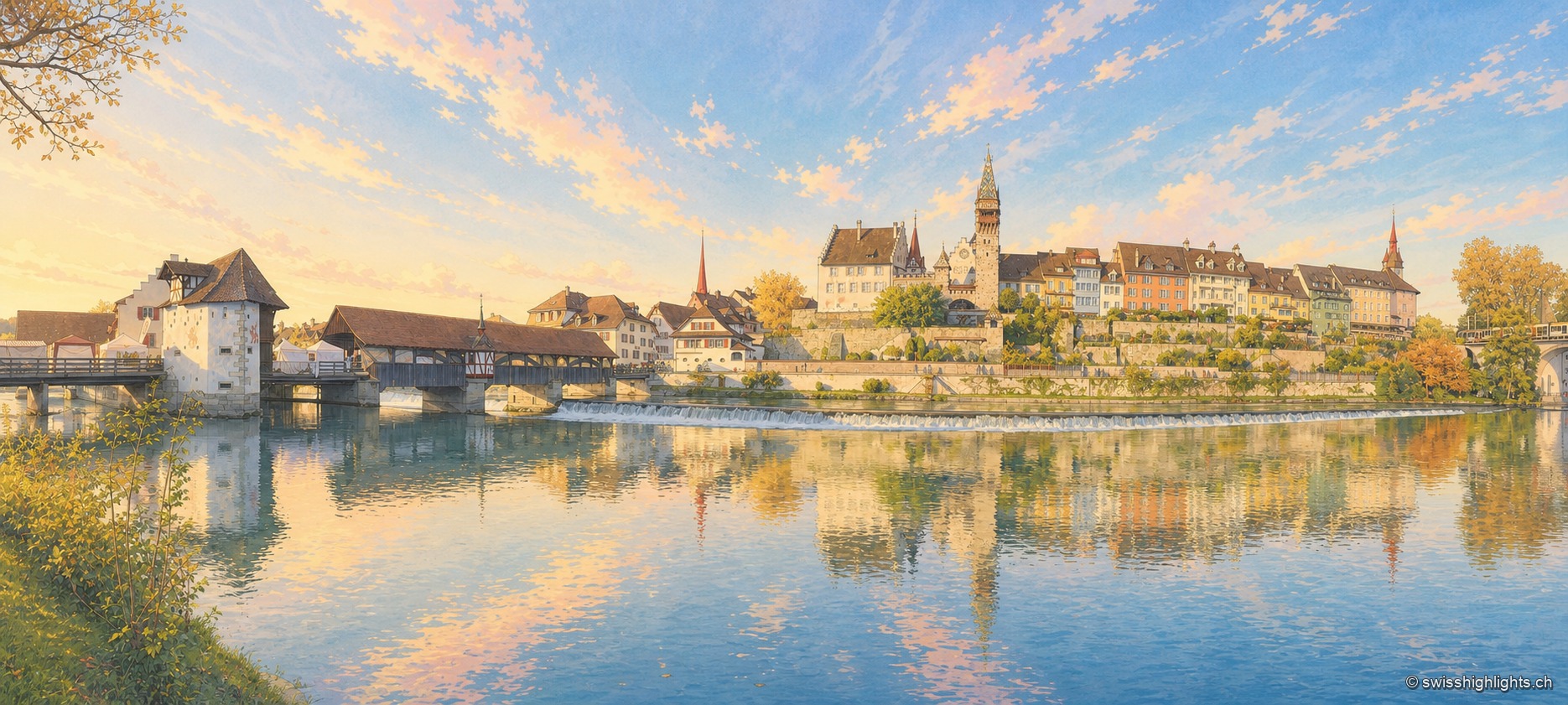
Small town · Aargau · 11 km as the crow flies
Bremgarten
The old town sits in a bend of the Reuss, still crossed by a covered wooden bridge. Four great markets set the year: those of Easter and Whitsun are over 750 years old, and the Christmas market, begun in 1995, lines up more than 300 stalls.
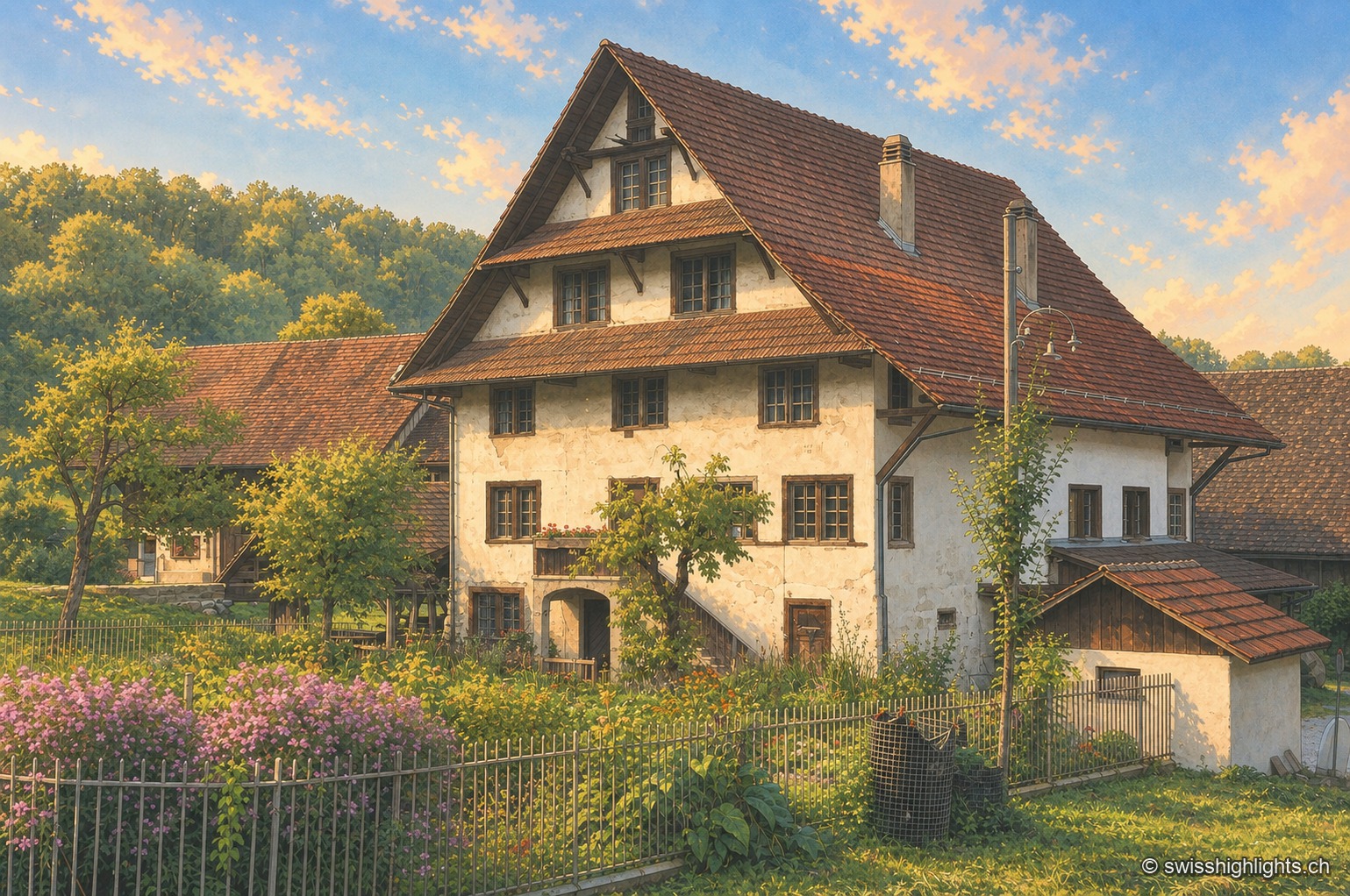
Historic mill · Stallikon, Zurich · 11 km as the crow flies
Aumüli
Probably built in the 9th century and recorded from 1328, the Aumüli keeps its water right, wheel and sawmill. Listed in 1993 and added to the ISOS register in 2012, it has milled spelt again since 2007.