Roman capital · Vaud
Avenches
Capital of the Roman civitas of the Helvetii, Avenches keeps a well-preserved amphitheatre and the one standing tower of its ancient wall, on Lake Morat.
Under the Roman High Empire, Aventicum was the capital of the Gallo-Roman civitas of the Helvetii, first attached to the province of Gallia Belgica and, from the end of the 1st century, to Germania Superior. It then counted more than 20,000 inhabitants. Its amphitheatre, well preserved today, still hosts performances; of the Roman wall, which had 73 watchtowers, only one remains fully standing, the Tornallaz. The Roman museum holds a collection of Gallo-Roman antiquities, including the copy of the gold bust of Marcus Aurelius, and excavations have uncovered the remains of a hydraulic organ in a wealthy Roman house.
The town was devastated by the Alamanni in 258. It nonetheless remained an episcopal see: Marius of Avenches, known as Saint Marius, held it in the 6th century, though historians consider he may have resided elsewhere, at Vindonissa or Lausanne, where the see may have been transferred toward the end of his tenure.
The present town hall, rebuilt in 1753 by the Bernese architect Nicolas Hebler, has an arcaded projecting bay topped by a pediment carved by Johann Friedrich Funk I. The commune merged with Donatyre on 1 July 2006, then with Oleyres on 1 July 2011; it counted 4,129 inhabitants on 31 December 2016. Since 2017, Avenches has belonged to the association Switzerland's Most Beautiful Villages.
Avenches is also a horse town: the national stud, founded in 1899 beside the National Equestrian Institute of Avenches (IENA), keeps stallions of the Swiss Warmblood and Franches-Montagnes breeds; the IENA, opened in 1999, hosts the Swiss Equidays every year.
Why this place is remarkable
What sets Avenches apart is the double life of the same site: capital of a Roman city of more than 20,000 people, whose Tornallaz — the sole survivor of 73 watchtowers — and amphitheatre still carry performances; a horse town, where the 1899 national stud and the 1999 IENA stand a few steps from the ancient remains.
History and origin
Aventicum became capital of the civitas of the Helvetii under Augustus, first in the province of Gallia Belgica and, from the end of the 1st century, in Germania Superior, on the limes facing the Germanic peoples across the Rhine. The Alamanni devastated it in 258. An episcopal see is attested there in the 6th century with Marius of Avenches, before a possible transfer to Lausanne considered by historians.
What to do and see
- See the well-preserved Roman amphitheatre, which still hosts performances today.
- Look for the Tornallaz, the only standing tower out of the 73 that made up the Roman walls of Aventicum.
- Visit the Roman museum for the copy of the golden bust of Marcus Aurelius and the remains of a hydraulic organ.
- Observe the town hall rebuilt in 1753 by Nicolas Hebler, with its arcaded projecting bay and carved pediment.
Coming with family: what to know
- The Roman amphitheatre and the museum can capture children's interest in Antiquity, with no particular facility specified in the source.
As a couple
- Settle into the Roman amphitheatre, still used today for performances.
- Walk along the ancient wall to the Tornallaz, the only surviving tower out of the original 73.
- Combine the visit to the Roman site with a stop at the national stud farm founded in 1899, nearby.
Location
Loads an interactive Google Maps view on demand, from the place's verified coordinates.
The embedded map will be enabled once an authorized Google Maps key is configured. Use the link above in the meantime.
The map could not load. Check your connection or use the link above to open the place in Google Maps.
Related places
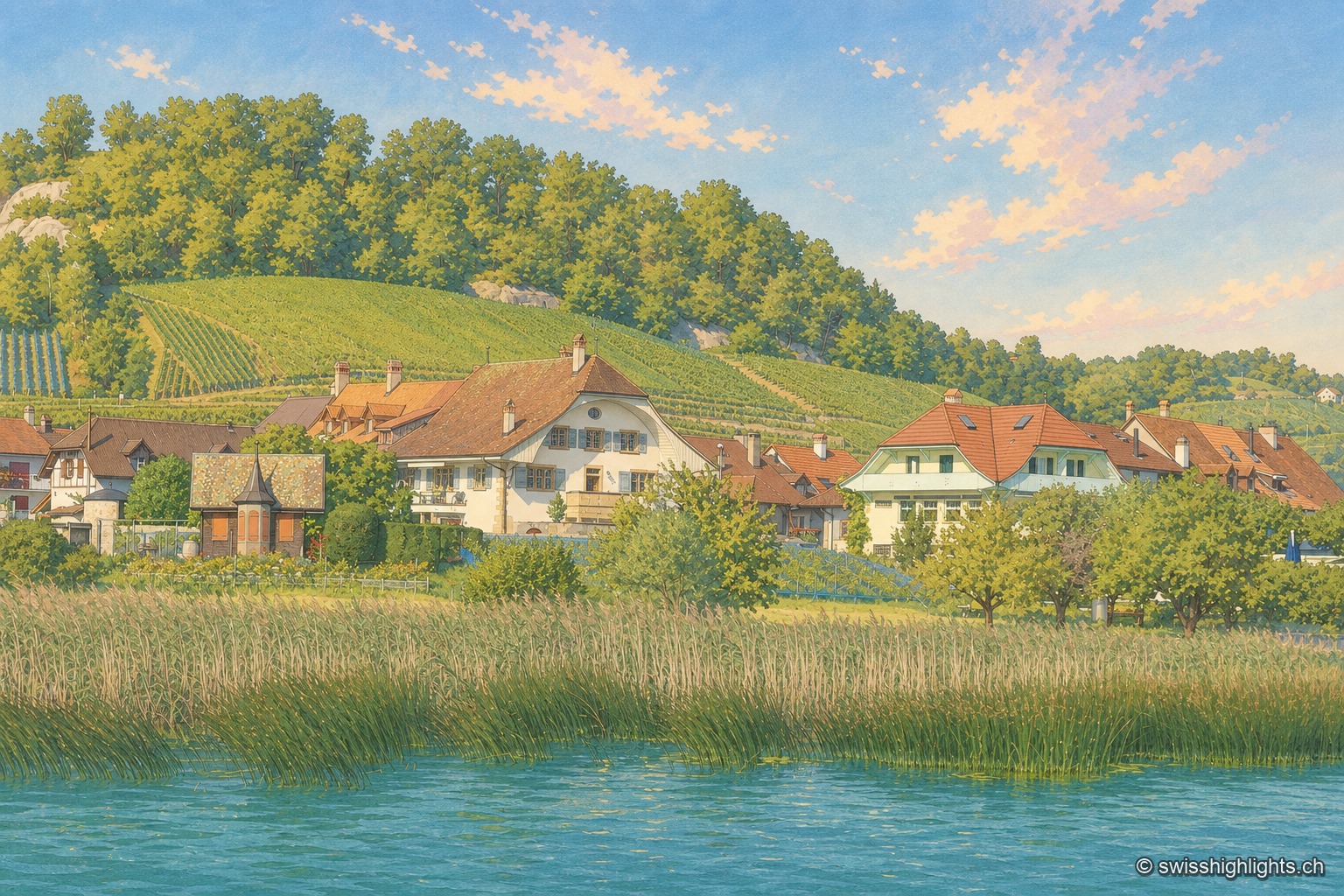
Winegrowing village of the Vully · Fribourg · 9 km as the crow flies
Praz
Praz belonged to the lordship of Morat until 1484. Its patrician winegrowers' houses have earned the site a national heritage listing. Since 1981, the Vully grape harvest festival has been held there every year in late September.
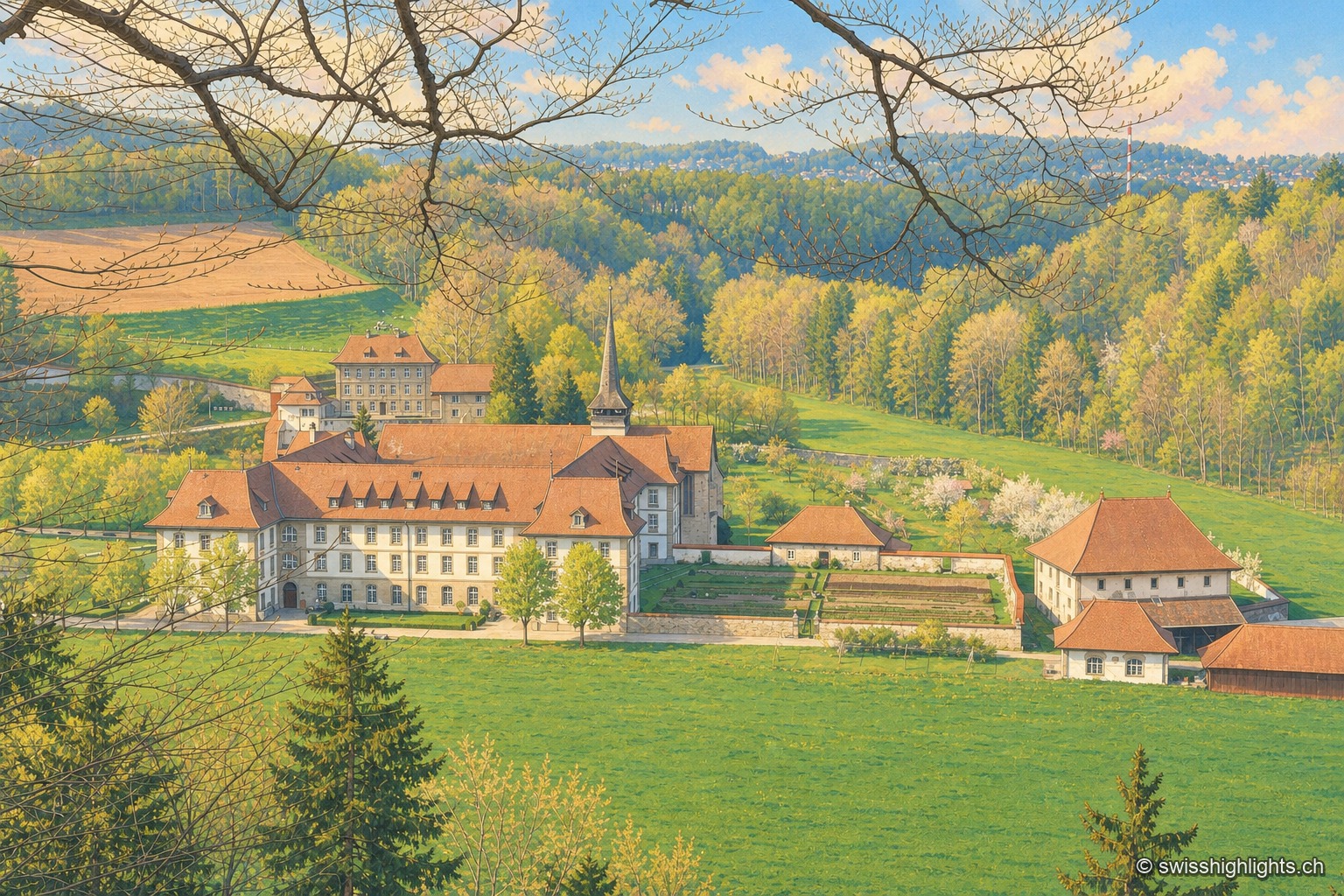
Cistercian abbey · Fribourg · 14 km as the crow flies
Hauterive Abbey
Consecrated on 25 February 1138, suppressed in 1848, repopulated in 1939. Its towerless church, built between 1150 and 1160, has just come through a 2021-2025 restoration and reopened on 4 September 2025.
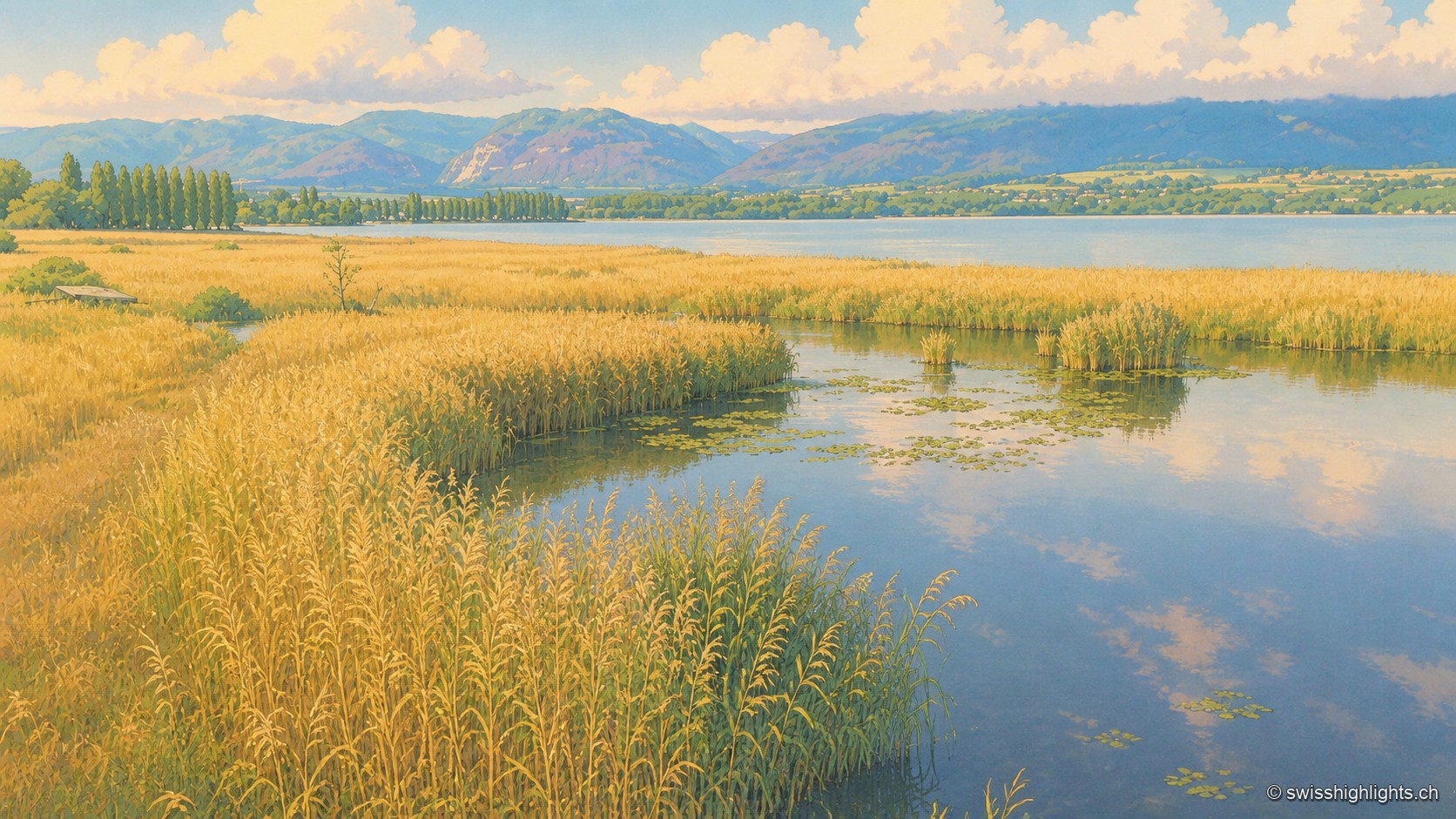
Lakeshore marsh · Lake Neuchâtel · 14 km as the crow flies
Grande Cariçaie
Eight intercantonal nature reserves cover about 3,000 hectares of reedbed, marsh and flooded forest. The landscape only exists because the Jura water correction lowered the lake by 2.7 metres between 1868 and 1891.