Lakeshore, Nobel's factory, anthem
Bauen
A former municipality on Lake Lucerne, Bauen was the birthplace of the composer of the Swiss anthem and hosted a dynamite factory founded by Nobel (1871).
Bauen is a former municipality in the canton of Uri, merged with Seedorf on 1 January 2021, with 165 inhabitants in 2018 across 3.78 square kilometres, a density of 49 people per km2. The village sits on the west shore of Lake Uri, an arm of Lake Lucerne, at the foot of the Bauenstöcke; its territory borders Seelisberg to the north and west, the lake to the east and Isenthal to the south, while the hamlet of Isleten, two kilometres to the south-east, lies on the delta of the Isenthalerbach stream. Its lakeside position and frequent Föhn winds give it an unusually mild climate, in which figs and palm trees grow.
In 1851 Carl Emanuel Müller built a paper mill on the Isleten industrial site. About twenty years later, around 1871, the Swedish chemist Alfred Nobel, founder of the Nobel Prize, joined Karl Müller Jr. to found a dynamite factory there based on nitroglycerin: the eleventh such factory in the world, supplying the Swiss Confederation under an exclusive contract, notably for the Gotthard tunnel works begun in 1872, as well as for the Axen and Urner Oberland tunnels. Employing up to 150 workers during the two world wars, the factory began producing Nobel's own invention, blasting gelatin, from 1875, half again as powerful as dynamite; the village's population peaked at 208 in 1941, at the height of this activity, before falling back. Explosives production at Isleten ended in 2003, after the factory had changed owners twice.
The parish church of St Ida, in neoclassical style, was built between 1808 and 1812; a monument from 1901 honours Father Alberich Zwyssig, composer of the Swiss Psalm, the national anthem, who was born in Bauen in 1808 and died in 1854. The village keeps many wooden houses, including the Oberer Baumgarten house, built in 1678 for councillor Aschwanden. Bauen's coat of arms, used since 1843 for the local shooting range, shows a flaming golden stag's antler on a black field, referring to St Ida of Toggenburg, the church's patron saint.
Why this place is remarkable
Bauen owes its singularity to a rare contrast: a lakeside climate mild enough for figs and palm trees, and, two kilometres away on the delta of the Isenthalerbach, one of the very first dynamite factories in the world, founded around 1871 by Alfred Nobel himself and bound by contract to supply the Gotthard tunnel works. The village is also the birthplace of Father Alberich Zwyssig, composer of the Swiss Psalm, which went on to become the national anthem.
History and origin
On the Isleten industrial site, a paper mill opened in 1851 gave way, around 1871, to a dynamite factory founded by Alfred Nobel and Karl Müller Jr.: the eleventh factory of its kind in the world, it supplied the Swiss Confederation under an exclusive contract, first for the Gotthard tunnel begun in 1872, then for the Axen and Urner Oberland tunnels. From 1875 it also produced Nobel's invention, blasting gelatin. Explosives production there ended only in 2003.
What to do and see
- Observe the particularly mild climate of the lakeshore, where fig trees and palm trees grow thanks to the lakeside position and the foehn wind.
- Spot on the delta of the Isenthalerbach, at Isleten, the site of the former dynamite factory founded around 1871 by Alfred Nobel.
- See the neo-classical Saint Ida church, built between 1808 and 1812, and the 1901 monument dedicated to Father Alberich Zwyssig, composer of the Swiss anthem, born in Bauen.
- Look for the village's wooden houses, including the Oberer Baumgarten house built in 1678.
Coming with family: what to know
- The industrial history linked to Alfred Nobel and the national anthem born here can serve as a thread to interest children in the village.
As a couple
- Enjoy the gentle shore of Lake Lucerne, whose climate is mild enough for fig trees and palm trees.
- Walk to the hamlet of Isleten and its industrial past linked to Alfred Nobel.
- Stop at the Saint Ida church and the monument dedicated to the composer of the Swiss Psalm.
Location
Loads an interactive Google Maps view on demand, from the place's verified coordinates.
The embedded map will be enabled once an authorized Google Maps key is configured. Use the link above in the meantime.
The map could not load. Check your connection or use the link above to open the place in Google Maps.
Related places
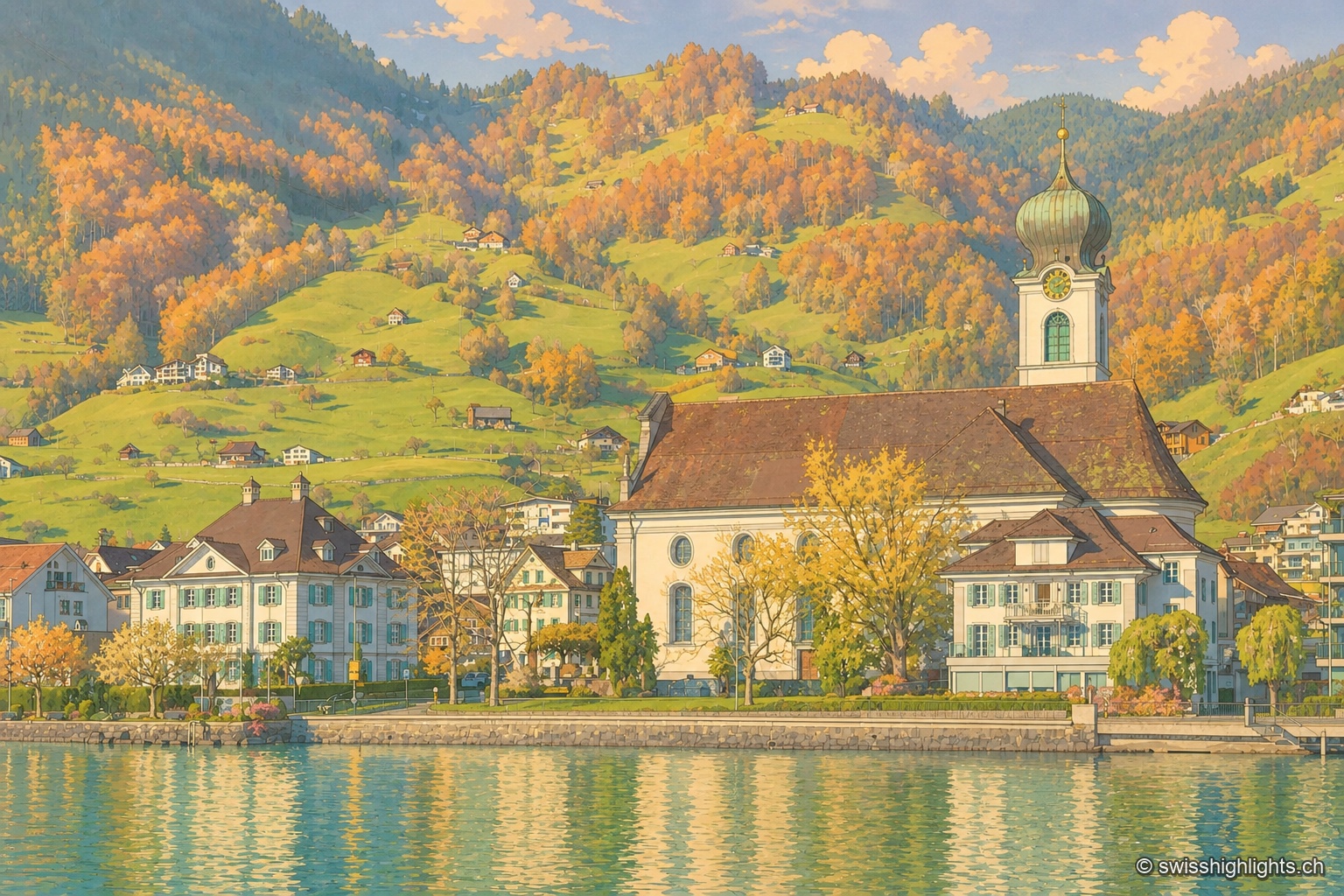
Former republic · Schwyz · 7 km as the crow flies
Gersau
Gersau was a sovereign republic from 1390 to 1817, recognised by Emperor Sigismund in 1433; sheltered by the Rigi on Lake Lucerne, it keeps its mild climate and its church of St Marzellus, attested from 1179.
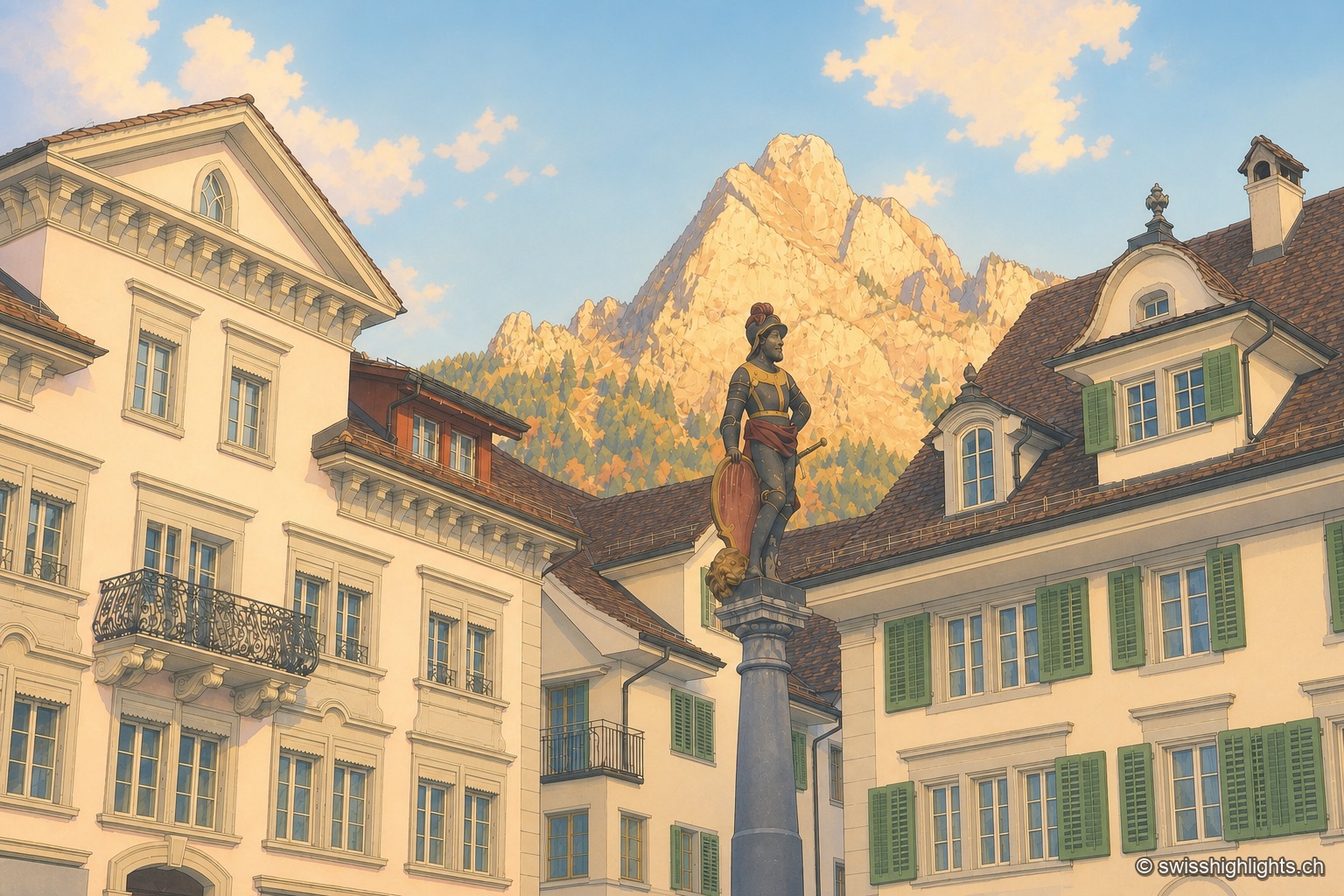
Capital below the Mythen · Schwyz · 11 km as the crow flies
Schwyz
The main square, one of the finest baroque squares in Switzerland, lies at the foot of the Grand Mythen (1899 m) and the Petit Mythen (1811 m). Schwyz has housed the Confederation's earliest archives since 1291.
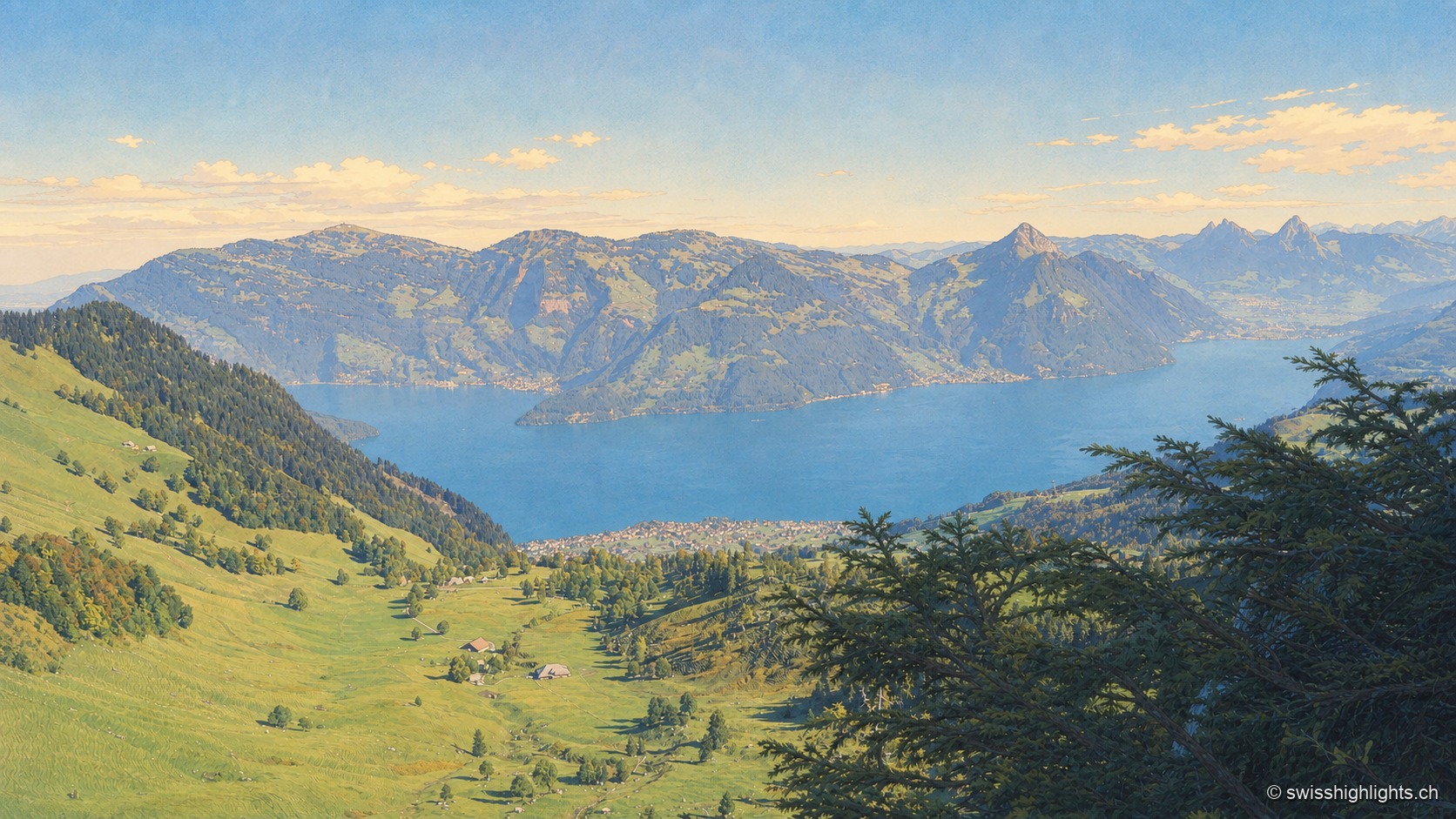
Mountain · Schwyz and Lucerne · 15 km as the crow flies
Rigi
Rigi Kulm stands at 1,797 metres above Lake Lucerne, Lake Zug and Lake Lauerz. The name comes from the bands of rock and grass that ring the summit; the rack railway has climbed it since 1871, the first in Europe.