Old town · Bern
Bern, Old Town
A sandstone old town set in a bend of the Aare, inscribed on the World Heritage List in 1983.
The old town of Bern occupies the bend of a peninsula that the Aare almost entirely encloses. Duke Berthold V of Zähringen founded the city here in 1191; the Cronica de Berno gives that date. The whole has been inscribed on the UNESCO World Heritage List since 1983, under criterion (iii), and ranks among the Swiss cultural properties of national importance. What is protected is not a series of isolated monuments but an entire urban fabric, held together by its continuity as much as by its buildings.
On 14 May 1405 a fire carried the city away. The rebuilding was done in Bern sandstone, the molasse quarried nearby, and from this comes the unity of tone in the centre: façades, arcades and window surrounds all belong to the same material. The date of 1405 therefore marks less a destruction than a change of state — the town of wood became a town of stone, and has remained one. The sandstone still gives the centre its unmistakable colour today.
Three elements organise the reading of this centre. The arcades first: more than six kilometres of covered galleries run along the streets at ground-floor level. Then the fountains, dating from the 16th century, which raise painted allegorical figures in the middle of the roadway. And finally the Zytglogge, whose first function was that of a city gate, rebuilt around 1218-1220 and restored in 1771: its tower, at 540.5 metres above sea level, carries a 16th-century astronomical clock, and its carillon starts three minutes before the hour.
The cathedral, the Münster, was begun in 1421 and work continued until the end of the 16th century; its spire reaches 100 metres. The inscribed perimeter remains modest in size: reference data give 91.86 hectares. At that scale the city can be crossed on foot from end to end, and the interest lies as much in the runs of arcades as in the notable buildings they connect — here the continuity of the built fabric is part of the listed object.
Why this place is remarkable
What distinguishes Bern is the coherence of the whole rather than an accumulation of separate pieces. After the fire of 14 May 1405 the city was rebuilt in a single material, the local sandstone, on a site the Aare closes on almost every side. The result is a centre where more than six kilometres of arcades, 16th-century fountains and a clock tower inherited from a city gate form a continuous fabric: it is this ensemble, and not any single building, that the 1983 inscription recognises under criterion (iii).
History and origin
The history of the place tightens around two dates. In 1191 Duke Berthold V of Zähringen founded the city in the bend of the Aare. On 14 May 1405 a fire carried off the wooden town, and the rebuilding imposed Bern sandstone, fixing the colour of the centre for centuries. Between the two rose the Zytglogge: originally a city gate, rebuilt around 1218-1220, restored in 1771, and fitted in the 16th century with the astronomical clock that gives it its name today.
What to do and see
- Walk beneath the sandstone arcades that run for more than six kilometres at ground level through the centre, up to the Zytglogge.
- Watch the Zytglogge three minutes before the hour, when its carillon and 16th-century astronomical clock spring into motion.
- Spot the painted allegorical fountains from the 16th century standing in the middle of the roadway, on the way to the Münster.
- Follow the line of Bern sandstone from one façade to the next: it is the single material chosen after the fire of 14 May 1405 that gives the centre its colour.
Coming with family: what to know
- The listed centre remains modest (91.86 hectares according to reference data) and can be walked from end to end.
As a couple
- Follow the bend of the Aare that almost entirely encloses the old town, a route made for strolling.
- Look up at the Münster spire, whose construction began in 1421 and stretched to the end of the 16th century, for its 100 metres of height.
- Look under the arcades for the continuity of façades that justified the 1983 World Heritage listing.
Sources disagree on the area of the inscribed perimeter: 91.86 hectares according to reference data, against an infobox figure of 84,684 hectares that is plainly erroneous.
Location
Loads an interactive Google Maps view on demand, from the place's verified coordinates.
The embedded map will be enabled once an authorized Google Maps key is configured. Use the link above in the meantime.
The map could not load. Check your connection or use the link above to open the place in Google Maps.
Related places
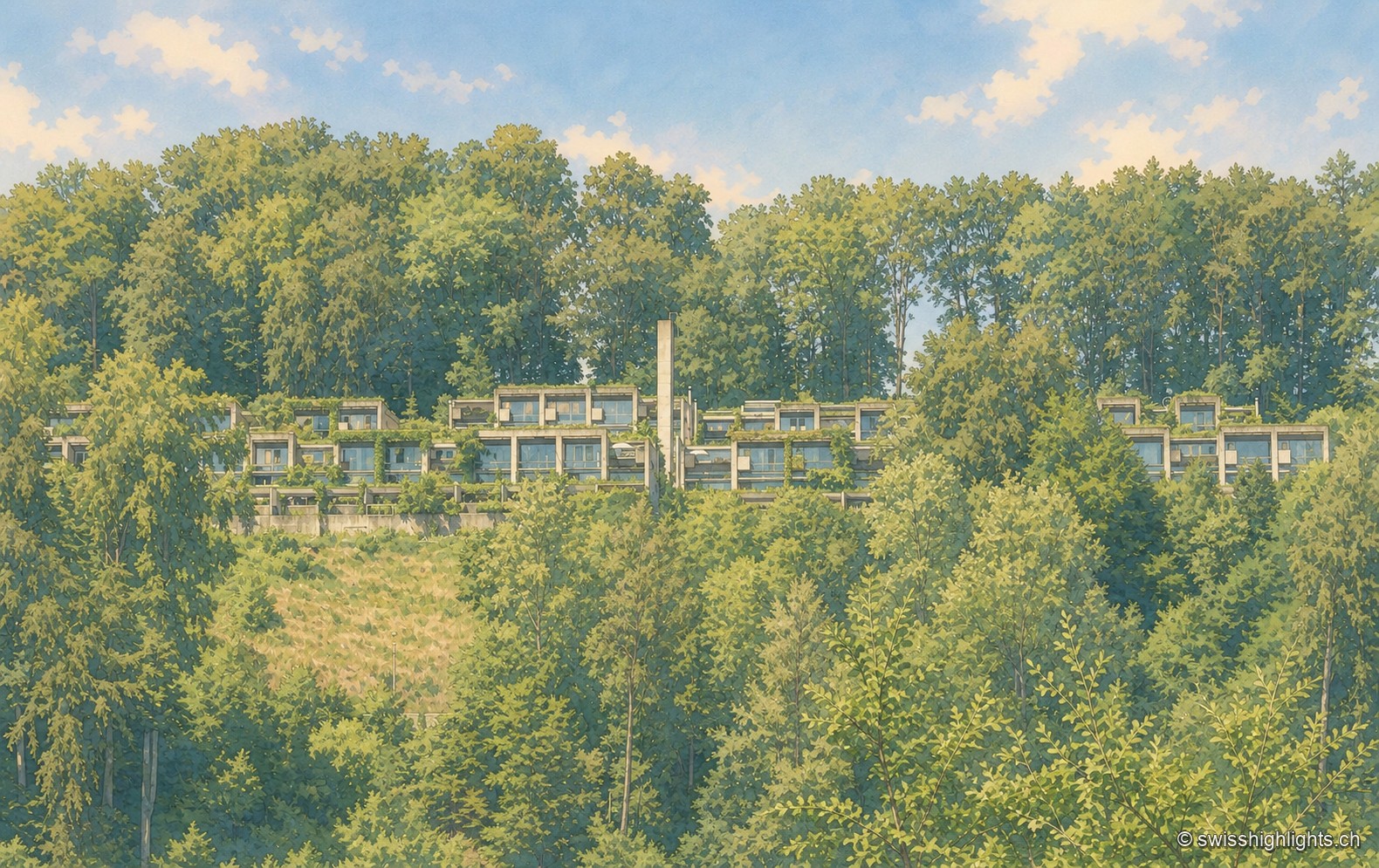
Row-house estate · Bern · 4 km as the crow flies
Halen
78 dwellings and 5 studios in three terraced rows, exposed concrete, gardens closed off by walls: Atelier 5's Siedlung Halen is listed as a cultural property of national significance.
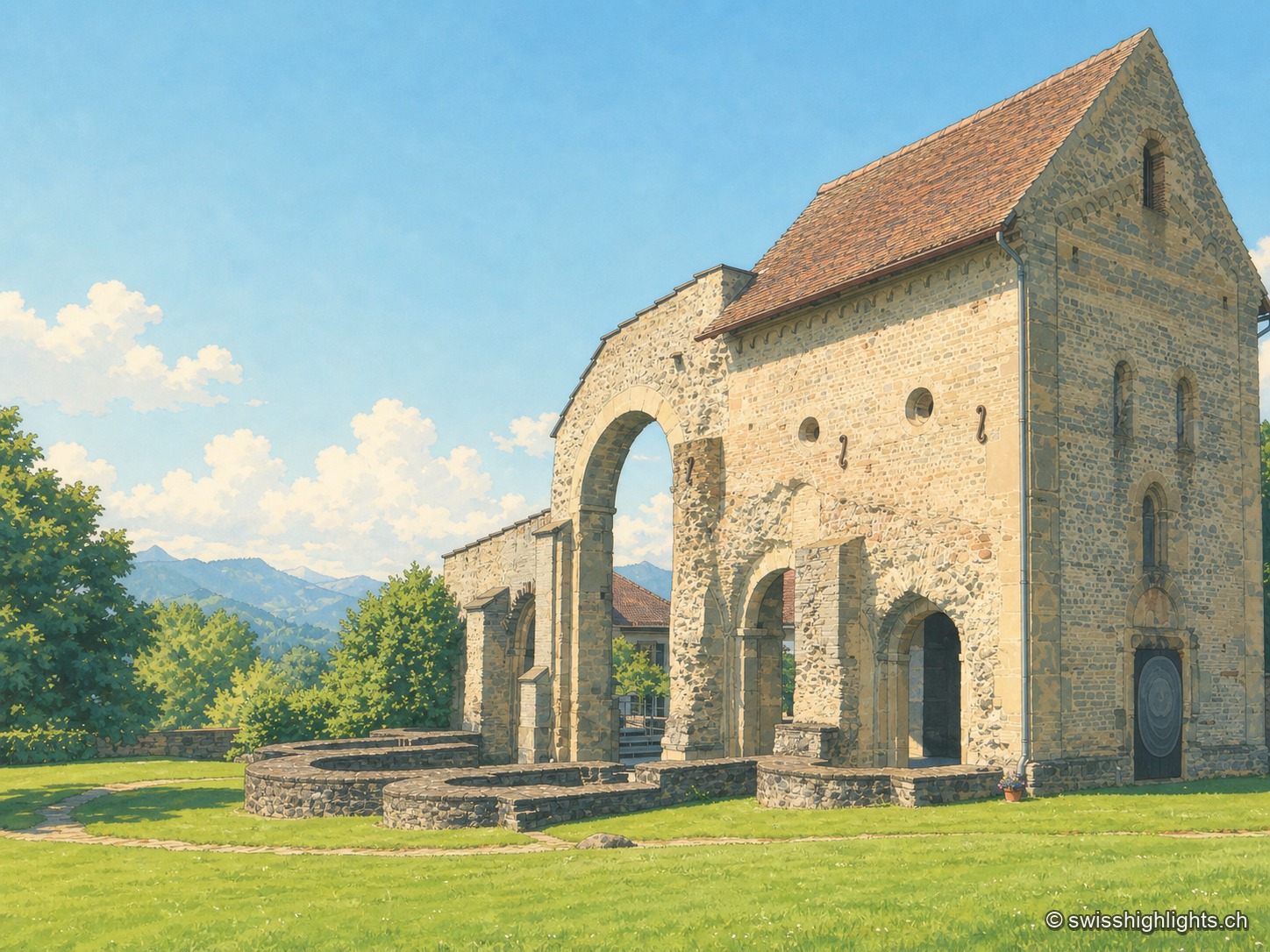
Village and Cluniac priory · Bern · 14 km as the crow flies
Rüeggisberg
Founded around the mid-11th century by two monks sent by Abbot Hugues de Cluny, the priory of Rüeggisberg, attested as early as 1075, was never completed to its planned five-apse design before being suppressed in 1484.
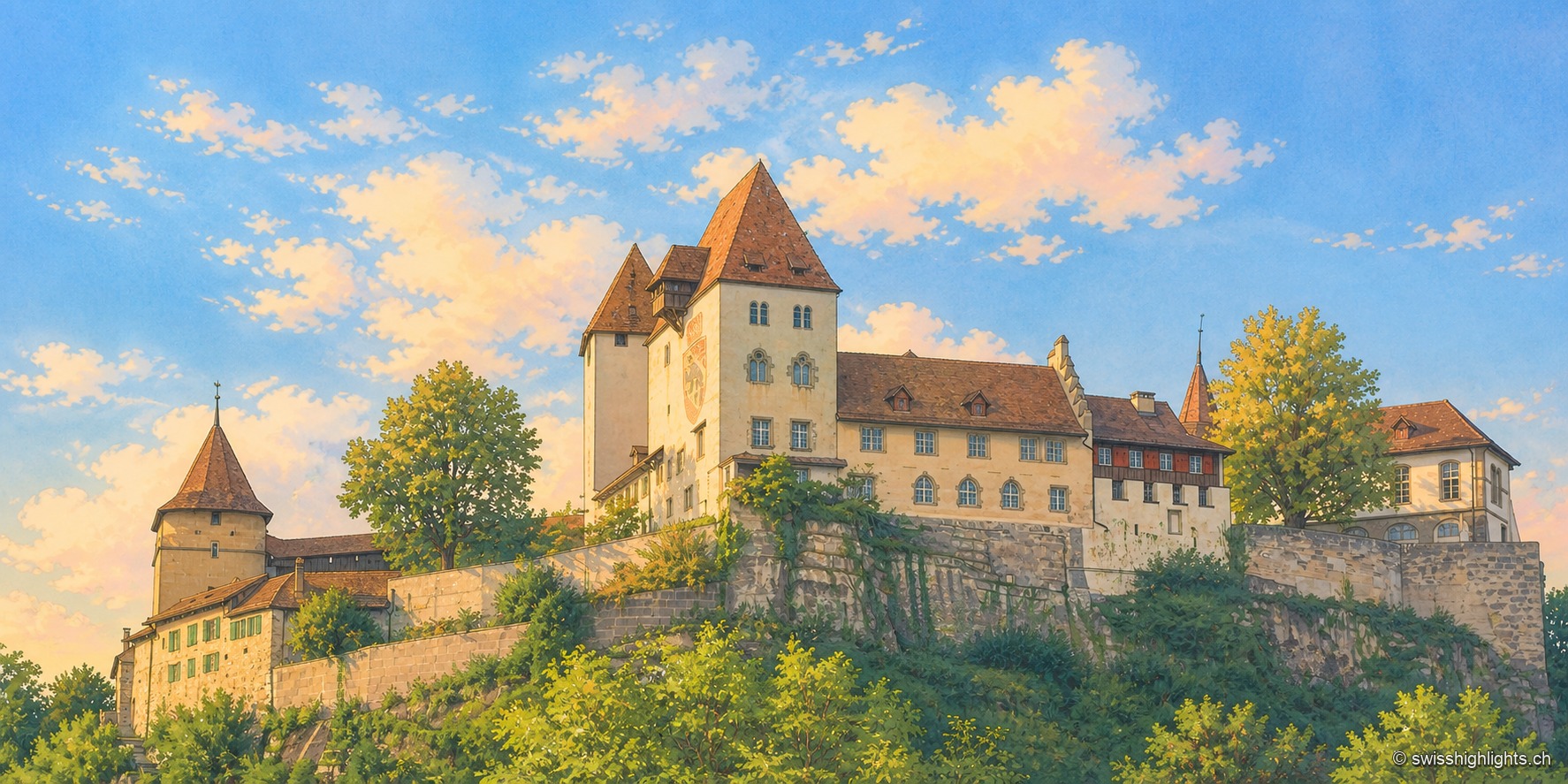
Emmental town · Bern · 18 km as the crow flies
Berthoud (Burgdorf)
The castle holds the sandstone spur above the town; its name appears as early as 1084. In 1273 the Goldene Handfeste set the town's law in writing, in force for five centuries. In 1899 the line to Thun made it a laboratory of electric traction.