Collegiate town · Lucerne
Beromünster
A Lucerne market town grown around a collegiate foundation refounded in 1036, where the first dated book printed in Switzerland was completed in 1470.
Beromünster comes in two distinct parts. The Flecken is the market street, tight between its façades; the Stift, set slightly apart, gathers the church of St Michael and the canons' houses. The town stands at 642 metres, in the upper Wyna valley. It never had walls: its status as a Flecken granted the right to hold a market, not the right to fortify. The church grew out of an early Romanesque building whose proportions can still be read beneath the Gothic and then Baroque campaigns; together with the chapter buildings it forms a Baroque ensemble.
On 10 November 1470, in a workshop set up there by Helias Helye, a canon of the chapter, a 600-page folio was completed: the Mammotrectus of Johannes Marchesinus, a dictionary for reading the Bible. It is the first dated book printed in Switzerland — the qualifier matters, since undated works were already coming off Basel presses before 1468. Helye, who joined the chapter in 1419, died here on 20 March 1475. The collegiate foundation itself had been refounded in 1036 by the counts of Lenzburg, and its school appears in the records from 1226.
On the night of 11 to 12 March 1764 a fire destroyed 86 dwelling and workshop buildings and 6 barns, and left about 360 people without a roof. The centre was rebuilt within four years and has changed little since. The name is far more recent: the commune was called Münster until 1934 and became Beromünster to distinguish it, on radio dials, from Münster in Westphalia. The national transmitter opened on 11 June 1931, extended in 1937 by the Blosenberg tower, broadcast until 31 December 2008, after 77 years.
Why this place is remarkable
Few towns of this size carry two dates of such weight. In 1470 a press installed in a canon's house produced the first dated book printed in Switzerland; in 1931 a medium-wave transmitter settled the country's radio voice here, to the point that the commune changed its name for it in 1934. Between the two, the fire of 1764 rebuilt the Flecken in four years, and it is that plan one still walks.
History and origin
The collegiate church of St Michael was refounded in 1036 by the counts of Lenzburg; its school is mentioned from 1226. Until 1798 the chapter held temporal and spiritual rights of rare density, and Lucerne, which took over the advocacy in 1415 and acquired the Michelsamt territory in 1420, left the provost to govern on the spot. The press of 1470, the fire of 1764 and the rebuilding that followed belong to the same long span.
What to do and see
- Walk along the Flecken, the narrow market street between its façades, then head out to the Stift with St Michael's church and the canons' houses.
- Look for the proportions of the old Romanesque building still legible in the church, beneath its later Gothic and Baroque phases.
- Picture the 1470 workshop where the Mammotrectus was completed, the first dated printed book from Switzerland, a 600-page folio.
- Spot the Blosenberg tower, added in 1937 to the national transmitter that long gave the town its name.
Coming with family: what to know
- The town never had ramparts: its status as a Flecken only gave it the right to hold a market.
As a couple
- Wander through a core rebuilt in four years after the fire on the night of 11 to 12 March 1764, which destroyed 86 houses and 6 barns.
- Compare the village's two cores, the market Flecken and the ecclesiastical Stift, set at 642 metres in the upper Wyna valley.
- As you stroll through the village, tell each other about the 1934 name change, when Münster became Beromünster to stand out on radio dials.
Location
Loads an interactive Google Maps view on demand, from the place's verified coordinates.
The embedded map will be enabled once an authorized Google Maps key is configured. Use the link above in the meantime.
The map could not load. Check your connection or use the link above to open the place in Google Maps.
Related places
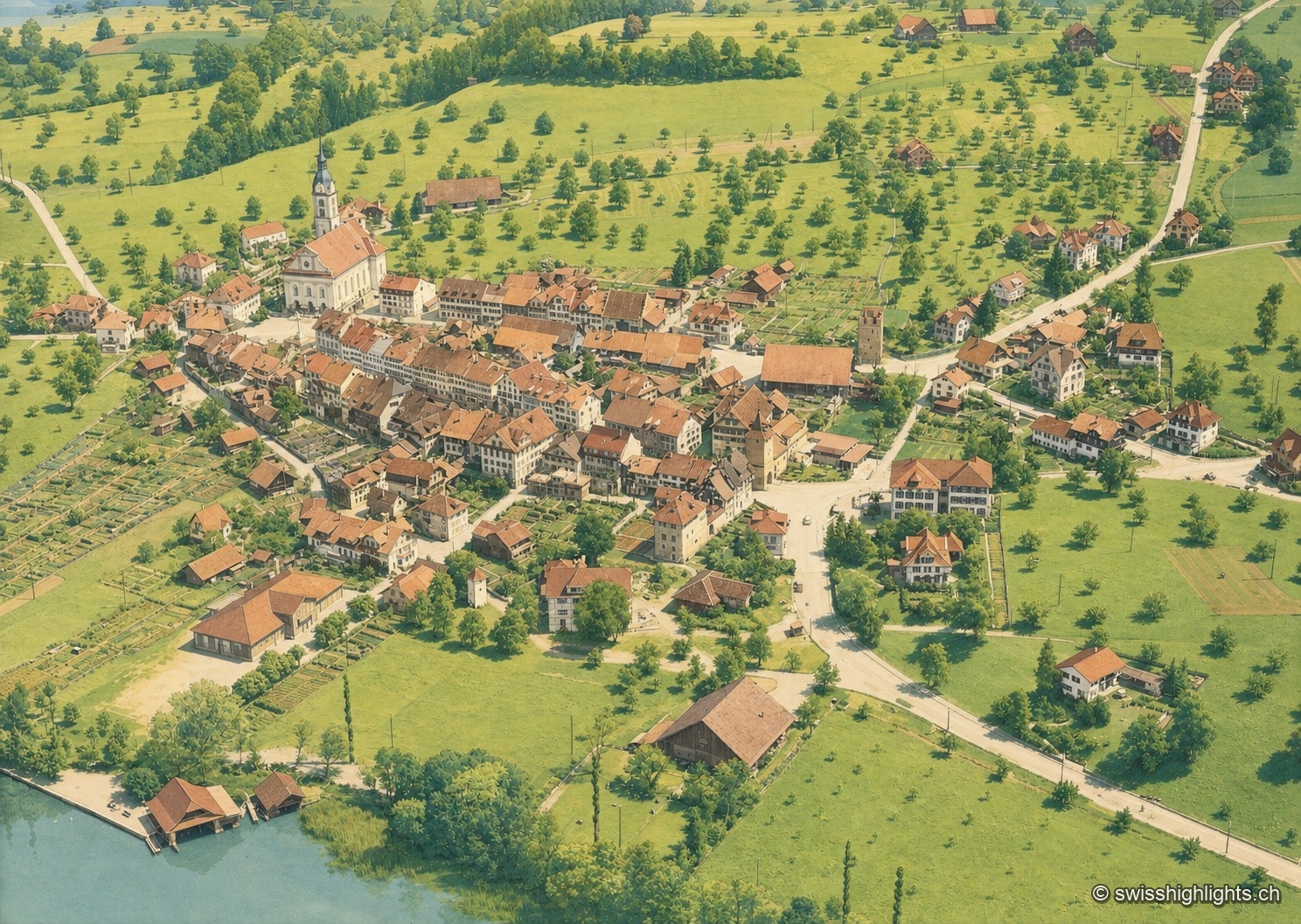
Battle town · Lucerne · 8 km as the crow flies
Sempach
On 9 July 1386, the Battle of Sempach saw the Lucerners and their allies defeat the Habsburgs; the Sempach Pact was signed there in 1393. The town received the Wakker Prize in 2017 for preserving its old town.
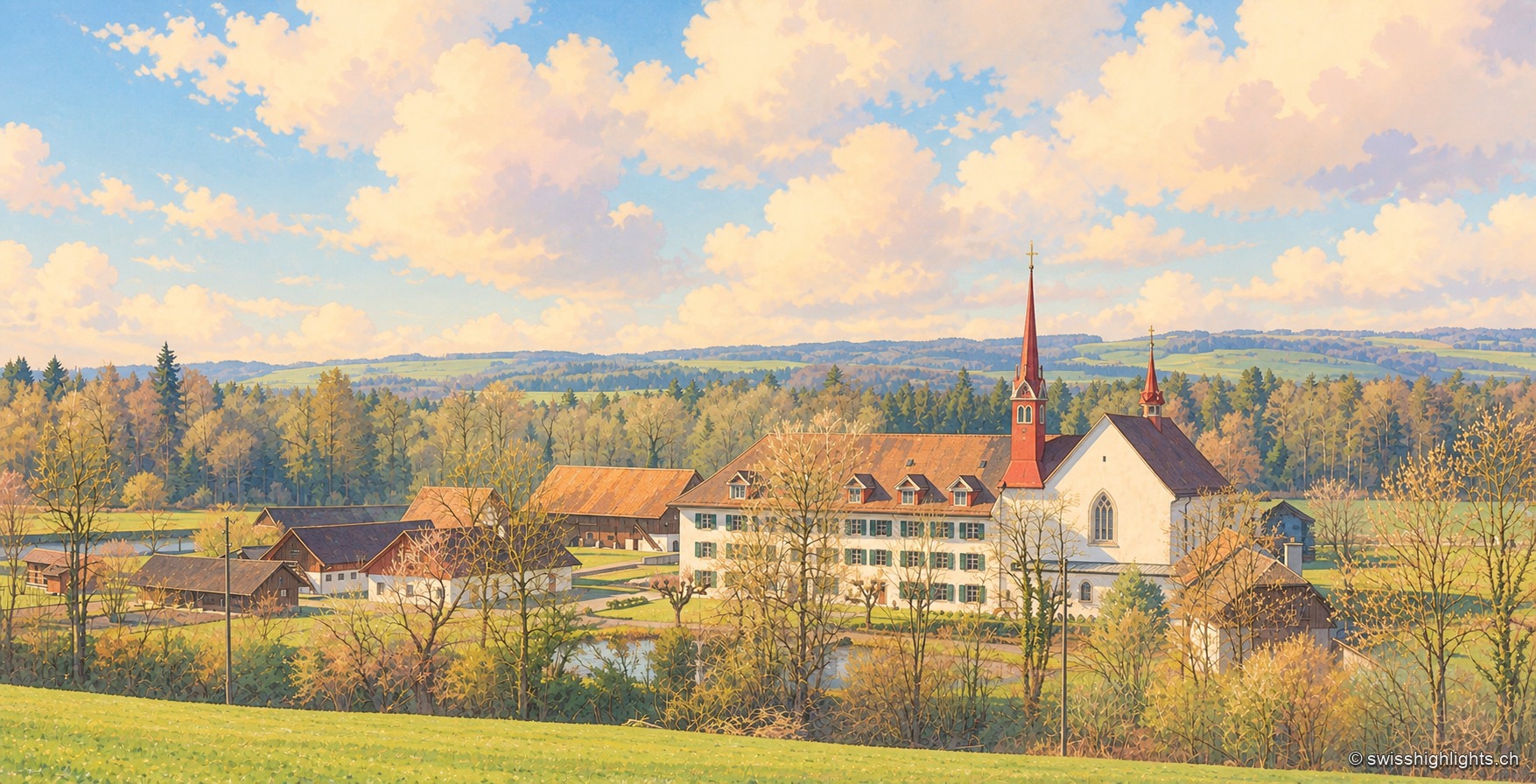
Cistercian abbey · Zug · 17 km as the crow flies
Frauenthal Abbey
Traditionally founded in 1231, with no surviving charter, the abbey went through the 1528 Reformation before being restored by Abbess Anna von Fulach in 1552. Since 2021 it has been a civil-law foundation, still home to a community of nuns.
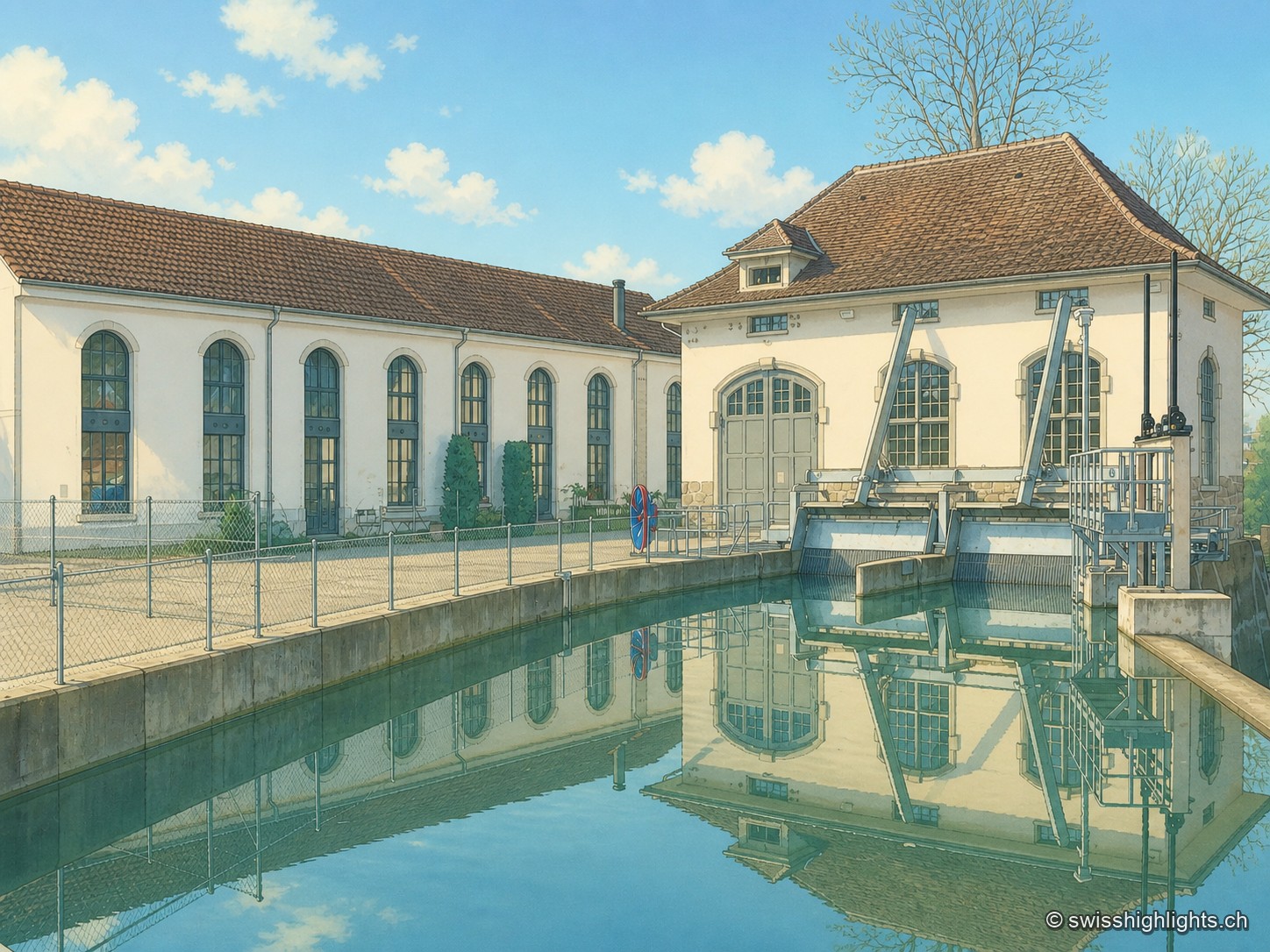
Former mill on the Lorze, ISOS site · 18 km as the crow flies
Lorzenweid industrial site
The complex sits on the Lorze, whose hydraulic power once drove the mill's turbines; the weir of the Hagendorn power station survives on the river, alongside a road bridge and a wooden bridge.