Battle town · Lucerne
Sempach
On the shore of its lake, Sempach keeps the memory of the 1386 battle where the Confederates defeated the Habsburgs, and the Wakker Prize it won in 2017.
On 9 July 1386, not far from the village, the Battle of Sempach saw Lucerne's troops and their Confederate allies defeat those of the Habsburgs. Seven years later, in 1393, the Sempach Pact was signed in the town during the battle's commemoration. The town, set on the shore of the lake bearing its name, today covers 8.91 km², of which 63.7% is farmland, 21.2% is housing and infrastructure, and 14.3% is forest according to the 2013-2018 survey.
The old town preserves several monuments: the Witches' Tower, the Lucerne Gate, the municipal church of St Stephen, the St James memorial chapel, and the town hall. At the Kirchbühl, a wall painting known as the Legend of the Three Living and the Three Dead shows three young noblemen confronted in a cemetery by three dead men, reminding them of life's brevity. In 2017 the heritage association Patrimoine suisse awarded Sempach the Wakker Prize for the care the local authorities took in preserving this heritage.
Sempach is also home to the Swiss Ornithological Institute, set on the lakeshore.
Why this place is remarkable
Sempach owes its renown to a single day, 9 July 1386, when the Confederates defeated the Habsburgs at its gates — the pact sealing that memory was signed there seven years later, in 1393. The 2017 Wakker Prize rewards an old town that has kept trace of this history, from the Witches' Tower to the fresco of the Three Living and the Three Dead.
History and origin
The Battle of Sempach, on 9 July 1386, pitted Habsburg troops against the Lucerners and their Confederate allies, who prevailed. The Sempach Pact was signed in the town in 1393, during the battle's commemoration. The old town, whose fresco of the Three Living and the Three Dead adorns the Kirchbühl, received the Patrimoine suisse Wakker Prize in 2017.
What to do and see
- Spot in the old town the Witches' Tower, the Lucerne Gate, St Stephen's Church and the town hall, witnesses to the reconstruction that won an award in 2017.
- Look at the Kirchbühl for the fresco of the Legend of the Three Living and the Three Dead, where three young noblemen meet three dead men in a cemetery.
- Make the link between the Saint-Jacques memorial chapel and the battle of 9 July 1386, where the Lucernese and their Confederate allies defeated the Habsburgs.
- Pass by the Swiss Ornithological Institute set on the shore of Lake Sempach.
As a couple
- Stroll through the old town, rebuilt between the 15th and 20th centuries, around the Witches' Tower and the town hall.
- Stop in front of the fresco of the Legend of the Three Living and the Three Dead at the Kirchbühl, a rare scene to observe together.
- Follow the shore of Lake Sempach to the Swiss Ornithological Institute.
- As you pass the Chapel of St. James, tell each other about the Sempach Pact signed in the town in 1393.
Location
Loads an interactive Google Maps view on demand, from the place's verified coordinates.
The embedded map will be enabled once an authorized Google Maps key is configured. Use the link above in the meantime.
The map could not load. Check your connection or use the link above to open the place in Google Maps.
Related places
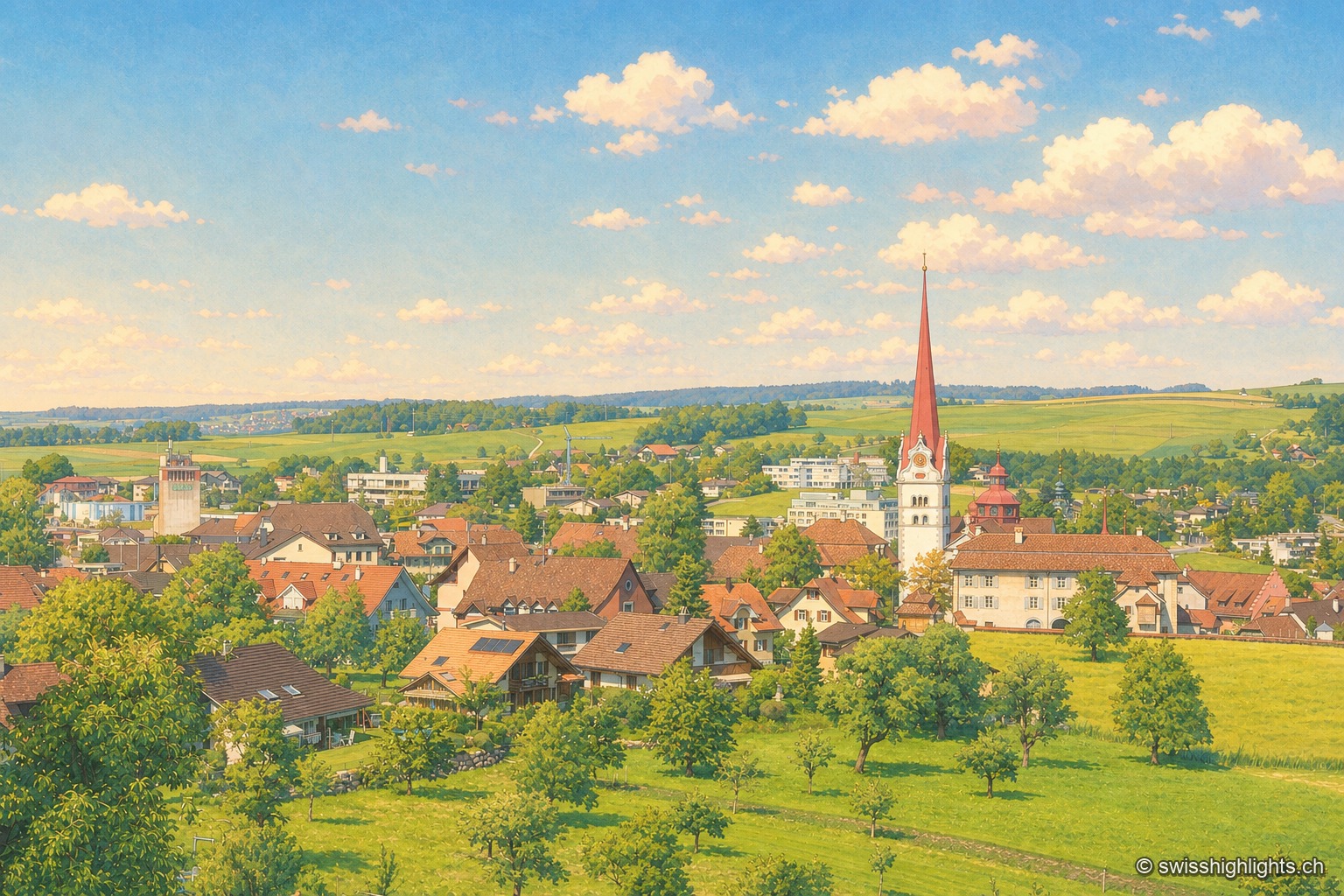
Collegiate town · Lucerne · 8 km as the crow flies
Beromünster
Two centres, the market Flecken and the canons' Stift, at 642 metres. Helias Helye finished the first dated book printed in Switzerland here on 10 November 1470; the transmitter that gave the place its present name fell silent in 2008.
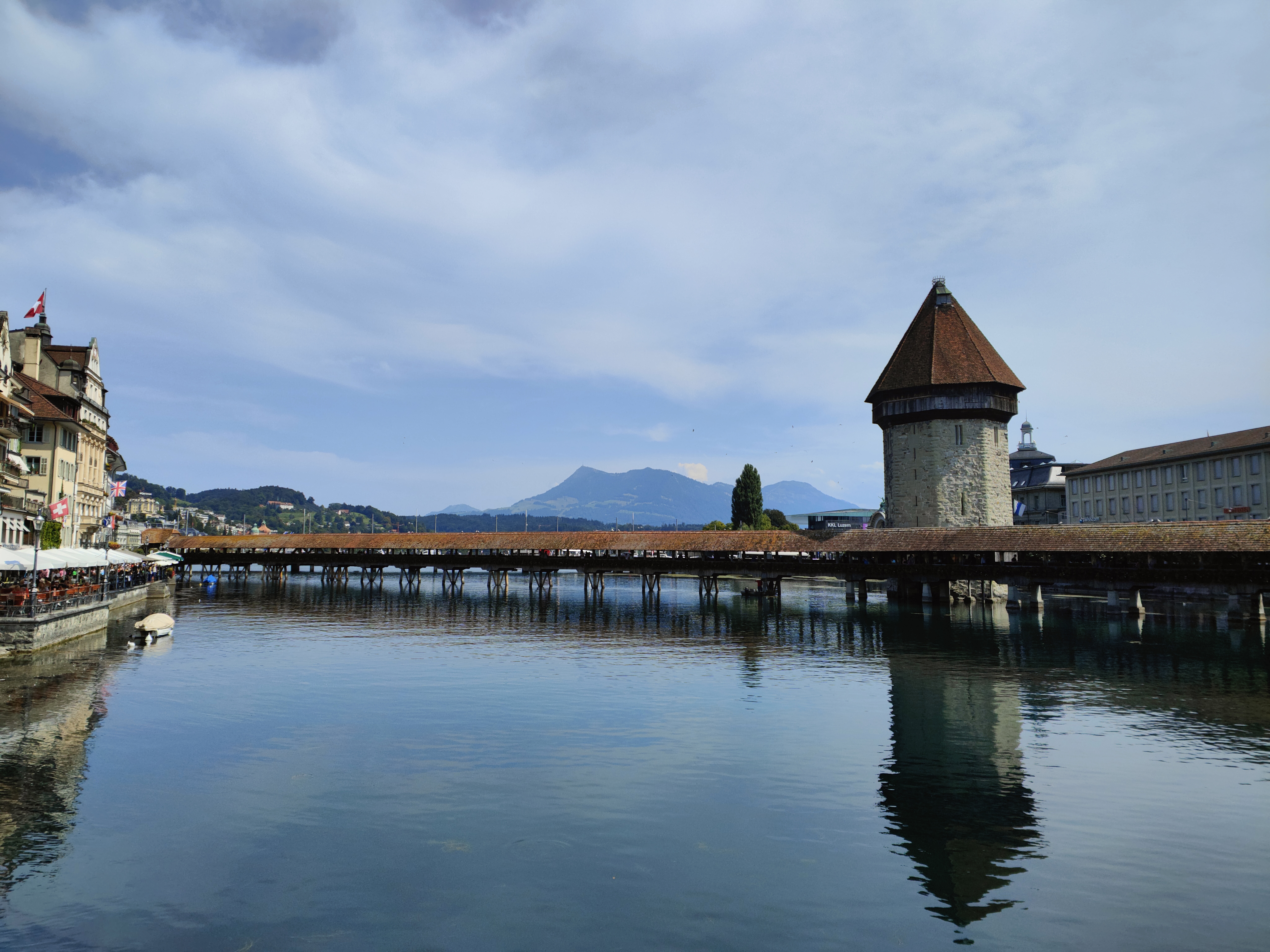
Old town and covered bridge · Lucerne · 12 km as the crow flies
Lucerne, old town and Kapellbrücke
It joined the Confederation in 1332, before any other town; along the Reuss, Lucerne lines up a wooden bridge of 1333, an octagonal water tower older than the bridge, and 870 metres of curtain wall with nine towers.
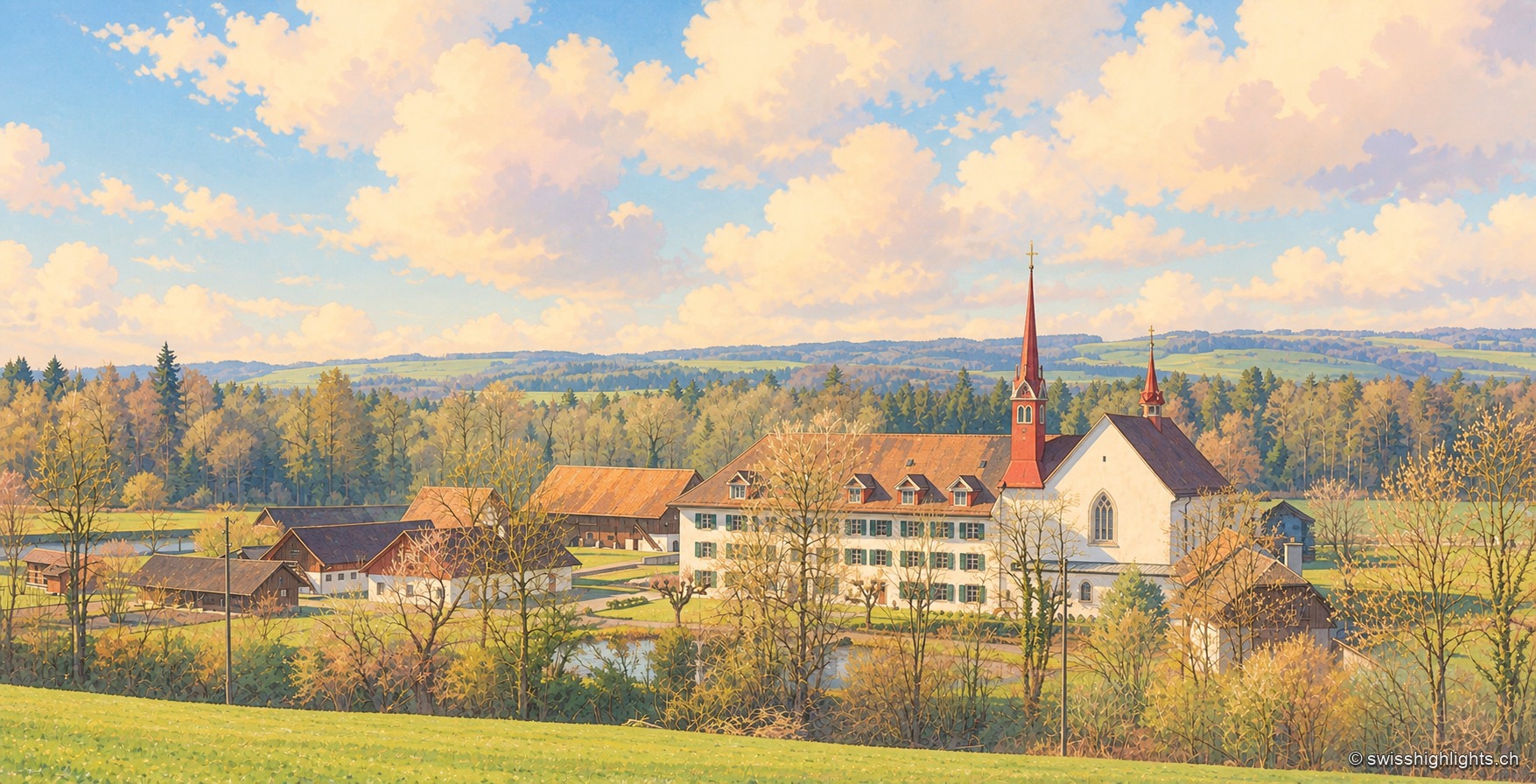
Cistercian abbey · Zug · 20 km as the crow flies
Frauenthal Abbey
Traditionally founded in 1231, with no surviving charter, the abbey went through the 1528 Reformation before being restored by Abbess Anna von Fulach in 1552. Since 2021 it has been a civil-law foundation, still home to a community of nuns.