Medieval castle · Vaud
Chillon Castle
A Savoyard stronghold built on a rock in Lake Geneva, later a Bernese bailiwick and then property of the canton of Vaud.
Chillon stands on a limestone rock dropping into Lake Geneva, at an altitude of 376 metres, in the municipality of Veytaux between Villeneuve and Montreux. The buildings follow the shape of the islet and leave almost none of it free: about a hundred metres long by some fifty wide, the consulted sources differing slightly on these figures. The rock was occupied early. The castle is documented by a charter of 1150, but archaeological survey dates its foundations to the 11th century, and the foundation that runs the site reports a presence as far back as the Bronze Age.
Its present appearance is owed largely to the House of Savoy. In the 1250s and 1260s, Peter II had windows cut and the residential quarters reworked; the master mason Jacques de Saint-Georges stayed on site in 1273. The wall paintings of the Camera Domini were executed from 1341 to 1343, and Amadeus VIII led a last major building campaign between 1436 and 1450. The castle was therefore not built in one go: it accumulates layers, and one changes century in moving from one room to the next.
In March 1536 the Bernese took Chillon after a siege of some weeks; the exact date varies by source, the 18th or the 29th. A long Bernese period followed, during which the castle served as the bailiffs' residence, arsenal and prison for about two hundred and sixty years, until the bailiffs left in 1733. In January 1798 the Vaudois militias occupied it, the independence of the Vaud country was proclaimed on the 24th of that month, and the canton joined the Confederation in 1803. Chillon today belongs to the State of Vaud and is run by the Fondation du Château de Chillon.
Part of the site's fame rests on a prisoner and a poet. François Bonivard, held captive by the Savoyards, owed his release to the Bernese in 1536; in June 1816 Byron visited the underground chambers and drew from them The Prisoner of Chillon. The prison closed in 1894, excavations ran from 1896 to 1903, and the collections, assembled since 1888, number beyond three hundred pieces. Attendance has been counted since 1896, when 34,242 admissions were recorded; it reached 431,946 visitors in 2019 and exceeded 391,000 in 2023 — figures that place it, according to the encyclopedic sources consulted, first among Swiss historic monuments.
Why this place is remarkable
Few Swiss castles let so clear a stratification be read: the Savoyard campaigns of the 13th to 15th centuries, two and a half centuries of Bernese administration and the status of cantonal monument are superimposed on a single rock, and the wall paintings of 1341-1343 survive there.
History and origin
Charter of 1150 under Count Humbert III of Savoy; foundations dated to the 11th century by archaeology, occupation of the rock attested from the Bronze Age. Building campaign of Peter II of Savoy in the 1250s and 1260s, stay of the master mason Jacques de Saint-Georges in 1273, Camera Domini paintings from 1341 to 1343, works of Amadeus VIII from 1436 to 1450. Bernese conquest in March 1536 (the 18th or the 29th depending on the source), departure of the bailiffs in 1733, Vaudois occupation in January 1798, independence proclaimed on the 24th of that month. Prison closed in 1894, archaeological excavations from 1896 to 1903. The castle is a Swiss cultural property of national significance.
What to do and see
- Trace, room by room, the layers of construction: the 1150 charter, Peter II of Savoy's building campaign in the 1250s-1260s, and Amadeus VIII's works between 1436 and 1450.
- Look for the wall paintings of the Camera Domini, executed from 1341 to 1343, one of the castle's few surviving medieval decorative schemes.
- Descend into the dungeons where François Bonivard was held prisoner, and which Byron visited in June 1816 before writing The Prisoner of Chillon.
- Observe how the building follows the limestone rock that plunges into Lake Geneva, between Villeneuve and Montreux.
Coming with family: what to know
- The route mixes vaulted rooms, staircases and dungeons across several levels, to be adapted to how comfortable the youngest visitors are.
As a couple
- Follow the thread of two and a half centuries of Bernese administration, from the conquest of March 1536 to the departure of the bailiffs in 1733.
- Enjoy the isolated rock on Lake Geneva, a setting Byron made famous in 1816.
- Compare the 13th-century Savoyard rooms with the later work of Amadeus VIII.
Location
Loads an interactive Google Maps view on demand, from the place's verified coordinates.
The embedded map will be enabled once an authorized Google Maps key is configured. Use the link above in the meantime.
The map could not load. Check your connection or use the link above to open the place in Google Maps.
Related places
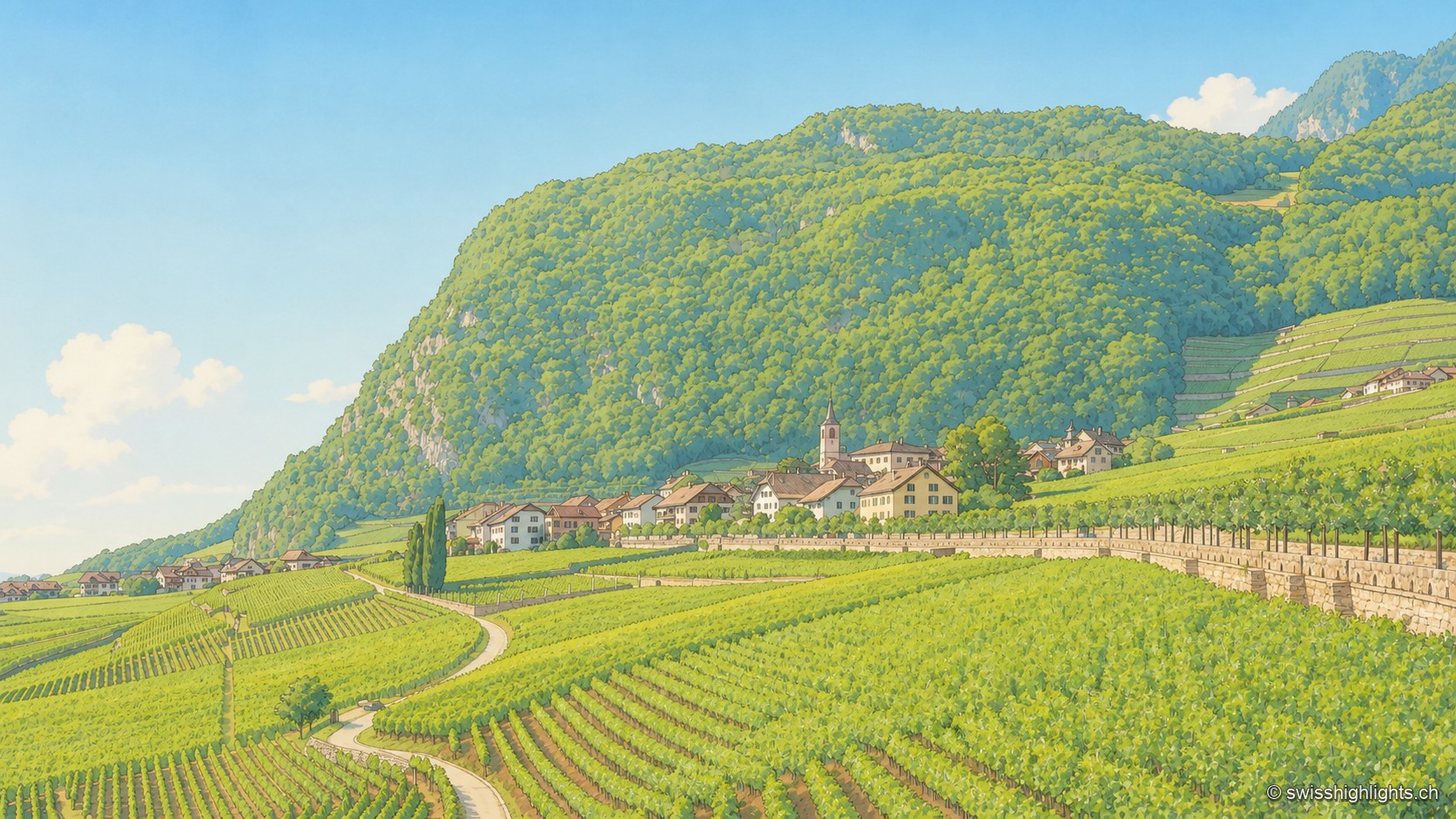
Wine village · Vaud · 9 km as the crow flies
Yvorne
A rockslide destroyed the village in 1584; rebuilt further east from 1607, it planted its vines on the rubble. The Truchefardel quarry, active from the 17th century to 1921, supplied the marble for Lausanne's town hall in 1674.
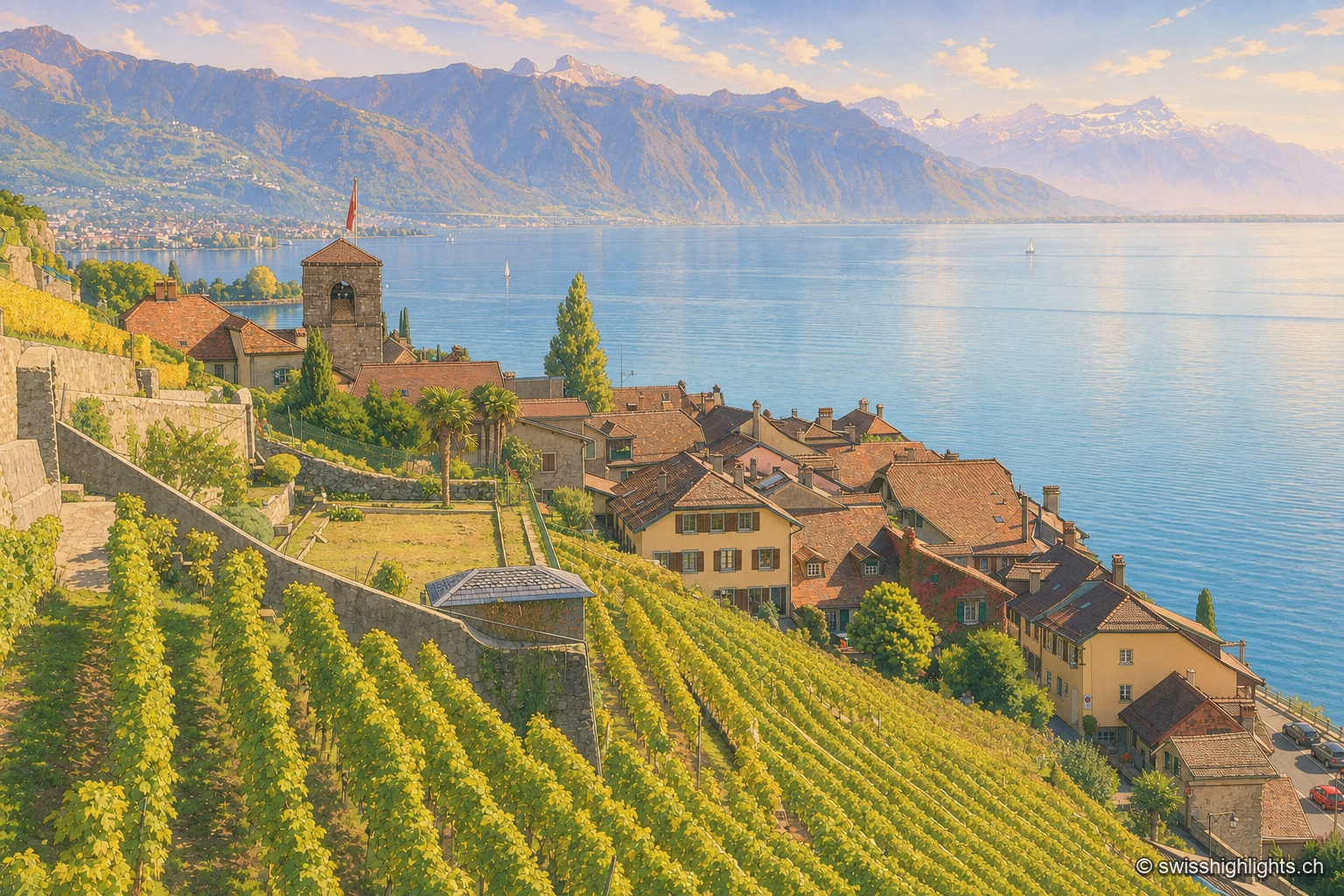
Wine village · Vaud · 11 km as the crow flies
Saint-Saphorin
The original village, at the water's edge, was destroyed by the Tauredunum landslide in 563. Rebuilt higher up, it gathered around a church raised between 1517 and 1521, whose floor still covers Roman remains.
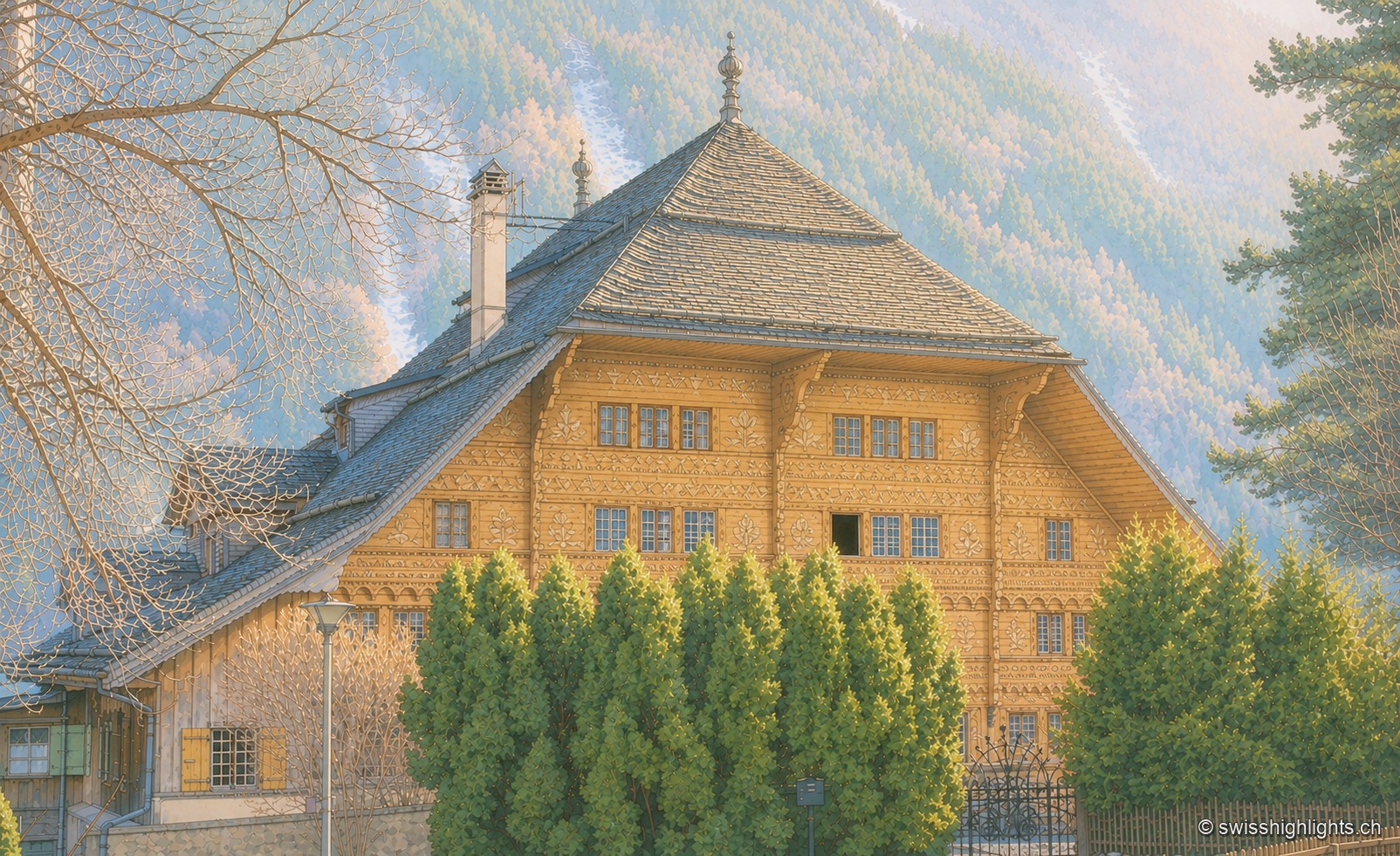
Village in the Pays-d'Enhaut · Vaud · 13 km as the crow flies
Rossinière
The Grand Chalet, 113 windows built for David Henchoz between 1752 and 1756, housed the painter Balthus until his death in 2001. Rossinière has 499 residents at the end of 2024; its population grew 4.1% since 2010, against 18.6% in Vaud.