Village in the Pays-d'Enhaut · Vaud
Rossinière
A Vaud village in the Pays-d'Enhaut where the largest wooden house in the Alps housed the painter Balthus from 1977 until his death in 2001.
Rossinière covers 23.36 km² in the Riviera-Pays-d'Enhaut district, at 920 m elevation. The 2013-2018 survey records 37.5% farmland, 50.3% woodland, 3.0% built-up and infrastructure, and 9.1% unproductive land. Lake Vernex lies within the municipal territory, as does the La Tine gorge, which marks the border with canton Fribourg. The village is served by a station on the Montreux–Bernese Oberland (MOB) line.
The first written record of the name, Ransonery, dates from 1115; its origin and meaning remain uncertain. In the Vaud patois the commune is called La Rochenaïrè, and its old German name is Russeneiri or Russeneire. Its inhabitants are nicknamed the Pétolets or Pétolais — pétoles meaning goat droppings in Vaud patois — or else the Crosérais, lè Crozalye, lè Craoja-Tsun and the Traîne-Lien.
Rossinière had 499 residents on 31 December 2024, for a density of 21 people per km². Between 2010 and 2023 its population grew by 4.1%, against 18.6% for the canton of Vaud as a whole and 9.4% for Switzerland.
Why this place is remarkable
Rossinière's largest building was never a manor but a wooden cheese store built in the 1750s — before housing, two centuries later, one of the most acclaimed painters of the 20th century until his death in 2001. The village also carries, in Vaud patois, nicknames evoking goat droppings and treasure hunters, and served as the setting for the film La Symphonie pastorale.
History and origin
The Grand Chalet of Rossinière was built from 1752 to 1756 for and by David Henchoz, originally to store and mature cheese; its 113 windows make it the largest wooden house in the Alps. The painter Balthus lived there from 1977 until his death in 2001.
What to do and see
- See the Grand Chalet of Rossinière, built between 1752 and 1756 as a wooden cheese dairy and now the largest wooden house in the Alps with its 113 windows.
- Recall that the painter Balthus lived there from 1977 until his death in 2001.
- Spot Lake Vernex and the La Tine gorge, which marks the border with Fribourg, on the commune's territory.
Coming with family: what to know
- The Grand Chalet is visited as a historic building, with no particular indication of family access in the available data.
As a couple
- Look, while walking through the village, for the setting used for the film La Symphonie pastorale.
- Enjoy the local nicknames in Vaudois patois, les Pétolets or les Crosérais, before seeing the Grand Chalet.
- Combine the visit to the chalet with a stop by Lake Vernex, nearby.
Location
Loads an interactive Google Maps view on demand, from the place's verified coordinates.
The embedded map will be enabled once an authorized Google Maps key is configured. Use the link above in the meantime.
The map could not load. Check your connection or use the link above to open the place in Google Maps.
Related places
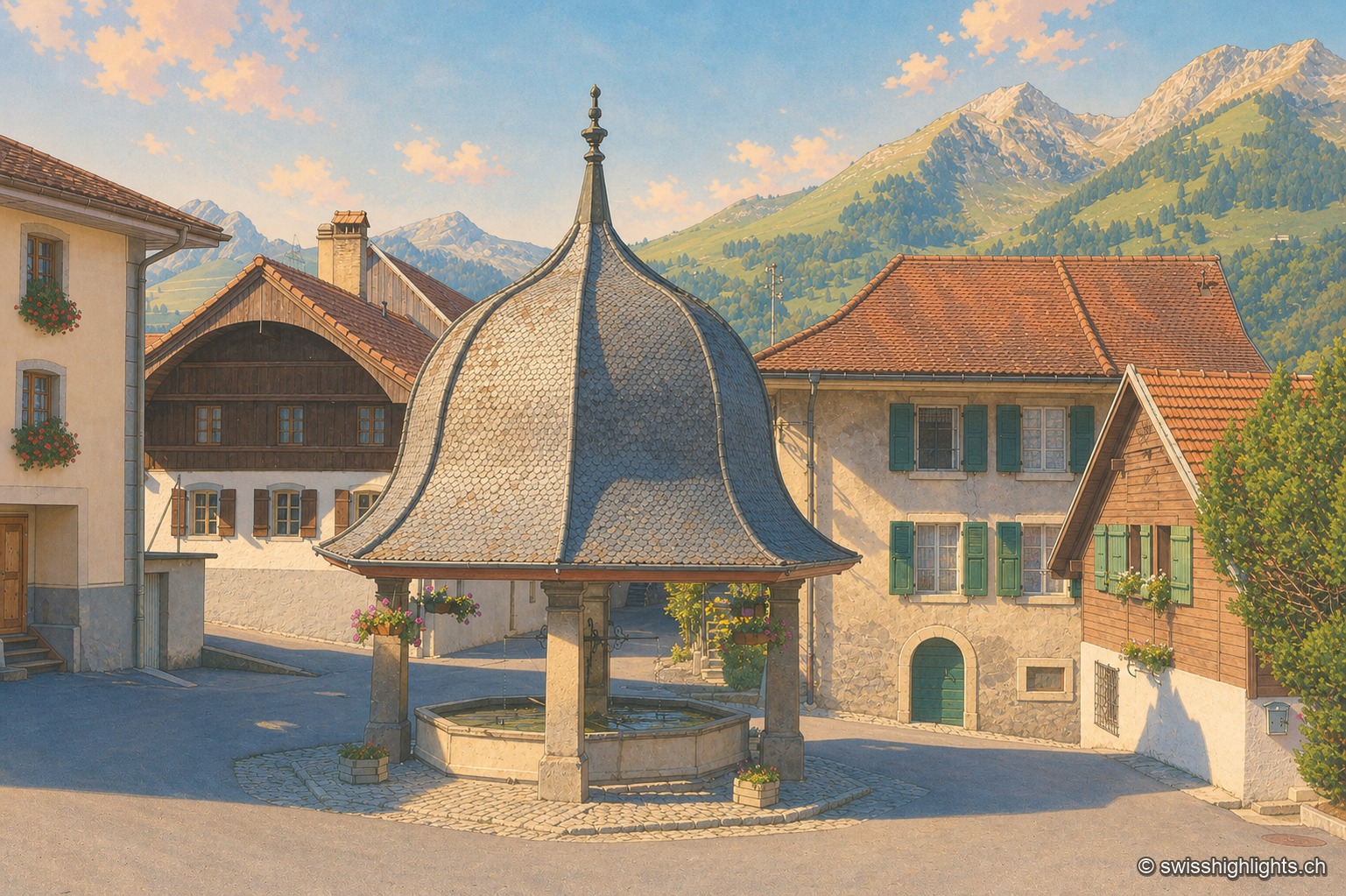
Gruyère village · Fribourg · 5 km as the crow flies
Lessoc
Recorded from 1115, Lessoc broke away from the parish of Grandvillard only in 1643. Its church and its octagonal fountain of 1796 are built of the grey-white limestone veined with green quarried on the spot, the Lessoc 'marble'.
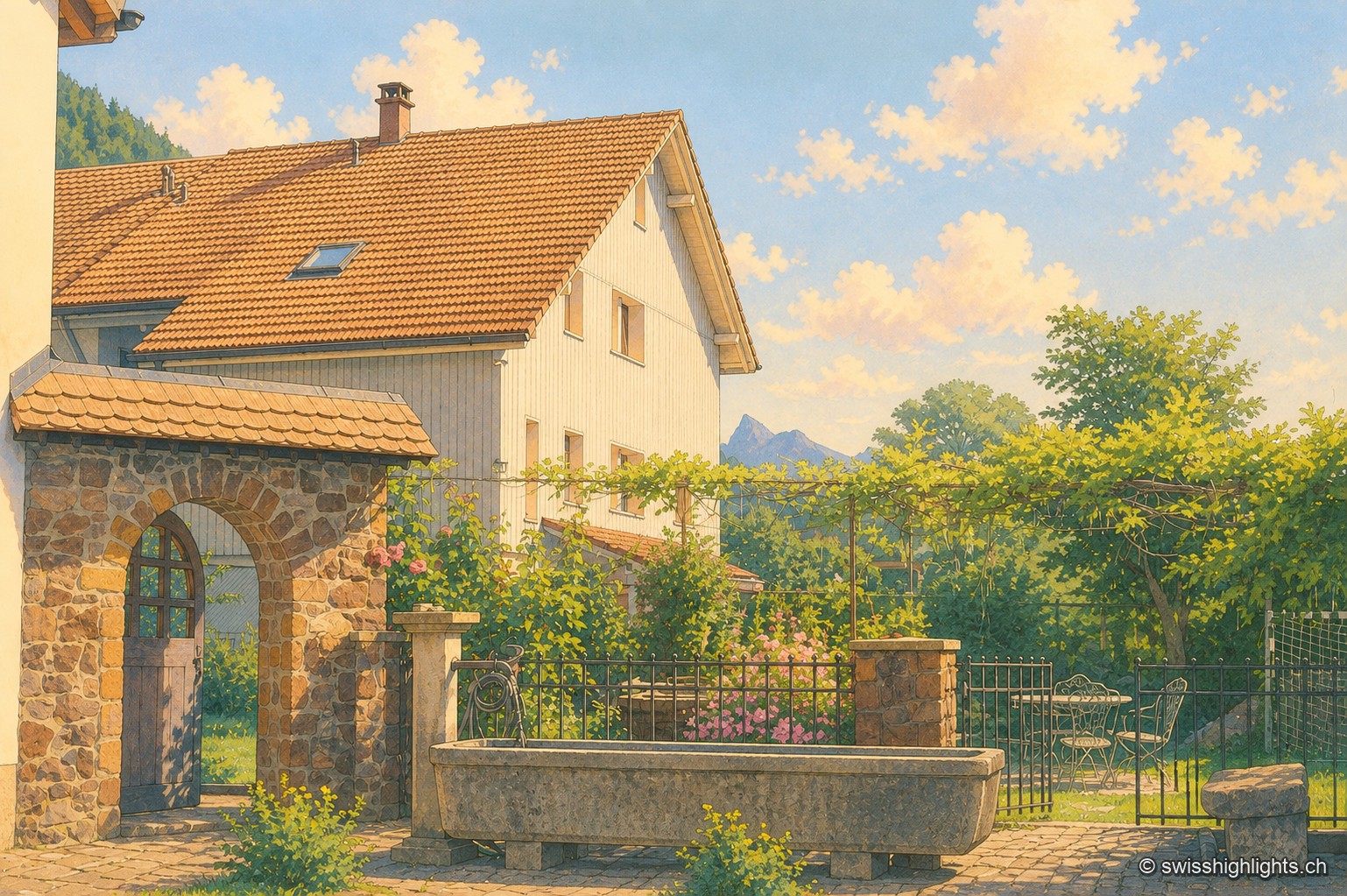
Listed village · Gruyère · 7 km as the crow flies
Grandvillard
Freed from mainmorte in 1388, the commune obtained its charter of liberties in 1439. The present church was consecrated in 1603, the bridge over the Sarine built in 1641. Since 2019, among the Most Beautiful Villages of Switzerland.
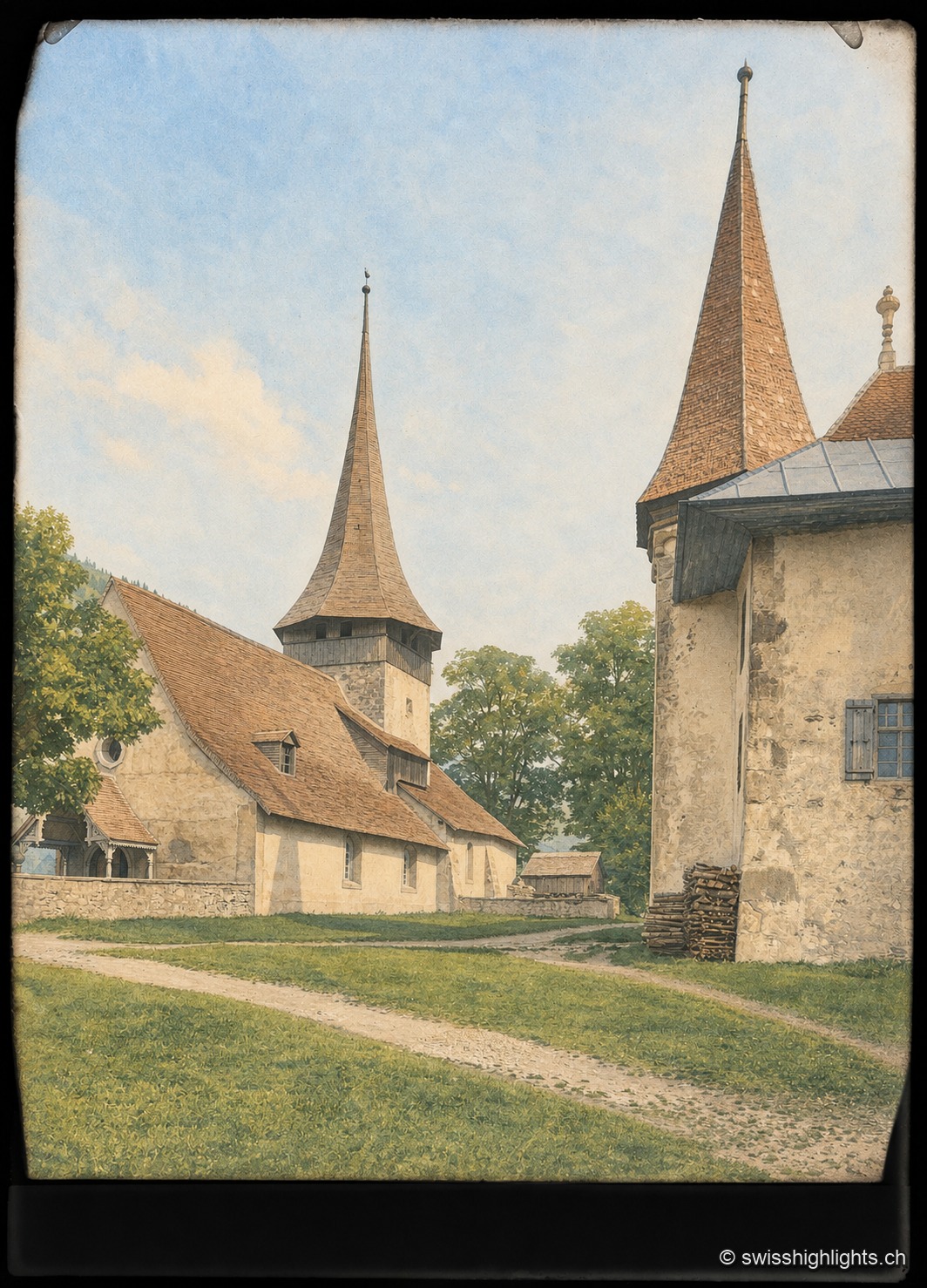
Pays-d'Enhaut village · Vaud · 10 km as the crow flies
Rougemont
Founded around 1073-1085 around a Cluniac priory, Rougemont keeps an 11th-century Romanesque church and chalets with carved façades; a member since 2017 of the Most Beautiful Villages of Switzerland.