Modernist estate · Geneva
Cité du Lignon
A single building 1,065 metres long, folded into a broken line above a meander of the Rhône: the longest residential block in Switzerland.
The Cité du Lignon comes down to a single gesture: one continuous building, folded into a broken line 1,065 metres long, set on the edge of the plateau above a meander of the Rhône, in the commune of Vernier. It is the longest residential block in Switzerland; you walk along it as you would a street, past its 84 stairwells and the three bus stops that had to be installed for this one building. Two towers stand with it, the taller reaching 91 metres.
The whole thing came out of a public decision. In 1962 the State of Geneva set aside the 280,000 m² of the Lignon farm estate to build one of the largest housing schemes in the canton. Work began in September 1963; the first stage, 1,846 flats, was finished in September 1967, and a second brought the total to 2,780 dwellings in 1971. Under the architect Georges Addor, the teams cast the walls in sheet-steel formwork and had heating, plumbing and ventilation delivered ready-assembled.
What still strikes the visitor is the decision about the ground. By folding the whole programme into one continuous volume, the designers built on only 8% of the estate's surface; the rest went to lawns, trees and the wooded slope running down to the Rhône and to the Grebattes stream. Every flat runs through the building, open on both sides. The estate is listed in the Federal Inventory of Swiss Heritage Sites of National Importance.
Why this place is remarkable
A building a kilometre long asks a question few neighbourhoods put so plainly: what do you do with the ground you have not built on? At the Lignon the answer comes down to one figure — 8% coverage for 2,780 dwellings — and can be checked on foot, between the lawns and the trees, all the way to the slope above the Rhône. The estate's continuous plan has been studied by architects who came from as far away as Japan.
History and origin
The farm estate was first called Gourbattes, then Grebattes, after the stream that crosses it; in 1791 Francis d'Ivernois bought it and renamed it Lignon, after the small river in the Forez that flows through Honoré d'Urfé's L'Astrée. The estate itself belongs to another moment entirely: in the late 1950s the Geneva law on the development of urban agglomerations opened the countryside to schemes sized for tens of thousands of inhabitants, and Georges Addor took part in that planning before building several of them. The Lignon was designed for 10,000 people; it housed 6,800 in 2010.
What to do and see
- Walk the length of the 1,065-metre main block, the longest in Switzerland, folded into a broken line above the Rhône's meander.
- Observe the two towers that accompany the ensemble, the taller of which reaches 91 metres.
- Note that only 8% of the estate's surface is built up, the rest given over to lawns, trees and the wooded slope toward the Rhône.
As a couple
- Follow on foot the wooded slope that descends from the estate toward the Rhône and the Nant des Grebattes.
- Compare, while walking along the 84 pathways, the scale of the continuous building with that of the surrounding lawns.
- Observe the broken line of the building from the plateau overlooking the river's meander.
The estate is first of all a lived-in neighbourhood: its 2,780 dwellings, courtyards and stairwells are living space, not a site laid out for visitors.
The estate is first of all a lived-in neighbourhood, with its 2,780 dwellings, courtyards and pathways: these are living spaces, not a developed visitor site, to be walked through with discretion.
Location
Loads an interactive Google Maps view on demand, from the place's verified coordinates.
The embedded map will be enabled once an authorized Google Maps key is configured. Use the link above in the meantime.
The map could not load. Check your connection or use the link above to open the place in Google Maps.
Related places
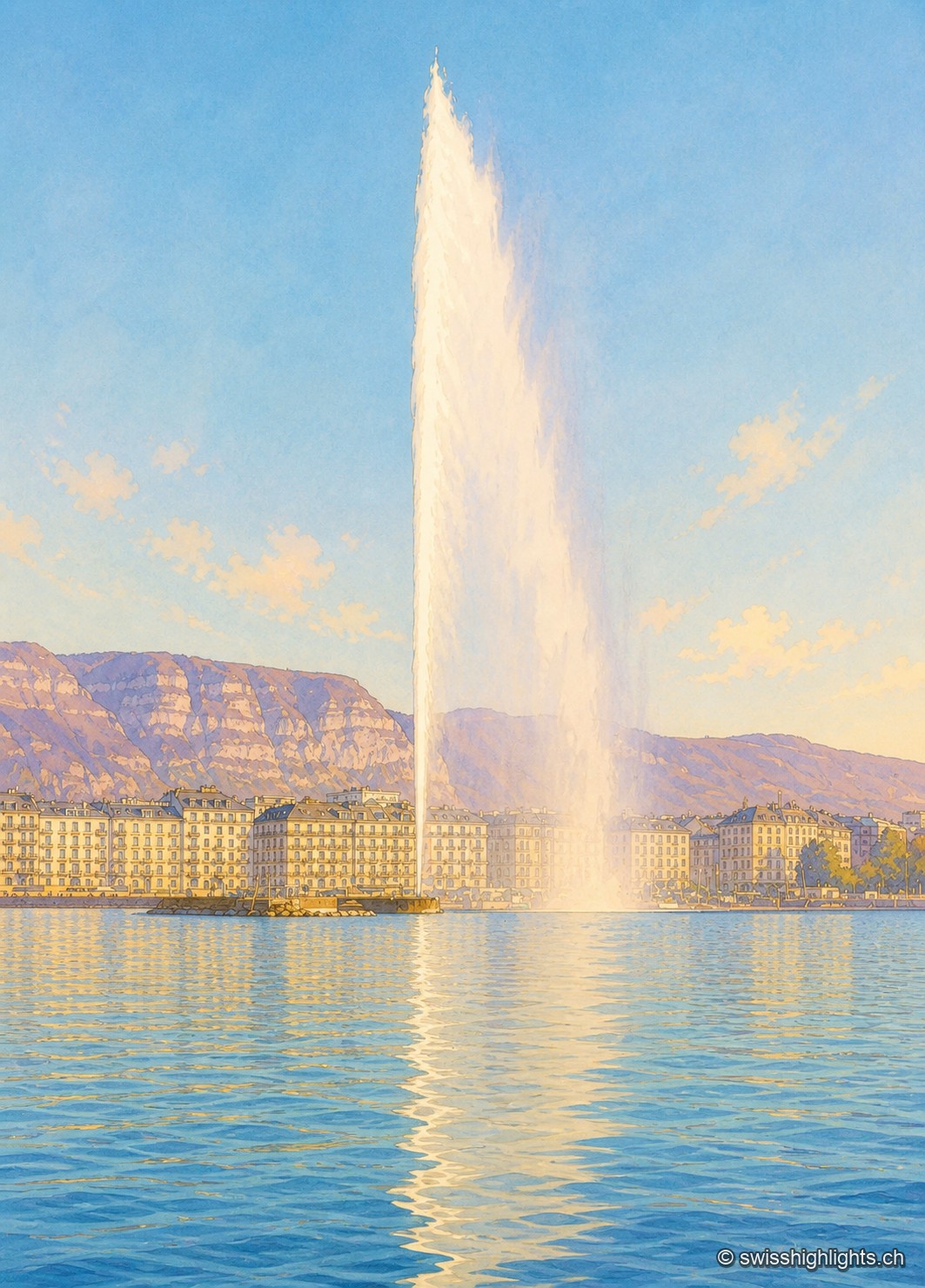
City · Canton of Geneva · 4 km as the crow flies
Geneva
The commune covers 15.93 km² and counted 203,856 inhabitants; the cross-border conurbation around it holds 1,053,436. Since 1891 the Jet d'Eau has thrown its column 140 metres above the bay.
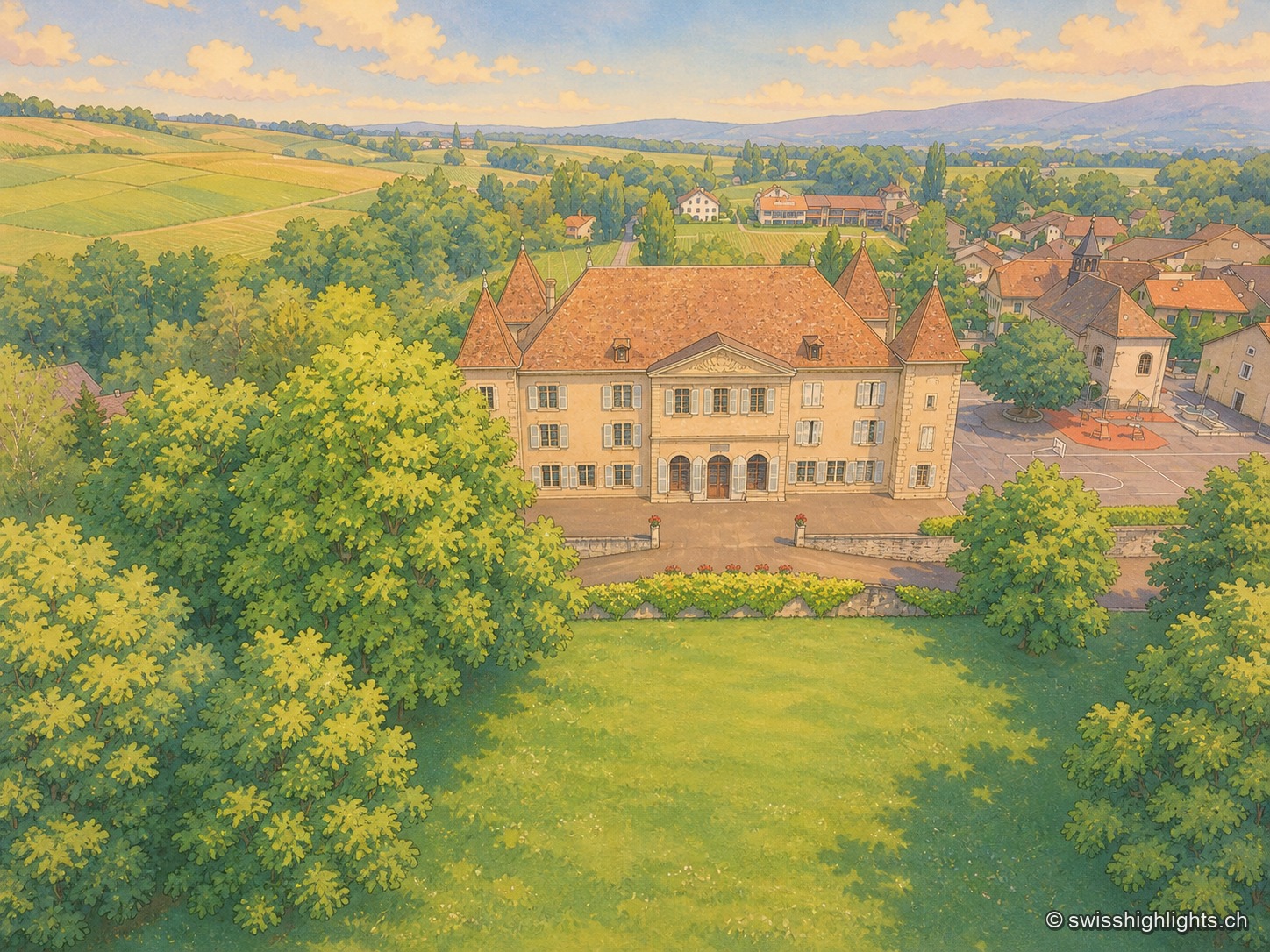
Wine-growing village · Geneva · 8 km as the crow flies
Dardagny
The largest château in the canton of Geneva, rebuilt by the banker Jean Vasserot in 1723, holds the centre of the village; in 1978 the Wakker Prize honoured the conservation of the site, a member since 2021 of the Most Beautiful Villages of Switzerland.
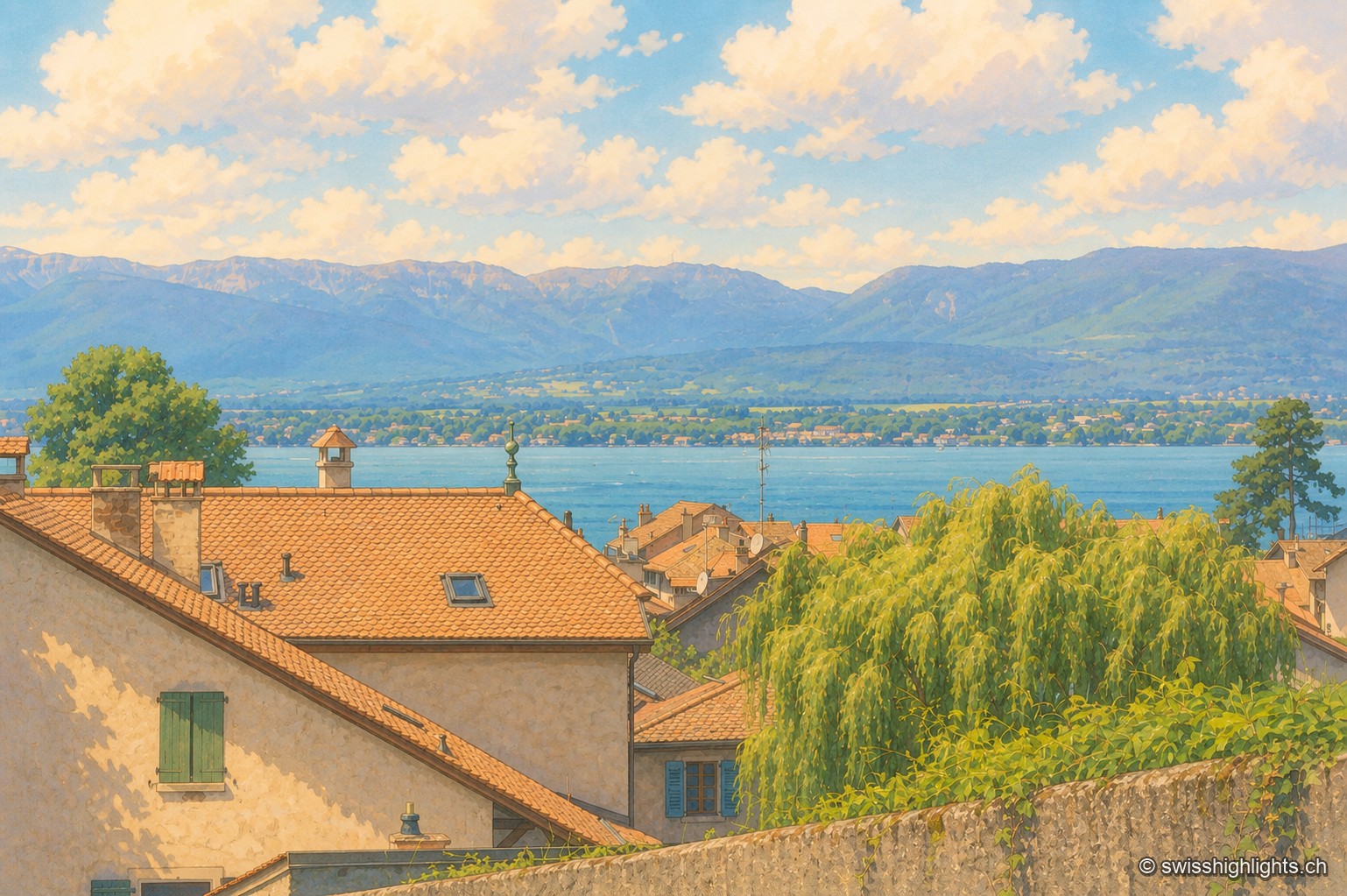
Medieval town · Geneva · 15 km as the crow flies
Hermance
A new town laid out by the lords of Faucigny, Hermance still has its ring wall, the round keep raised around 1337-1338 and a harbour of 159 berths. Savoyard until the Treaty of Turin of 1816, it covers just 1.44 km².