Goms village · Valais
Ernen
On a moraine terrace above the Rhône, a village of the Goms left aside by the main routes and awarded the Wakker Prize in 1979.
Ernen sits on a moraine terrace on the left bank of the upper Rhône, facing Fiesch, at about 1,196 metres. The commune — 35.38 km² and 544 inhabitants at the end of 2024 — has brought together, since 1 October 2004, the former villages of Ausserbinn, Mühlebach and Steinhaus, along with the hamlet of Niederernen, attached since 1872; it belongs to the Binntal regional nature park. Around the square the houses are dated one by one: the Capuchin house of 1511, the school of 1538, the Tellenhaus of 1576, the Sigristen-Jost house of 1580, the Matthäus Schiner house of 1603, the St George house of 1629, and the tithing house built between 1750 and 1762 as courthouse and prison. The site is listed in the federal inventory of built sites of national importance.
This ensemble owes its survival to being left behind. Set among the Albrun, Gries, Furka and Grimsel passes, Ernen lived for centuries off the transhipment of goods; its mayoralty is recorded in 1135, and high justice stayed here — three gallows columns, set in a triangle on a nearby hill, bear the date 1703, another source giving 1702. The parish gave the Church bishop Walter Supersaxo (1457-1482) and then cardinal Matthäus Schiner (1499-1522). Then the Furka pass road, opened in 1860-1861, and the railway, in 1914, ran along the opposite slope: the village fell outside the flow of traffic and its economy declined. That impoverishment, at the very moment the rest of Valais was being transformed, is what left the built fabric intact; it earned Ernen the Wakker Prize in 1979.
The church of St George is recorded from 1214. Its tower was rebuilt in 1510-1511 and the choir followed until 1518 under Ulrich Ruffiner, who threw star-ribbed vaults over it; inside, the carved stalls date from 1666 and the organ from 1679-1680, by Christophe Aebi of Solothurn. The restoration carried out from 1964 to 1968 uncovered beneath the floor the remains of an eleventh-century basilica with three apses. Opposite, the Tellenhaus, built in 1576, carries on its façade a scene from the story of William Tell painted in 1578 — held by local tradition to be the oldest in Switzerland, though the question remains open. From 1974 the Hungarian pianist György Sebők gave summer courses here; the village has called itself Musikdorf ever since, and a chamber music series was added in 1987.
Why this place is remarkable
Ernen owes its coherence to being sidelined: the Furka road in 1860-1861 and the railway in 1914 passed along the other bank, and the poverty that followed spared the village the rebuilding of the twentieth century. What remains is a whole square of houses dated between 1511 and 1762, a church whose choir Ulrich Ruffiner completed in 1518, and a façade of 1576 painted in 1578 with a story of William Tell; the Wakker Prize acknowledged it in 1979.
History and origin
The name appears in 1214 as Aragnon — perhaps 'the estate of Aranius' — the form Ärnen being attested only in 1510. Settlement is older: a La Tène period cemetery at Binnachern marks the route that climbed towards the Binn valley and the Albrun pass. The mayoralty of Ernen, recorded in 1135, administered the Goms; high justice remained attached to it, as the gallows columns dated 1703 attest. The commune then produced two leading prelates, bishop Walter Supersaxo and cardinal Matthäus Schiner, before the shift of the transport routes in the nineteenth century left it aside.
What to do and see
- Walk across Ernen's square among the houses dated one by one, from the Capuchin house of 1511 to the tithing house built between 1750 and 1762.
- Enter the Church of St. George, whose choir Ulrich Ruffiner completed in 1518, with its star-ribbed vaults and stalls from 1666.
- See on the Tellenhaus, built in 1576, the William Tell scene painted in 1578, held by local tradition to be the oldest in Switzerland.
As a couple
- Wander among the houses dated from 1511 to 1762 around Ernen's central square, left untouched since the Furka road and the railway passed on the other side of the valley.
- Look at the painted facade of the Tellenhaus, where a 1578 William Tell scene adorns the house built in 1576.
- Enter together the Church of St. George for its 1518 star vaults and its 1679-1680 organ signed by Christophe Aebi.
Location
Loads an interactive Google Maps view on demand, from the place's verified coordinates.
The embedded map will be enabled once an authorized Google Maps key is configured. Use the link above in the meantime.
The map could not load. Check your connection or use the link above to open the place in Google Maps.
Related places
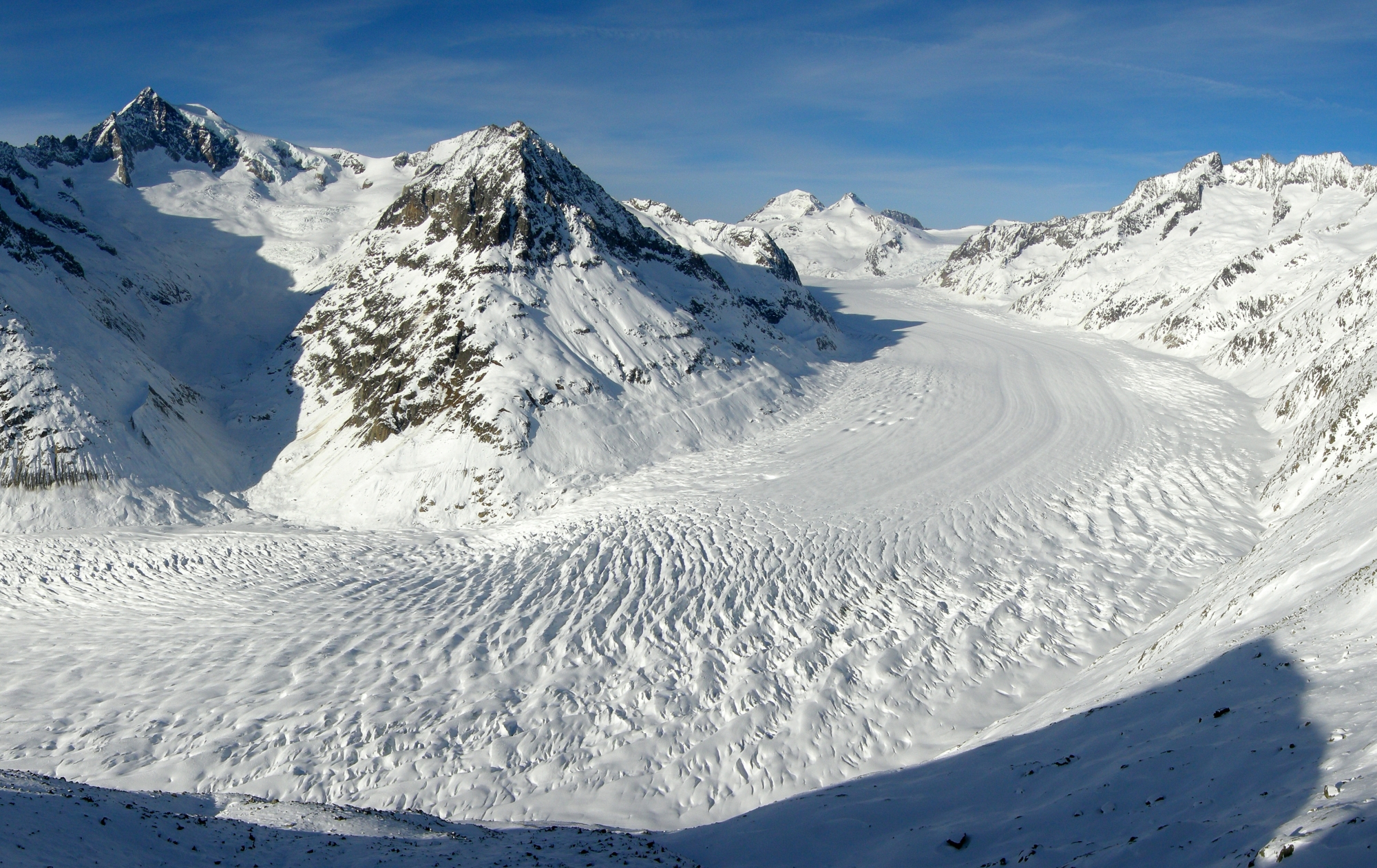
Glacier · Valais · 7 km as the crow flies
Aletsch Glacier
Three rivers of ice meet at Konkordiaplatz to form the largest glacier in the Alps. It flows 180 to 200 metres a year and loses up to 50 metres of length annually.
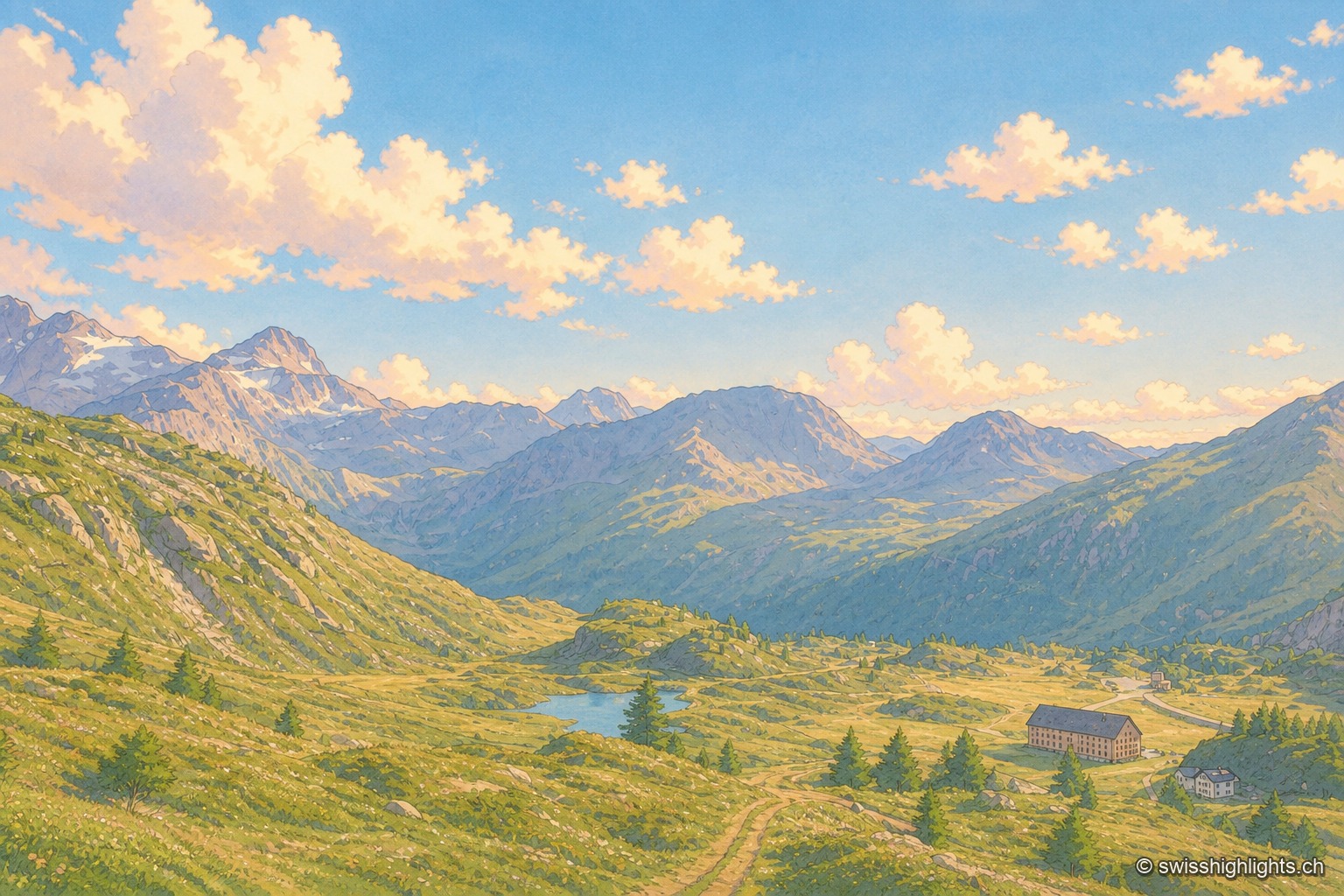
Road pass · Valais · 19 km as the crow flies
Simplon Pass
The road crosses at 2,006 metres, a little above the geographical col. Opened between 1801 and 1805 by Napoleon's decree, it runs from Brig to the Ossola valley and takes you from the Rhône to the Po.
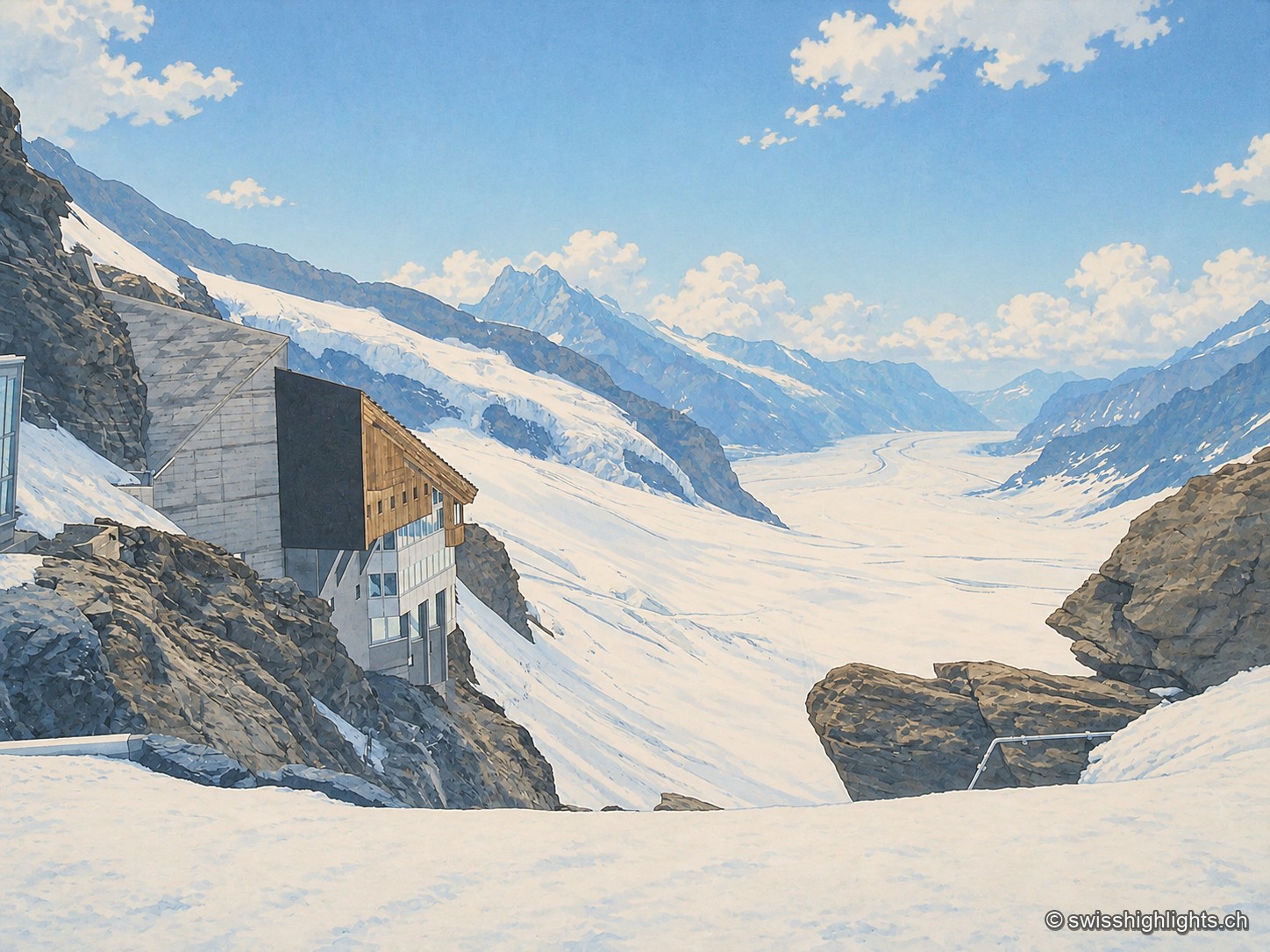
Railway pass · Bernese Alps · 21 km as the crow flies
Jungfraujoch
The line, proposed in 1893 by Adolf Guyer-Zeller and completed in 1912 after 7.1 km of tunnel under the Eiger and the Mönch, reaches 3,454 metres. The site drew more than a million visitors a year between 2017 and 2019.