Ticino village · Leventina
Giornico
A village of the Leventina crossed by the Ticino, where the river parts around an island linked to the town by two medieval bridges.
Giornico lies on the floor of the Leventina, the valley by which the Ticino comes down from the Gotthard towards Bellinzona. The river crosses the built-up area and parts around a natural island, the island of Giornico, which two medieval bridges attach to the town. All the traffic of the valley passes at the edge of the village: the A2 motorway, which links the Gotthard road tunnel to Bellinzona and Como, runs along the commune; the Gotthard railway tunnel opened in 1881, and the base tunnel in 2016.
The built heritage to see comes down to two objects that have nothing in common. On one side, the chapel of Santa Maria del Castello. On the other, the La Congiunta museum, the essential part of which is a modern building by the architect Peter Märkli: it houses nothing but the reliefs and sculptures of Hans Josephsohn, made between 1950 and 1991. Giornico, moreover, is no longer a commune — on 26 November 2023 its inhabitants approved by vote the attachment of their territory to that of Bodio, effective on 6 April 2025.
Why this place is remarkable
Two things set Giornico apart, and they do not resemble each other. The first is an island: crossing the village, the Ticino divides around a bank of land that two medieval bridges still link to the shores. The second is a museum built for a single artist — La Congiunta, the work of Peter Märkli, where the reliefs and sculptures Hans Josephsohn made between 1950 and 1991 are gathered.
What to do and see
- Cross to the natural island of the Ticino by the two medieval bridges that link it to the town.
- Visit the chapel of Santa Maria del Castello.
- Discover the La Congiunta museum, a modern building by architect Peter Märkli housing the reliefs and sculptures of Hans Josephsohn made between 1950 and 1991.
As a couple
- Cross together the two medieval bridges leading to the island where the Ticino splits to skirt the village.
- Stop at the La Congiunta museum, designed by Peter Märkli for the works of Hans Josephsohn.
- Visit the chapel of Santa Maria del Castello, a stone's throw from the island.
Location
Loads an interactive Google Maps view on demand, from the place's verified coordinates.
The embedded map will be enabled once an authorized Google Maps key is configured. Use the link above in the meantime.
The map could not load. Check your connection or use the link above to open the place in Google Maps.
Related places
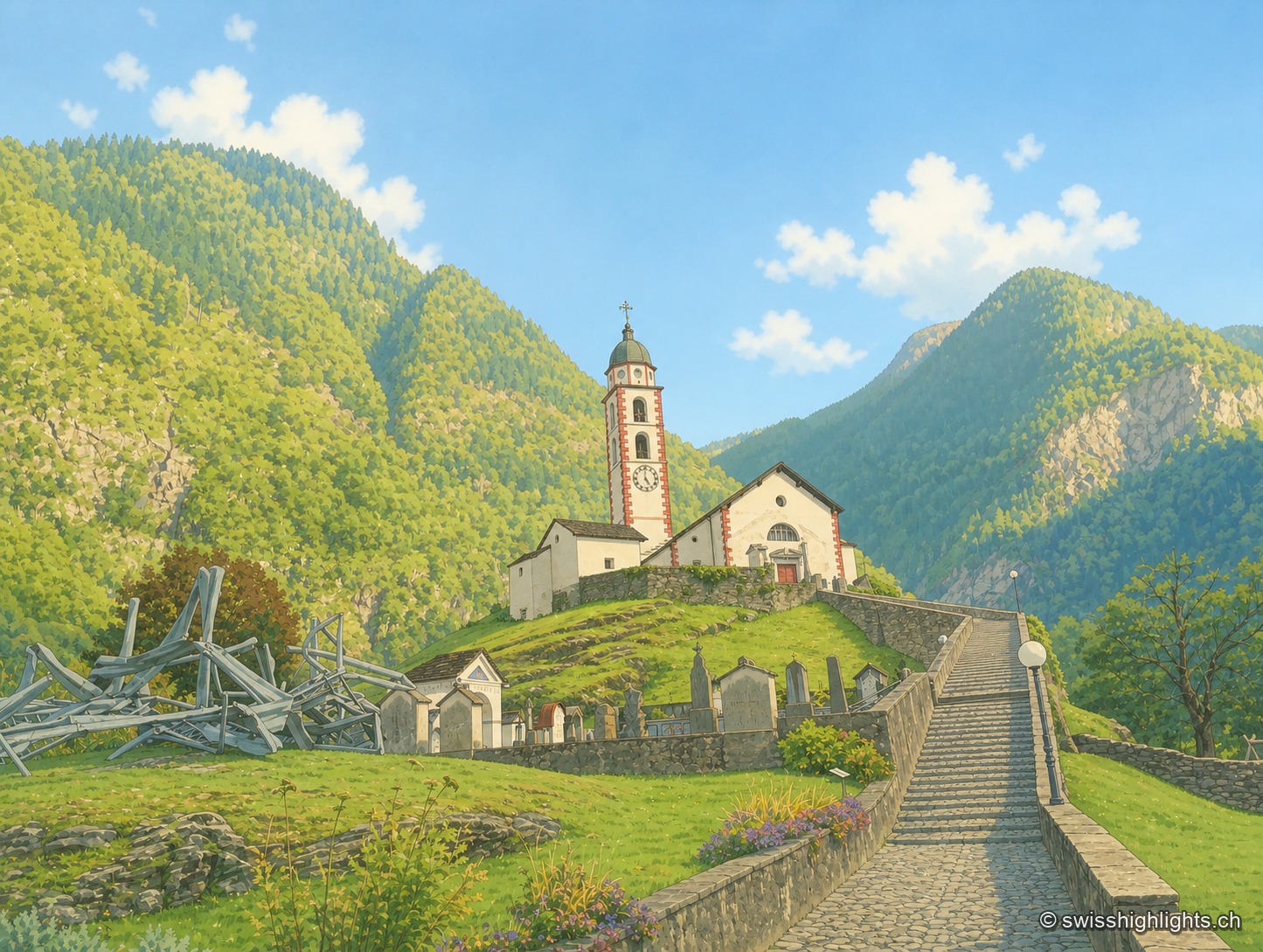
Mesolcina village · Grisons · 27 km as the crow flies
Soazza
324 inhabitants on 46.4 km², more than half of it forest, a church with a striped bell tower on its spur, a frescoed hospice: Soazza holds the hinge between upper and lower Mesolcina.
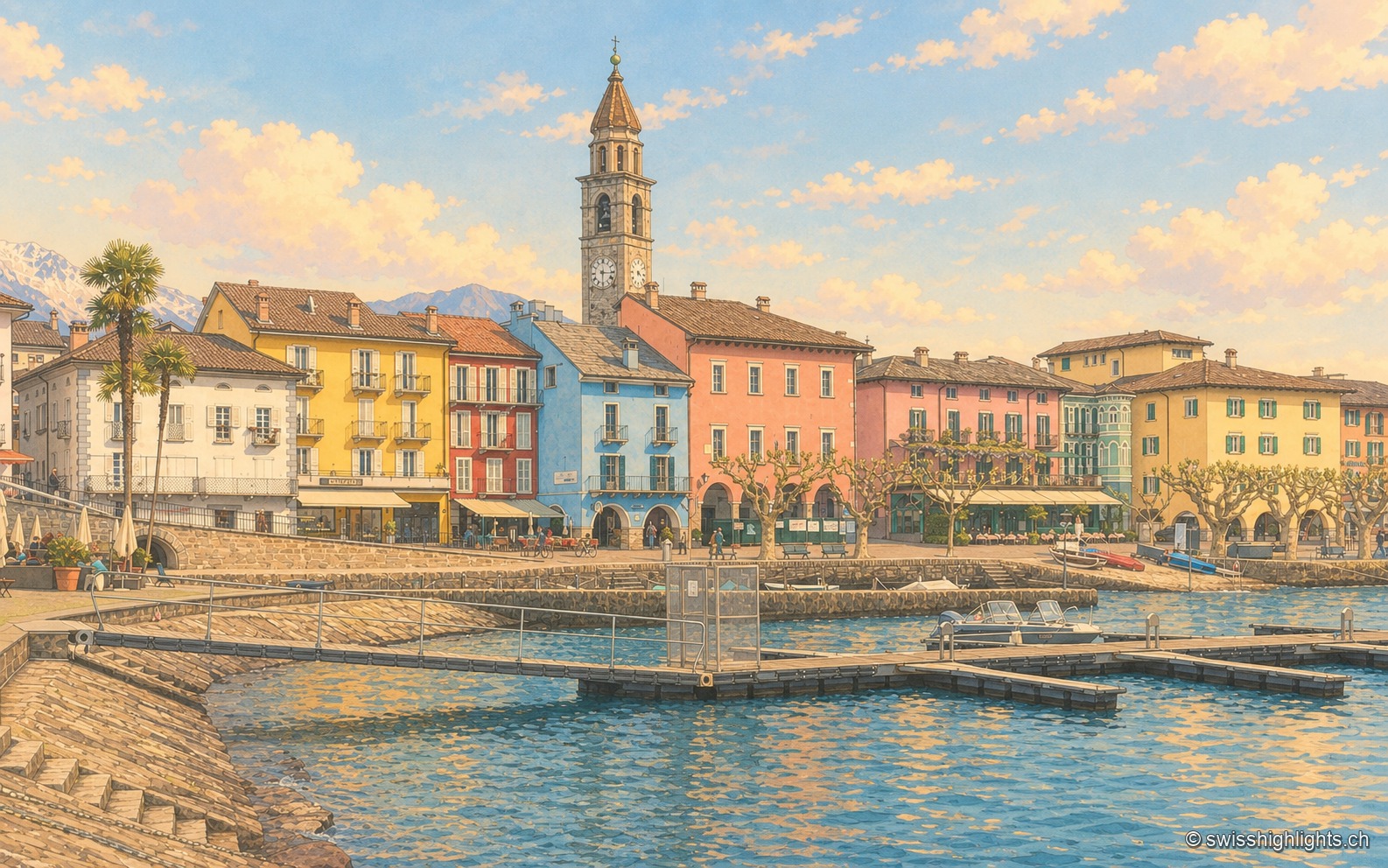
Lakeside town · Ticino · 29 km as the crow flies
Ascona
A row of painted houses closes the square that opens onto the lake, behind the campanile of Santi Pietro e Paolo. On the hill stand the light-and-air huts of 1901-1902 and the hotel of 1926-1928.
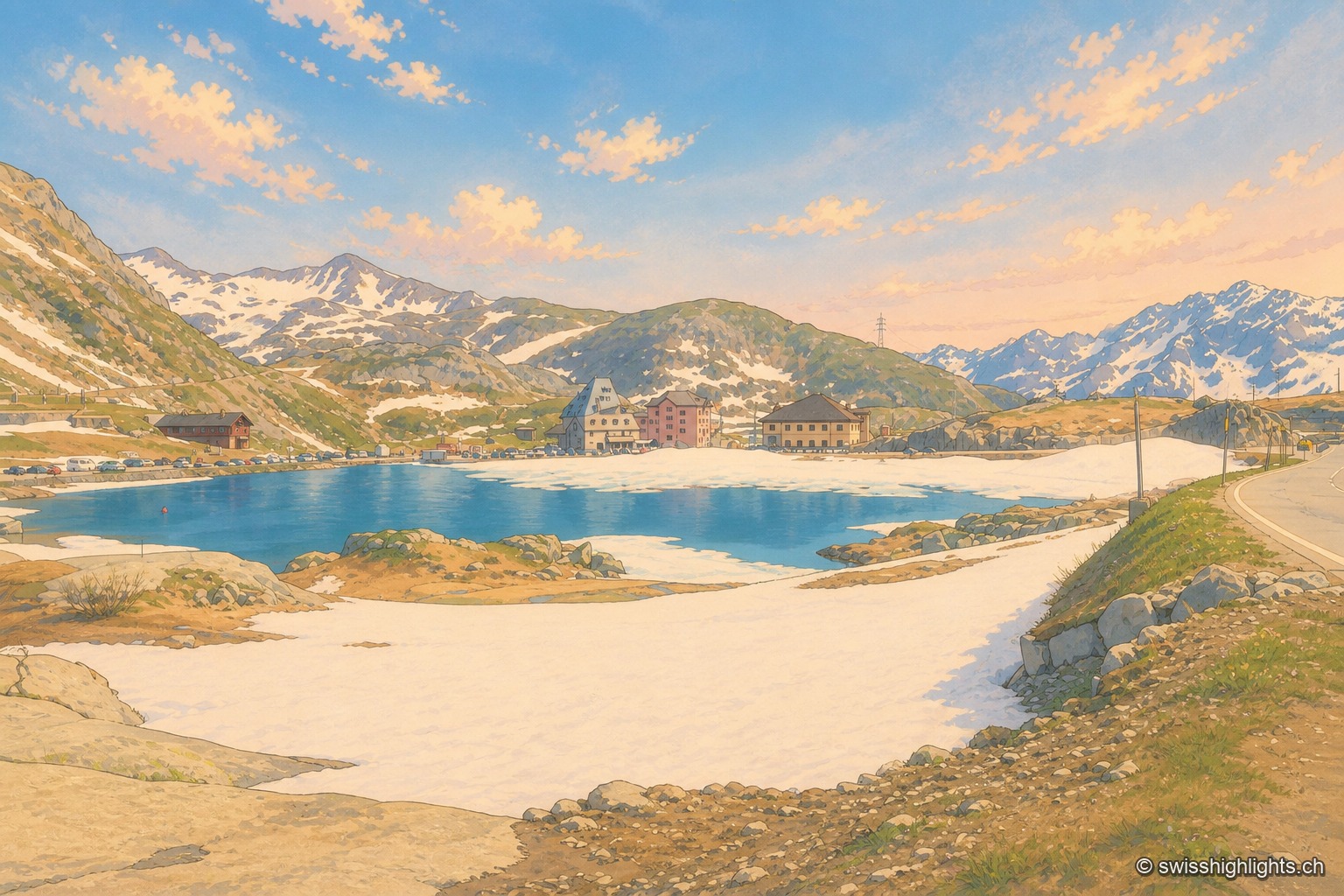
Alpine pass · Uri – Ticino · 29 km as the crow flies
Gotthard Pass
Opened around 1220, the crossing linked the Po plain to northern Europe and weighed on the beginnings of the Confederation. A hospice recorded from 1237, the old cobbled Tremola road, the Sasso da Pigna fort turned museum.