Seerhein village · Thurgau
Gottlieben
On the arm of the Rhine that links Lake Constance to the Untersee, the smallest commune in Switzerland: 31 hectares and a castle of 1251.
Gottlieben covers 31 hectares: it is the smallest commune in Switzerland, level with Rivaz. It occupies one bank of the Seerhein, the arm of the Rhine that links Lake Constance to the Untersee, four kilometres as the crow flies from Kreuzlingen. The village lives today on tourism, and its name remains attached to the Gottlieber Hüppen, wafer rolls filled with praline or nougat.
Everything here turns on the castle. The village was fortified in 1251 by bishop Eberhard von Waldburg, and the castle carries the same date. During the Council of Constance, in 1415, two prisoners were held in it: the Czech reformer Jan Hus and the antipope John XXIII, both deposed by the Church. Market rights came only at the end of the seventeenth century.
From 1798 to 1874 Gottlieben was the seat of the district; the role then passed to Kreuzlingen and the village returned to its own scale. The soprano Lisa della Casa lived in the castle from 1974. The village has a landing stage on the Seerhein, from which boats leave for Schaffhausen and Kreuzlingen.
Why this place is remarkable
Gottlieben is the smallest commune in Switzerland — 31 hectares, level with Rivaz — and yet two of the most contested prisoners in Christendom were held here: Jan Hus and the antipope John XXIII, in 1415, during the Council of Constance. The castle that held them carries the date 1251, that of the fortification of the village by bishop Eberhard von Waldburg.
History and origin
The village was fortified in 1251 by bishop Eberhard von Waldburg; the castle is dated to the same year. Market rights arrived only at the end of the seventeenth century, more than four centuries after the walls. From 1798 to 1874 Gottlieben served as the seat of the district; since 1874 that function has belonged to Kreuzlingen.
What to do and see
- Discover the castle dated 1251, where Jan Hus and antipope John XXIII were imprisoned in 1415 during the Council of Constance.
- Stroll through the smallest municipality in Switzerland, 31 hectares, tied with Rivaz.
- Walk along the bank of the Seerhein, the short channel by which the Rhine passes from Lake Constance to the Untersee.
- Taste the Gottlieber Hüppen, waffle-pastry rolls filled with praline or nougat, a local specialty.
Coming with family: what to know
- The town has a landing stage on the Seerhein, from which boats depart for Schaffhausen and Kreuzlingen.
As a couple
- Wander through the smallest town in Switzerland, fortified in 1251 by Bishop Eberhard von Waldburg.
- Stop by the Seerhein, four kilometres from Kreuzlingen, before boarding a boat for Schaffhausen.
- End the walk with a piece of Gottlieber Hüppen, the village's specialty.
Location
Loads an interactive Google Maps view on demand, from the place's verified coordinates.
The embedded map will be enabled once an authorized Google Maps key is configured. Use the link above in the meantime.
The map could not load. Check your connection or use the link above to open the place in Google Maps.
Related places

Lakeside village · Thurgau · 4 km as the crow flies
Ermatingen
First named in 724 in the founding charter of Reichenau Abbey, Ermatingen lines up its half-timbered houses along the water. Its carnival, the Groppenfasnacht, falls on Laetare Sunday, three weeks before Easter.

Rhine town · Thurgau · 29 km as the crow flies
Diessenhofen
Raised to town status in 1178 by the counts of Kyburg, Diessenhofen has kept its medieval street plan, its Seal Tower with a zodiac dial, and its covered wooden bridge across the Rhine into Germany.
Heritage landscape · St. Gallen · 33 km as the crow flies
Bridges of Bruggen and the Sitter Valley
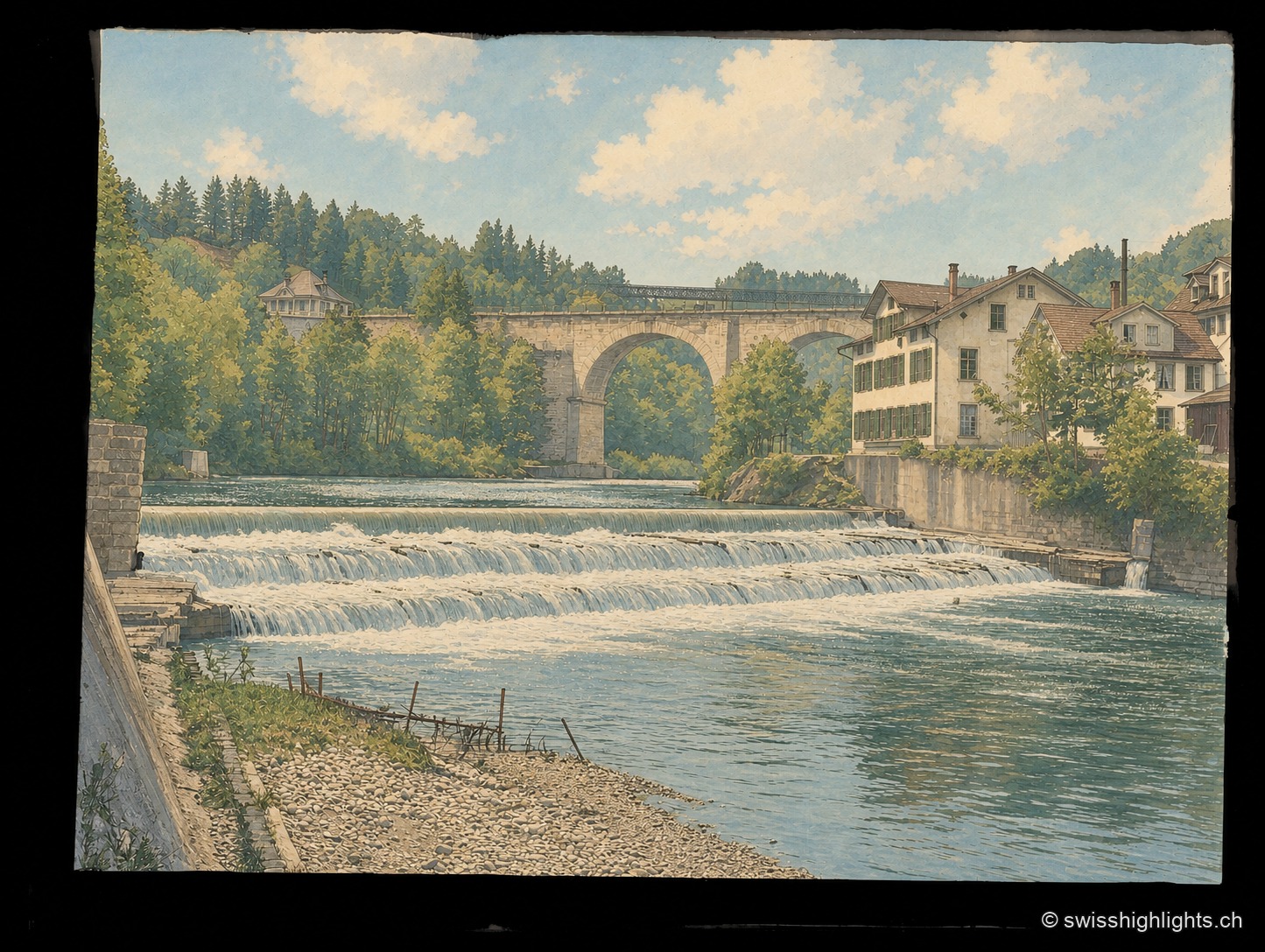
Around Bruggen, at the gates of St. Gallen, an 8.2 km path links eighteen 18th-20th century bridges: timber from 1780, stone from 1811, a 100-metre railway viaduct opened in 1910, through the wooded gorges of the Sitter.