Bailiwick town · Zurich
Grüningen
A Zurich village set on a rise in the Hinwil district, with the castle that housed the Zurich bailiffs until 1798.
Grüningen is a commune in the canton of Zurich, in the district of Hinwil, at 502 metres. The settlement established itself on a rise, as a country town, and that position still governs its outline: the built fabric holds tight to the ridge, meadows and orchards begin at the foot of the last houses.
The castle commands the whole. Raised in the 13th century, it served until 1798 as the residence of the bailiffs sent from Zurich. Part of the building was demolished in the 19th century and what remained became a parsonage. In 1970 a fire damaged it; the building now houses a historical collection.
The Reformed parish church adjoins the castle. It is a single-nave building in neoclassical style, built in 1782-1783 to plans attributed to David Vogel. Its interior, destroyed by the fire of 1970, was refitted by Markus Dieterle in 1973 — refitted, not restored to its former state. The commune received the Wakker Prize in 1976.
Why this place is remarkable
Two buildings stand side by side at the top of the town and tell the same story of dependence: the castle from which Zurich administered the bailiwick until 1798, and the Reformed church built against it in 1782-1783. The fire of 1970 went through both, and the church interior was refitted in 1973 in the language of its own time rather than reconstituted. The commune received the Wakker Prize in 1976.
History and origin
The commune's territory was already settled in the 8th century, as older traces attest. The town itself was founded at the beginning of the 13th century by the barons of Regensberg, on the rise it still occupies. From 1408 Grüningen was attached to Zurich, which made it the seat of a bailiwick: the castle received the bailiffs until 1798, the year the old regime collapsed in Switzerland.
What to do and see
- Observe side by side the castle of the bailiffs of Zurich and the Reformed church of 1782-1783 built against it.
- Spot, inside the church, the 1973 refurbishment by Markus Dieterle, carried out after the 1970 fire rather than as an identical rebuild.
- Follow from the height of the town the passage between the tightly packed buildings and the meadows and orchards that begin immediately below.
As a couple
- Walk between the 13th-century castle and the neighbouring church, two buildings that share the same history of dependence on Zurich.
- Linger over the town's silhouette seen from the orchards below, where the buildings give way to the meadows.
- Look for the traces left by the 1970 fire on both buildings, now rebuilt differently.
Location
Loads an interactive Google Maps view on demand, from the place's verified coordinates.
The embedded map will be enabled once an authorized Google Maps key is configured. Use the link above in the meantime.
The map could not load. Check your connection or use the link above to open the place in Google Maps.
Related places
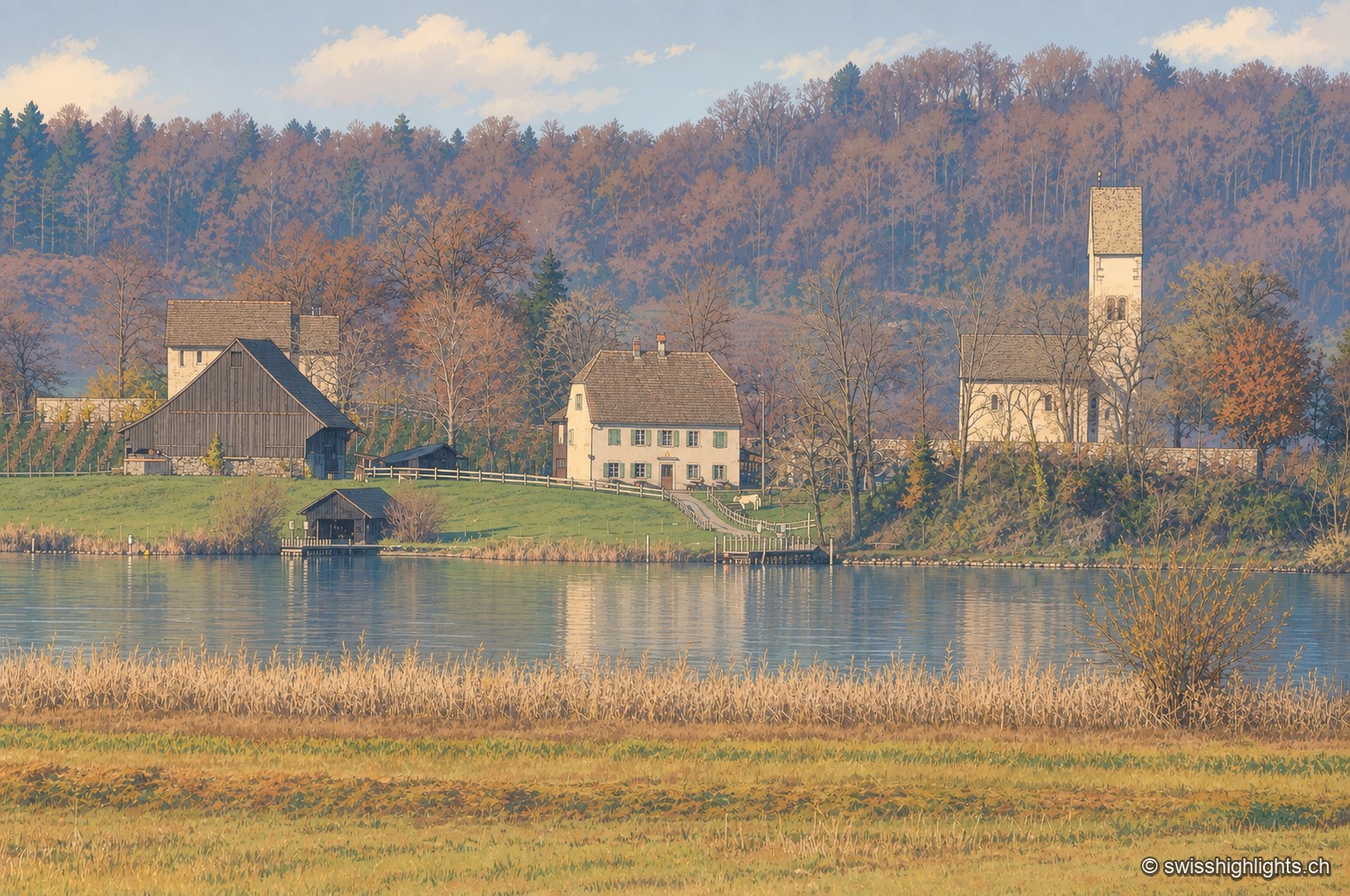
Monastic island · Lake Zurich · 7 km as the crow flies
Ufenau
Otto I gave the island to Einsiedeln Abbey in 965. The church of Saints Peter and Paul was consecrated in 1141. Knight Ulrich von Hutten died here in 1523. In 2012, the site's protected status blocked a restaurant by Peter Zumthor.
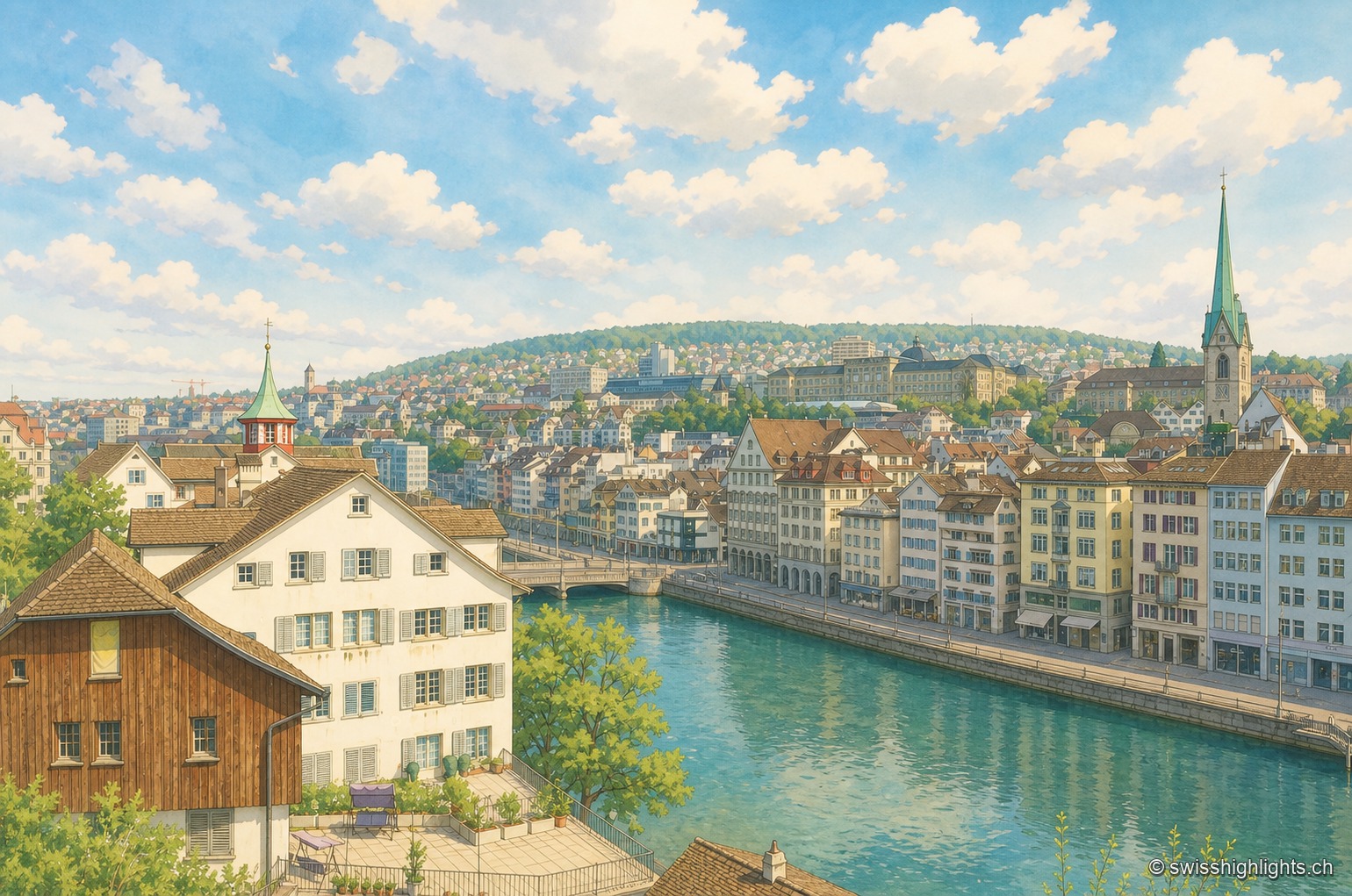
Cantonal capital · Zurich · 19 km as the crow flies
Zurich
433,989 inhabitants in December 2023, a river people swim across in summer, a 869-metre summit at the end of a train line: Zurich fits into a corridor three to four kilometres wide.
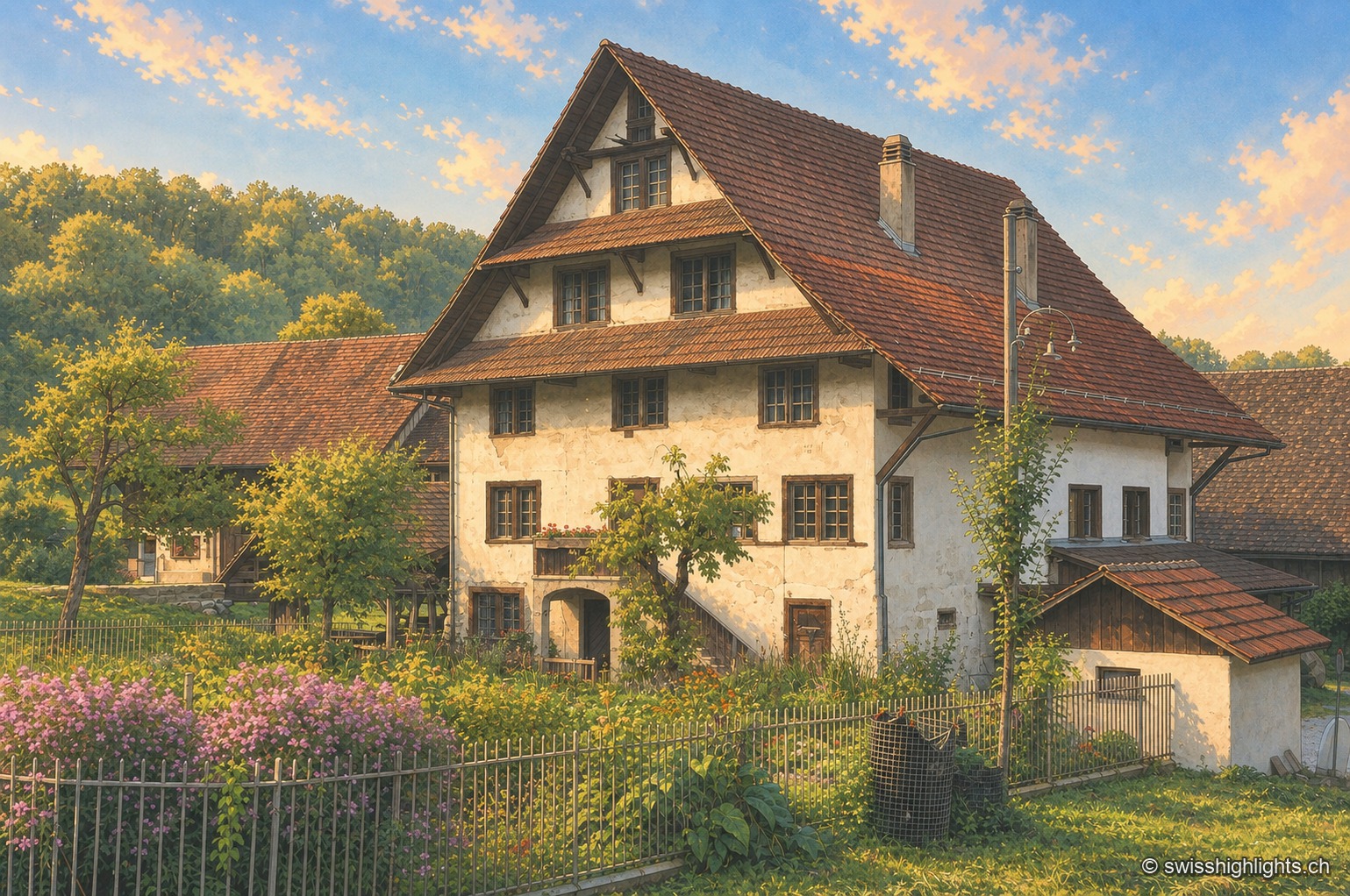
Historic mill · Stallikon, Zurich · 21 km as the crow flies
Aumüli
Probably built in the 9th century and recorded from 1328, the Aumüli keeps its water right, wheel and sawmill. Listed in 1993 and added to the ISOS register in 2012, it has milled spelt again since 2007.