Botanical islands · Ticino
Brissago Islands
Two islands set on the Swiss part of Lake Maggiore: three hectares where plants from every continent have been grown since 1885.
The Brissago Islands amount to three hectares — 0.03 square kilometres — set on Lake Maggiore near its northern shore, close to the Italian border. The larger one, San Pancrazio, is reached by scheduled boats: it carries the botanical garden and the villa. The smaller, Sant'Apollinare, also called the Island of Rabbits, is protected and cannot be visited. The water around them marks, at 193.5 metres, the lowest altitude in Switzerland.
The garden on the larger island gathers subtropical plants from the Mediterranean, China, Korea, Japan, Africa, the three Americas, Australia and islands of Oceania. What makes the assembly possible is not a glasshouse but the Insubric climate of the lower Ticino, mild enough for these species to winter outdoors, within sight of snow-covered summits. The garden opened to the public on 2 April 1950, a Palm Sunday; the villa above it now serves as a hotel and restaurant.
The garden was born of a whim and a fortune. In 1885 Baroness Antoinette Tzikos de Saint-Léger and her husband, the Irish banker Richard Fleming, bought two rocks bearing thin native vegetation and the ruins of a convent. They rebuilt the convent, planted, brought in species from every continent, and the islands became a meeting place for painters, sculptors, musicians and writers. The baron abandoned island and wife in 1897 for Naples; the baroness, cornered, sold in 1927 and ended up on public assistance at Intragna, where she died on 24 January 1948. Her remains were brought back to the larger island on 12 August 1972.
The buyer in 1927 was Max Emden (1874-1940), a Hamburg merchant. He had the Berlin architect Alfred Breslauer build the neoclassical villa seen today, on a 17th-century house, dug a boat dock and a Roman bath, and pushed the exotic plantings further. His heirs sold in 1949, and a coalition bought: the canton of Ticino, the communes of Ascona, Brissago and Ronco sopra Ascona, the Swiss League for National Heritage and the Swiss League for the Protection of Nature. The contract signed on 2 September 1949 reserved the islands and their buildings for the conservation and popularisation of natural beauty, for science, culture and tourism — which is what they have done since.
Why this place is remarkable
Three hectares hold together two things that do not go together elsewhere: plants from Africa, China and Oceania wintering in open ground, and the lowest altitude in the country, 193.5 metres, beneath summits still white in spring. The garden is not a collection under glass but a piece of Insubric climate, tended since 1885 by successive owners and made public property in 1949.
History and origin
The islands were settled long ago: the larger one has yielded Roman remains, and both rocks served as refuge for early Christians during the persecutions. In the 13th century the monks of the Umiliati order settled here; when Pius V suppressed the order in 1571, the islands emptied and stayed uninhabited. On Sant'Apollinare stand the ruins of a small Romanesque church dedicated to that saint, built in the 12th century on Roman remains — today the part of the archipelago that nobody visits.
What to do and see
- Take a boat to the larger island, Saint-Pancrace, to visit the botanical garden and the villa.
- Observe the subtropical plants from the Mediterranean, China, Africa and Oceania, which overwinter outdoors thanks to the insubrian climate.
- Spot from the shore the small island, Saint-Apollinaire, protected and closed to the public.
Coming with family: what to know
- The archipelago can only be reached by boat, with no access on foot.
- Only the larger island can be visited; the small one, Saint-Apollinaire, is closed to the public.
As a couple
- Stroll through the botanical garden of the larger island, open to the public since 1950.
- Observe the still snow-capped peaks in spring from a garden where tropical plants overwinter outdoors.
- While touring the neoclassical villa, tell each other the story of Baroness Antoinette Tzikos and Max Emden.
Sant'Apollinare, the smaller island, is protected and closed to the public: only the larger island can be visited.
The archipelago is reached by boat alone; there is no access on foot.
Location
Loads an interactive Google Maps view on demand, from the place's verified coordinates.
The embedded map will be enabled once an authorized Google Maps key is configured. Use the link above in the meantime.
The map could not load. Check your connection or use the link above to open the place in Google Maps.
Related places
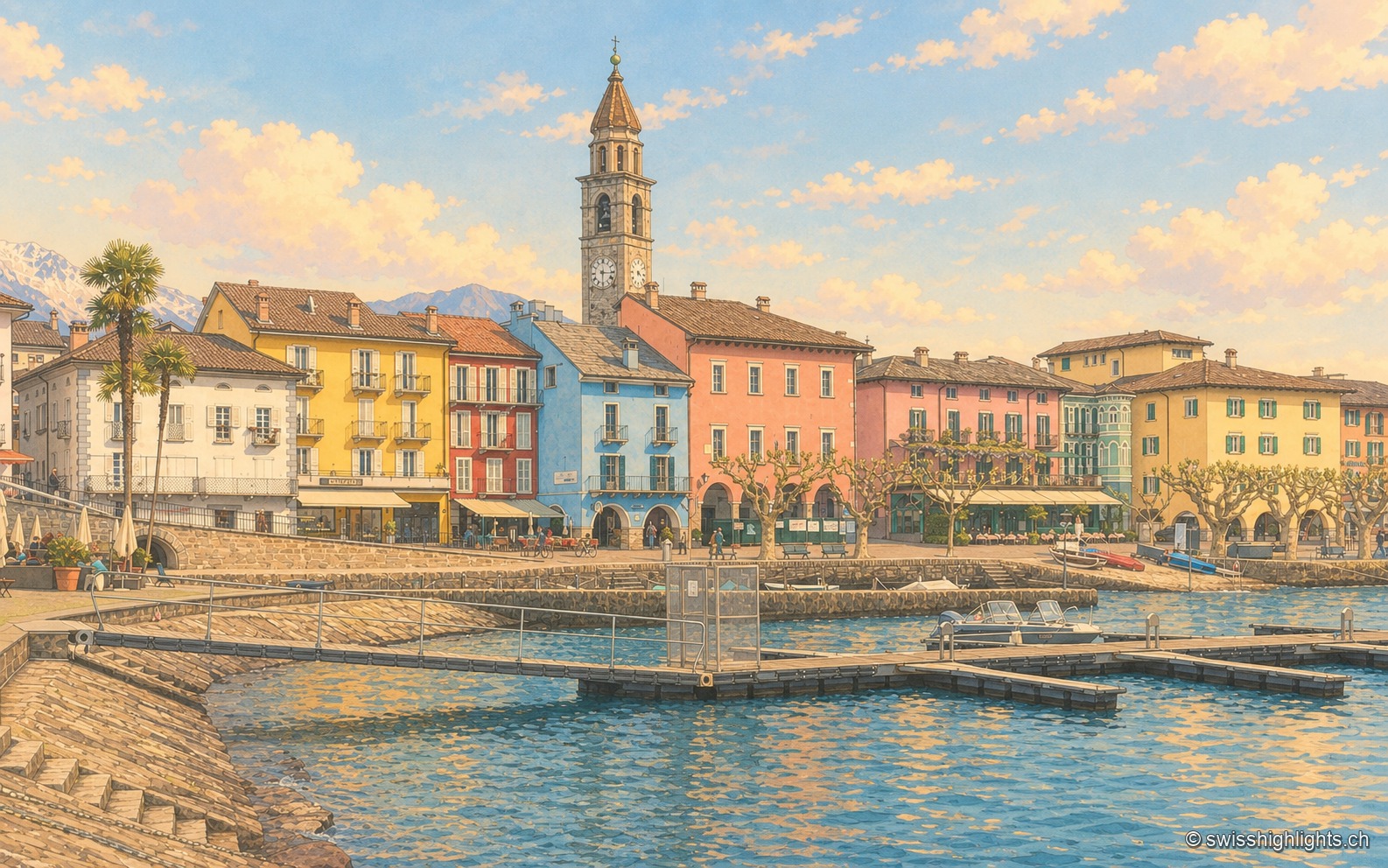
Lakeside town · Ticino · 3 km as the crow flies
Ascona
A row of painted houses closes the square that opens onto the lake, behind the campanile of Santi Pietro e Paolo. On the hill stand the light-and-air huts of 1901-1902 and the hotel of 1926-1928.
Hamlet listed by ISOS · Ticino · 15 km as the crow flies
Osignano
On the old mule track linking Agno to Bellinzona, at the foot of Monte Tamaro, the hamlet lines up two rows of stone or rendered rural houses, the oldest from the 17th-18th centuries, around a chapel dedicated to Saint Roch.
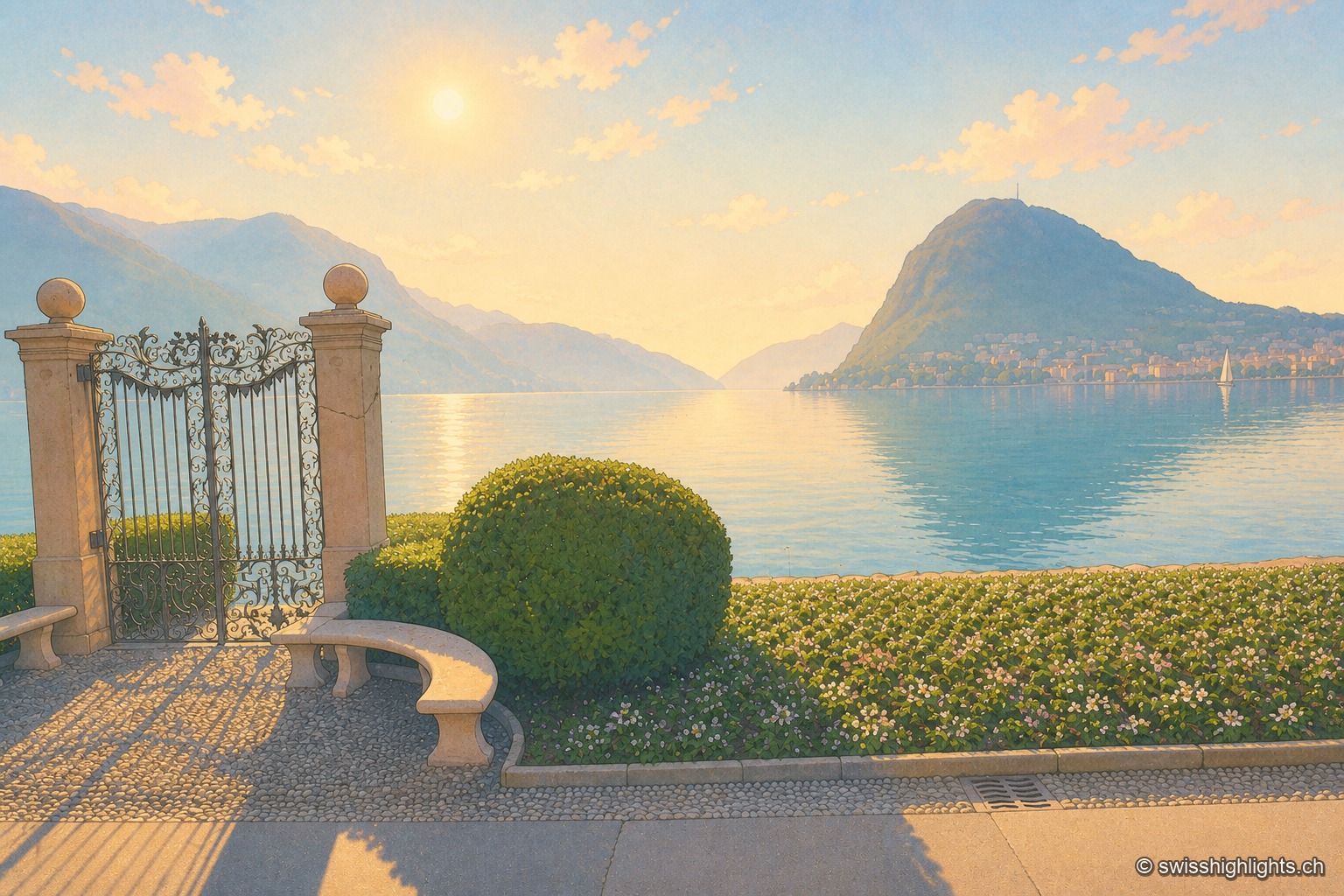
Lakeside city · Ticino · 22 km as the crow flies
Lugano
The country's third financial centre, Lugano hosted the first Eurovision Song Contest in 1956 and has, since the mergers of 2004, 2008 and 2013, an agglomeration of about 150,000 inhabitants on the shore of Lake Lugano.