Lakeside city · Ticino
Lugano
Switzerland's ninth-largest city and the largest Italian-speaking city outside Italy, set on the north shore of Lake Lugano.
Lugano occupies the north shore of Lake Lugano, also called Lago Ceresio, between Lake Maggiore and Lake Como, framed to the south by Monte San Salvatore and to the east by Monte Brè. According to the Federal Statistical Office, its territory covers 75.98 square kilometres. The climate, continental but softened by the lake, is classed Cfa under the Köppen system: average temperatures reach 22.6°C in July against 3.8°C in January, with about 1,567 millimetres of annual precipitation.
Archaeological research attests discontinuous occupation of the site since the 6th or 7th century. In the Middle Ages, the city first fell under the strong influence of the bishops of Como, before Milan imposed its sovereignty while leaving it a degree of administrative autonomy. The mergers of 2004, 2008 and 2013, which notably attached Breganzona, Pregassona, Carona and Sonvico, made Lugano Switzerland's ninth-largest city by population and the largest city of Italian-speaking Switzerland, with an agglomeration of about 150,000 inhabitants.
The country's third financial centre, Lugano is home to the headquarters of the Napapijri brand and of Etihad Regional. Via Nassa, reputed to be the most expensive shopping street in Italian Switzerland and the fifth in Switzerland, lines up boutiques such as Prada, Versace, Bulgari and Brunello Cucinelli. The city hosted the first Eurovision Song Contest in 1956, and the church of Santa Maria degli Angeli holds a fresco of the Passion and Resurrection painted by Bernardino Luini, a pupil of Leonardo da Vinci, completed in 1529.
The Museum of Cultures holds the Brignoni collection, about 600 objects of art from Asia, Oceania and Africa and one of Europe's most important ethnographic collections, while the Hermann Hesse Museum gathers the writer's archives — he remained in Montagnola until his death. Founded in 1996, the Università della Svizzera italiana made Lugano a university seat. The ice hockey club HC Lugano, seven-time Swiss champion between 1986 and 2006, has played in the National League since 1983; the city also hosted the UCI Road World Championships in 1953 and 1996.
Why this place is remarkable
Lugano owes its identity to its lakeside position between Monte San Salvatore and Monte Brè, which the mergers of 2004, 2008 and 2013 turned into Switzerland's ninth-largest city and the largest Italian-speaking city outside Italy. The country's third financial centre, it brings together a fresco by Bernardino Luini completed in 1529, the Brignoni ethnographic collection, and the memory of Hermann Hesse, who lived there until his death.
History and origin
Archaeology attests discontinuous occupation of the site since the 6th or 7th century. In the Middle Ages, Lugano first fell under the influence of the bishops of Como, a city that became a freely administered commune at the turn of the 12th century without losing its hold over Lugano; the powerful city of Milan then imposed its sovereignty, though Lugano kept a degree of administrative autonomy throughout the medieval period.
What to do and see
- Admire from the lakeshore Lugano's setting between Monte San Salvatore and Monte Brè.
- See in the church of Santa Maria degli Angeli the fresco of the Passion and Resurrection painted by Bernardino Luini, completed in 1529.
- Discover at the Museum of Cultures the Brignoni collection, around 600 works of art from Asia, Oceania and Africa.
- Stroll along Via Nassa, reputed to be the most expensive shopping street in Italian-speaking Switzerland.
Coming with family: what to know
- The Hermann Hesse Museum and the Museum of Cultures offer two indoor stops, alternating with the lake shores.
As a couple
- Walk along the shore of Lake Lugano between Monte San Salvatore and Monte Brè.
- Visit together the Bernardino Luini fresco at Santa Maria degli Angeli.
- Stop at the Hermann Hesse Museum, which gathers the archives of the writer who stayed in Montagnola until his death.
- Take a break on Via Nassa before returning to the lakeside.
Location
Loads an interactive Google Maps view on demand, from the place's verified coordinates.
The embedded map will be enabled once an authorized Google Maps key is configured. Use the link above in the meantime.
The map could not load. Check your connection or use the link above to open the place in Google Maps.
Related places
Hamlet listed by ISOS · Ticino · 9 km as the crow flies
Osignano
On the old mule track linking Agno to Bellinzona, at the foot of Monte Tamaro, the hamlet lines up two rows of stone or rendered rural houses, the oldest from the 17th-18th centuries, around a chapel dedicated to Saint Roch.
Ticino · Lake Lugano · 10 km as the crow flies
Morcote
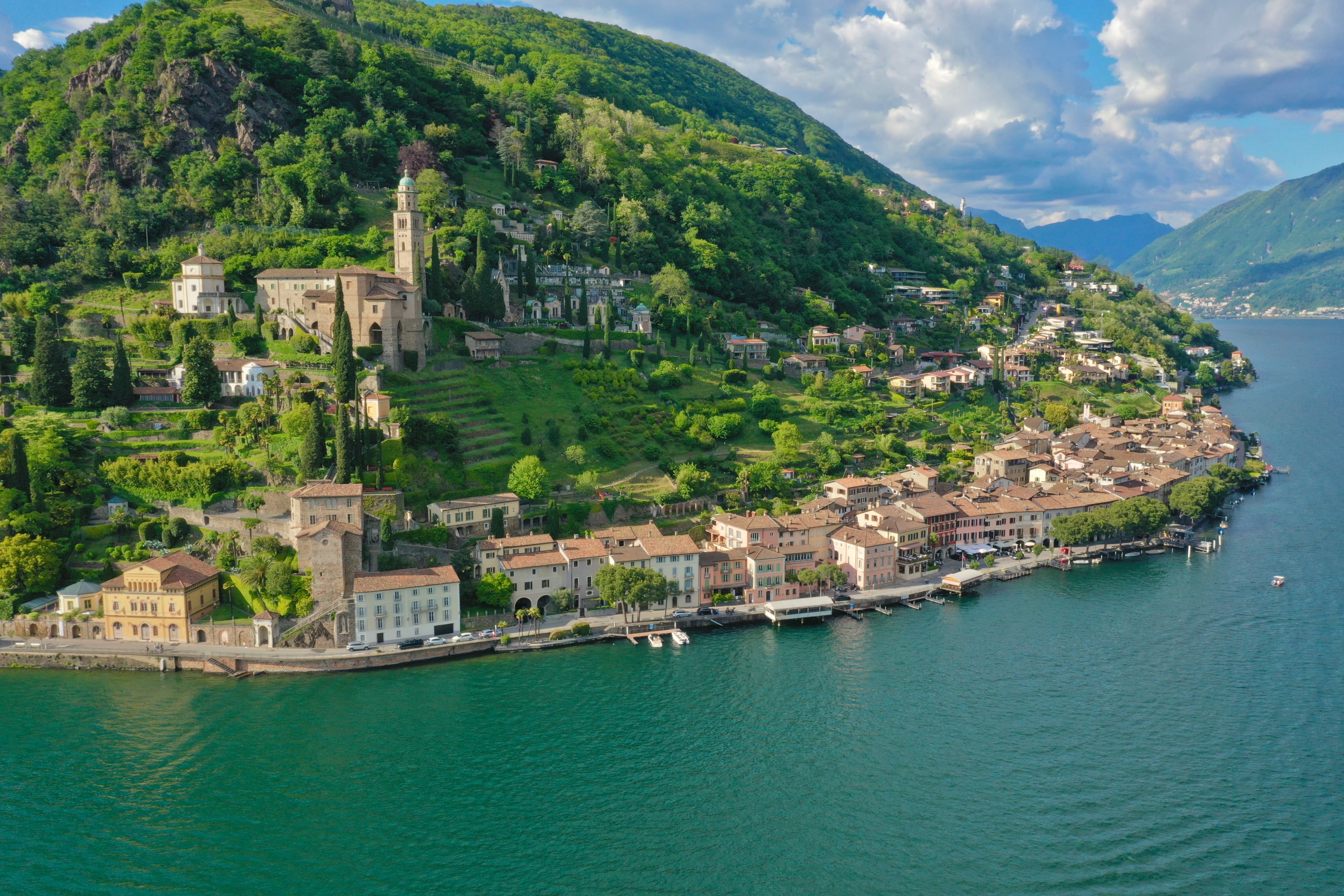
Morcote is strung along the shore of Lake Lugano, facing Italy. Above the roofs stands the church of Santa Maria del Sasso; between them, a stairway of 404 steps and a cemetery of 1750.
Village · Ticino · 13 km as the crow flies
Meride
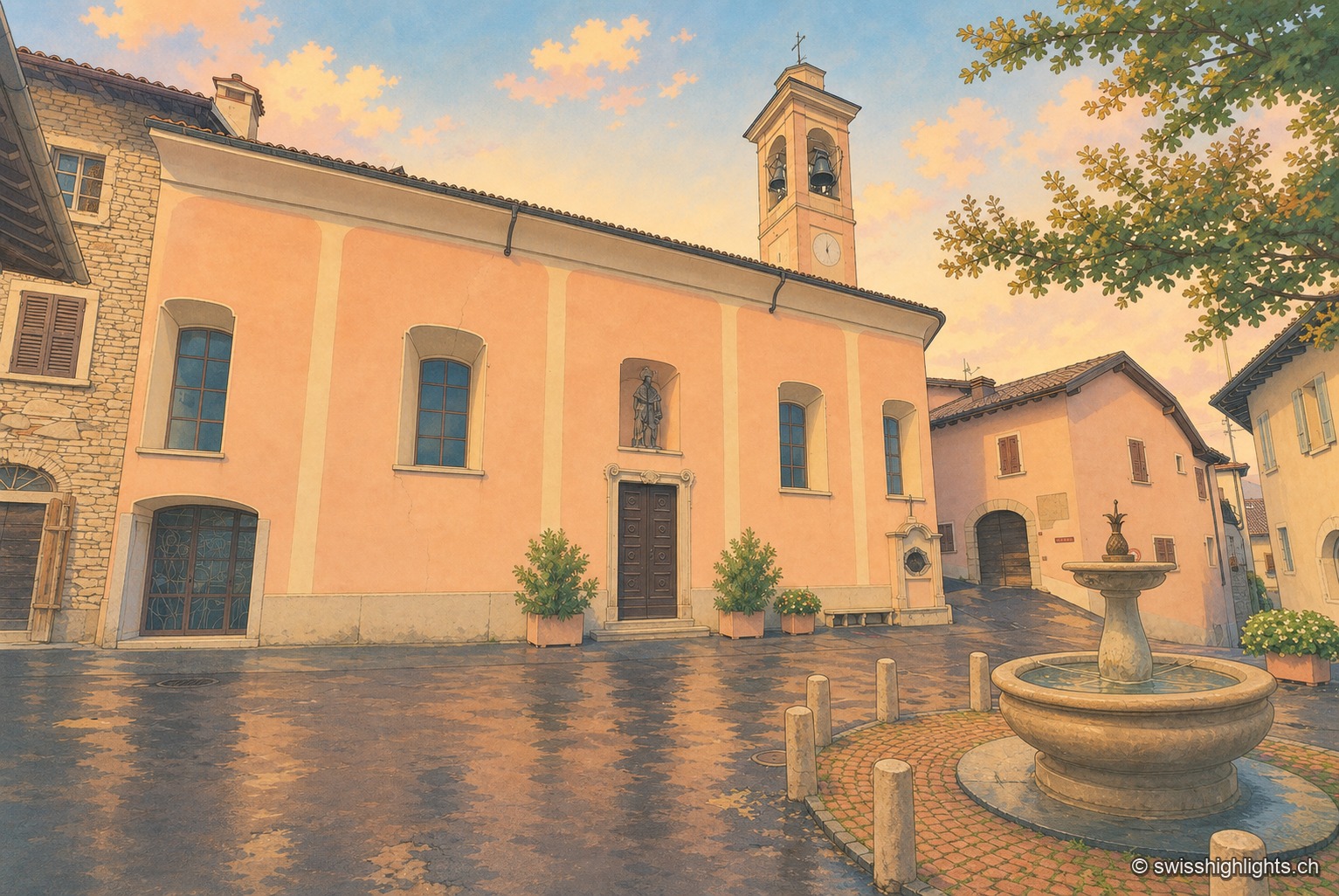
Recorded as early as 852, Meride long lived off the departure of its stucco workers and painters for northern Europe. Its land runs up to the summit of Monte San Giorgio, World Heritage listed in 2003 for its fossils.