Hamlet and ruin · Jura
Löwenburg
German-speaking hamlet of Pleigne (JU), a 13th-century castle ruin and a 16th-century fortified farm, restored since 1956 by a Basel foundation.
Löwenburg is a hamlet in the commune of Pleigne, in the canton of Jura, forming on its own the German-speaking part of an otherwise French-speaking commune, neighbouring the German-speaking municipalities of Ederswiler and Roggenburg. Set on a spur on a plateau above the Lützel valley, at an altitude of 585 metres, on an old Jura crossing route linking southern Alsace to the Pierre-Pertuis road between Basel and Biel, it combines a 13th-14th-century castle ruin and a 16th-century fortified farm, both listed in the cantonal and federal registers of protected cultural property. A local museum recounts the site's history.
The earliest human traces on the site, dated to the Middle and Late Neolithic, attest to the extraction and working of flint. The castle, first built of wood according to archaeological evidence in the late 10th century, is first mentioned in writing in 1271. Built in stone shortly before 1200 as a simple enclosure wall, it was entirely rebuilt in the mid-13th century into a fortress that was both defensive, in rubble masonry, and residential, with sandstone work, tiled roofs and glazed stoves. Destroyed by a total fire before 1300, it was promptly rebuilt; the 1356 Basel earthquake destroyed the keep and the cistern, which were rebuilt in turn, and minor works continued into the 15th century.
Owned by a noble family from the Sundgau, which bore a lion in its coat of arms by 1235 at the latest — the source of the place's name — the castle and its estate passed as a fief to the counts of Ferrette in the mid-13th century, then to the dukes of Habsburg in the 14th. Shortly after 1360, they passed by marriage and inheritance to the Basel knightly family of Münch von Münchenstein. For lack of money, the Münch family sold the estate in 1526 to Lucelle Abbey, which let the fortress fall into ruin but undertook, around 1585-1600, to turn the farm estate into a fortified complex with a residential wing, a chapel and a gate tower — a project left unfinished after the accidental death of Abbot Beatus Papa in 1597. Lucelle Abbey later used the estate as a refuge during the Thirty Years' War, and several of its monks are buried in the chapel, which nevertheless never held the status of a parish church; Löwenburg itself never became a priory of the abbey.
Passed into state hands after the fall of the Prince-Bishopric of Basel and Lucelle Abbey during the French Revolution, the estate gradually became private property from 1796. In 1956, the Christoph Merian Foundation of Basel bought the estate along with the ruin and had it fully restored between 1963 and 1966. Farming has continued there uninterrupted since the 1960s, and a local history museum, set up in 1961 in the former cheese dairy and renovated in 1995-1996, displays a papal seal among its most valued pieces.
Why this place is remarkable
Löwenburg owes its distinctiveness to a rare architectural pair: a 13th-century castle ruin, first built of wood as early as the late 10th century, and a fortified Renaissance farm left unfinished after the accidental death of its patron in 1597. Bought in 1956 by a Basel foundation that fully restored it in the 1960s, the estate remains today both an active farm and a local museum — and the only German-speaking hamlet in an otherwise French-speaking Jura commune.
History and origin
The castle was first built of wood in the late 10th century, then in stone shortly before 1200; it was entirely rebuilt in the mid-13th century into a defensive and residential fortress, destroyed by fire before 1300 and rebuilt, before the 1356 Basel earthquake again damaged the keep and cistern. Passed as a fief to the counts of Ferrette and then the dukes of Habsburg, the estate fell shortly after 1360 to the Münch von Münchenstein family, who sold it in 1526, for lack of money, to Lucelle Abbey. The abbey left the fortress in ruins but undertook, around 1585-1600, the construction of a fortified farm, left unfinished after 1597. The Christoph Merian Foundation of Basel acquired the whole estate in 1956 and restored it between 1963 and 1966.
What to do and see
- Explore the ruin of the 13th-14th century hilltop castle, perched on a spur above the plateau overlooking the Lützeltal.
- Compare the 16th-century fortified farmhouse, left unfinished after 1597, with the neighbouring medieval fortress.
- Visit the local museum housed in the former cheese dairy, which notably displays a papal seal.
Coming with family: what to know
- The site combines a ruin and a fortified farmhouse on the same estate, with a human-scale local museum providing historical bearings.
As a couple
- Walk up to the Löwenburg rocky spur for the view over the Lützeltal and the old Jura pass.
- Search together for traces of the castle's successive rebuildings, after it burned before 1300 and was later damaged by the 1356 Basel earthquake.
- Linger at the fortified farmhouse's chapel, where several monks from the Lucelle abbey are buried.
Location
Loads an interactive Google Maps view on demand, from the place's verified coordinates.
The embedded map will be enabled once an authorized Google Maps key is configured. Use the link above in the meantime.
The map could not load. Check your connection or use the link above to open the place in Google Maps.
Related places
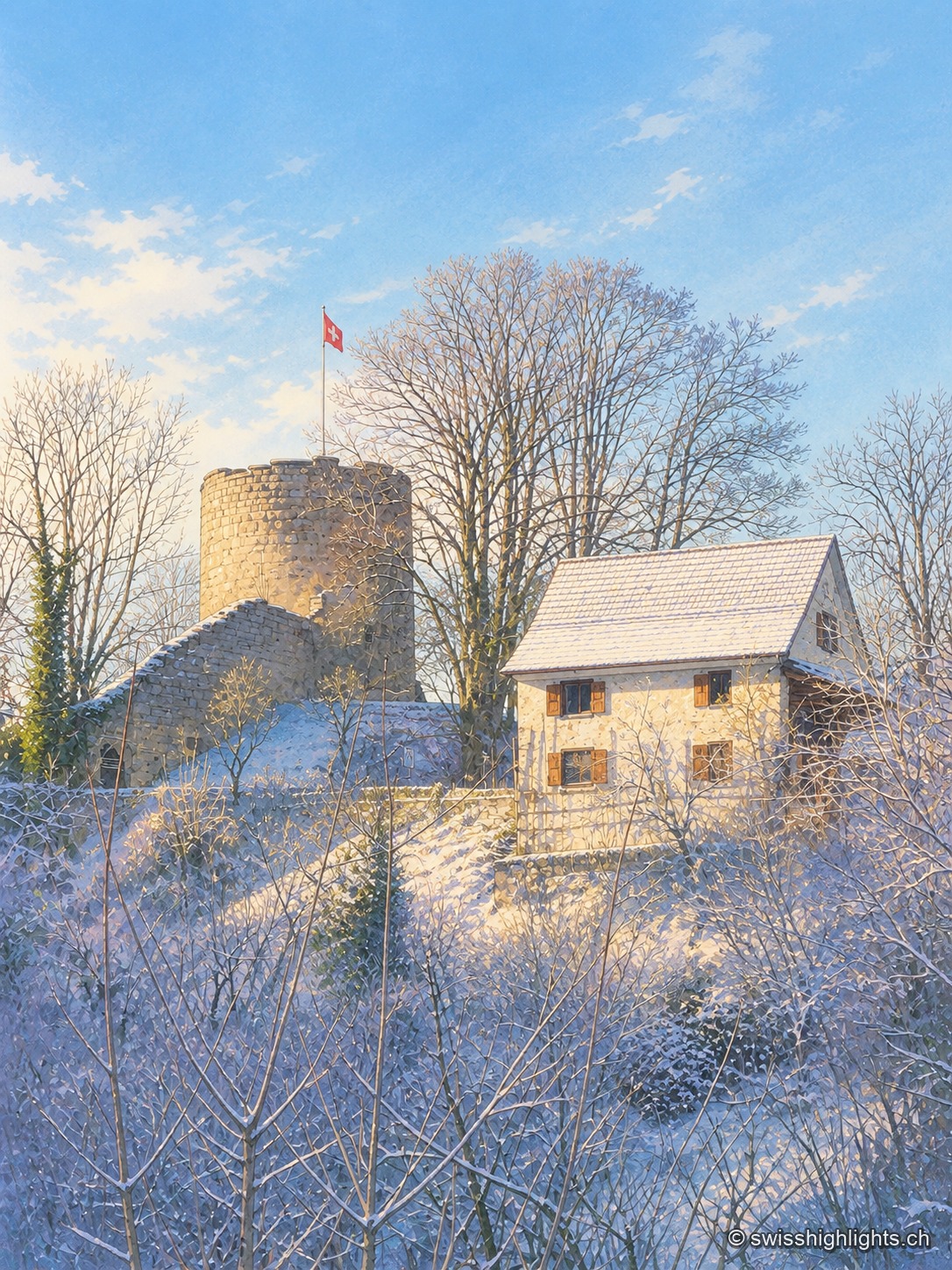
Castle village · Ajoie · 8 km as the crow flies
Pleujouse
At 580 metres, between forested heights, Pleujouse amounts to one street. The village formed around its fortress, which passed to the bishopric of Basel at the end of the 14th century and was rebuilt after the fire of 1980.
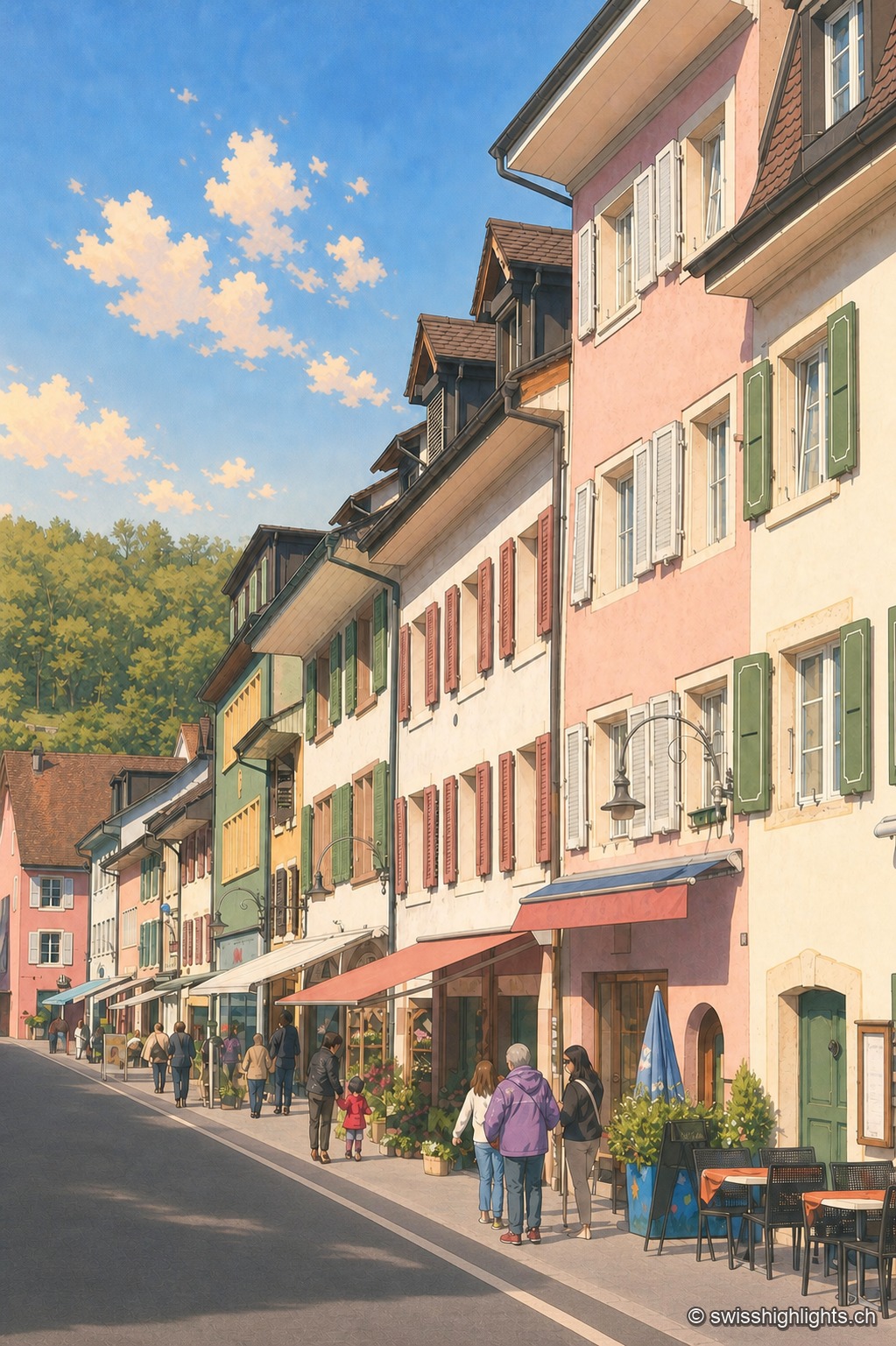
Town on the Birs · Basel-Landschaft · 14 km as the crow flies
Laufen
After refusing in 1974 to join the canton of Jura, Laufen opted in 1994 for Basel-Landschaft; its main street, closed by two gates, is lined by the church of Sainte-Catherine, built from 1698.
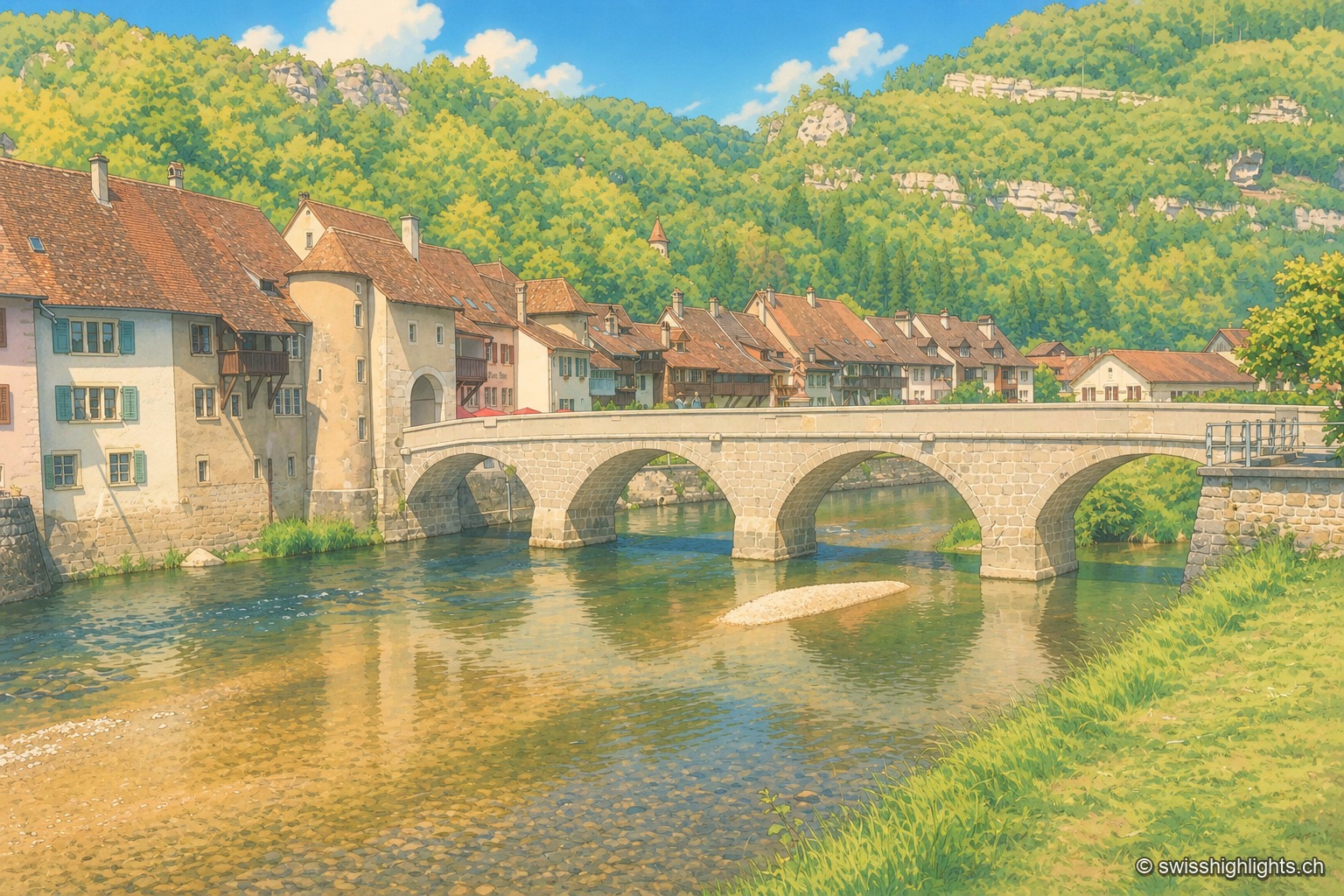
Medieval small town · Jura · 14 km as the crow flies
Saint-Ursanne
Born around a Benedictine abbey, it keeps its Romanesque collegiate church, its cloister and burgher houses from the 14th to the 16th century. At 440 metres, between wooded cliffs and river, it left its isolation only in 1877.