Village · Ticino
Meride
A Ticino village set against Monte San Giorgio, a mountain listed as World Heritage for its Triassic fossils.
Meride sits on a flank of Monte San Giorgio, at about 580 metres, in a basin open to the south and planted with vines, closed to the north by forest. The village is built around courtyards: narrow winding lanes run along the walls of the inner yards, which are cobbled and opened by porticoes, loggias and stone gateways. This core is listed in the federal inventory of built sites of national importance. An independent municipality until 2013, Meride is today a quarter of Mendrisio.
The name appears in writing as early as 852. In the Middle Ages the place belonged to the pieve of Riva San Vitale and to the diocese of Como; it broke away in 1483 and came under Confederate authority in 1517. The village's history is above all one of departure: its stucco workers and painters — the Fossati, the Oldelli, the Clerici — worked in Germany, Russia and France, came home for the winter and decorated their own houses. While they were away, women and the elderly kept the subsistence economy going. Their letters passed through the Casa Oldelli, the notaries' house, whose family archive is now held in Bellinzona.
Above the village, the church of San Silvestro stands on the hill where a castle once did; it became the parish church at the separation of 1483 and holds a cycle of frescoes by Francesco Antonio Giorgioli, a painter born here. In the centre of the village, the Monte San Giorgio fossil museum, rebuilt and enlarged by Mario Botta, reopened in 2012. It shows what the mountain has been yielding since 1850: more than 20,000 fossils of fish, reptiles and plants, laid down on the floor of a shallow Middle Triassic sea.
Why this place is remarkable
Two histories lie on top of each other here, an abyss of time apart. Beneath the village the mountain keeps the floor of a Middle Triassic sea, whose fossils earned Monte San Giorgio its World Heritage listing. Above it, a village built by men who were not there: stucco workers and painters gone to work in Germany, Russia and France, who came home in winter to decorate their own houses. A few of their works can still be seen.
History and origin
Monte San Giorgio is among the best known Middle Triassic fossil deposits. The region was then the floor of a shallow sea, and the sediments preserved fish, marine reptiles and plants. Scientific digs have followed one another since 1850 and have brought out more than 20,000 pieces. The site has been on the UNESCO World Heritage list since 2003, and the land of the former municipality of Meride runs up to its summit.
What to do and see
- Walk through the narrow, winding lanes of the village, built around courtyards with porticoes, loggias and stone gateways.
- Visit the Monte San Giorgio fossil museum, redesigned by Mario Botta, which displays more than 20,000 fossils from the Middle Triassic.
- Go up to the church of San Silvestro to see the fresco cycle by Francesco Antonio Giorgioli, a painter born in Meride.
- Look through the village for houses decorated by local stucco workers and painters who went abroad to work.
Coming with family: what to know
- The fossil museum, with its finds from Monte San Giorgio, offers an indoor stop suited to a break after walking through the village.
As a couple
- Stroll through the pebble-paved inner courtyards of the village core.
- Visit together the Monte San Giorgio fossil museum, a site listed as a World Heritage since 2003.
- Go up to the church of San Silvestro for the view from the hill where an old castle once stood.
Location
Loads an interactive Google Maps view on demand, from the place's verified coordinates.
The embedded map will be enabled once an authorized Google Maps key is configured. Use the link above in the meantime.
The map could not load. Check your connection or use the link above to open the place in Google Maps.
Related places
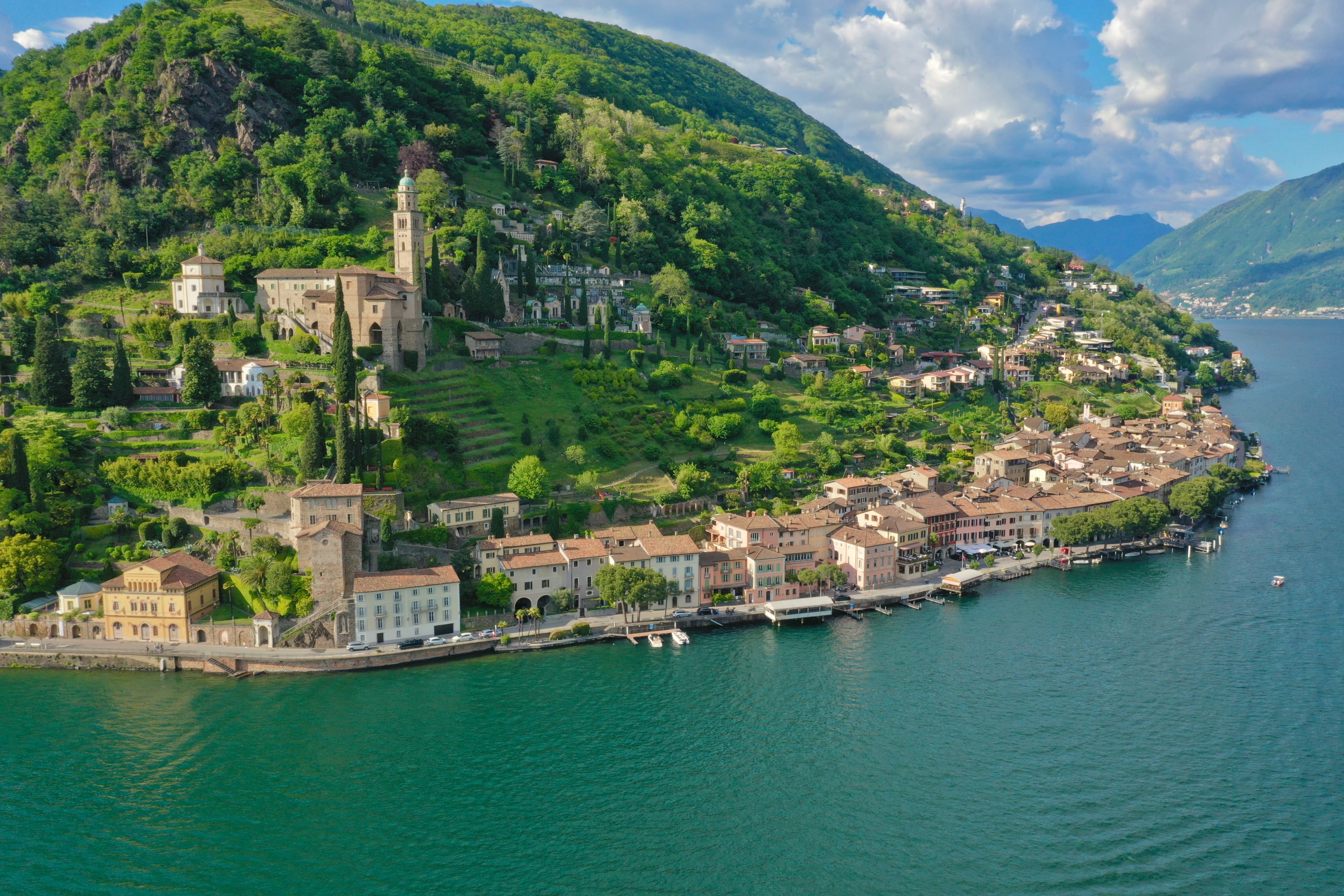
Ticino · Lake Lugano · 5 km as the crow flies
Morcote
Morcote is strung along the shore of Lake Lugano, facing Italy. Above the roofs stands the church of Santa Maria del Sasso; between them, a stairway of 404 steps and a cemetery of 1750.
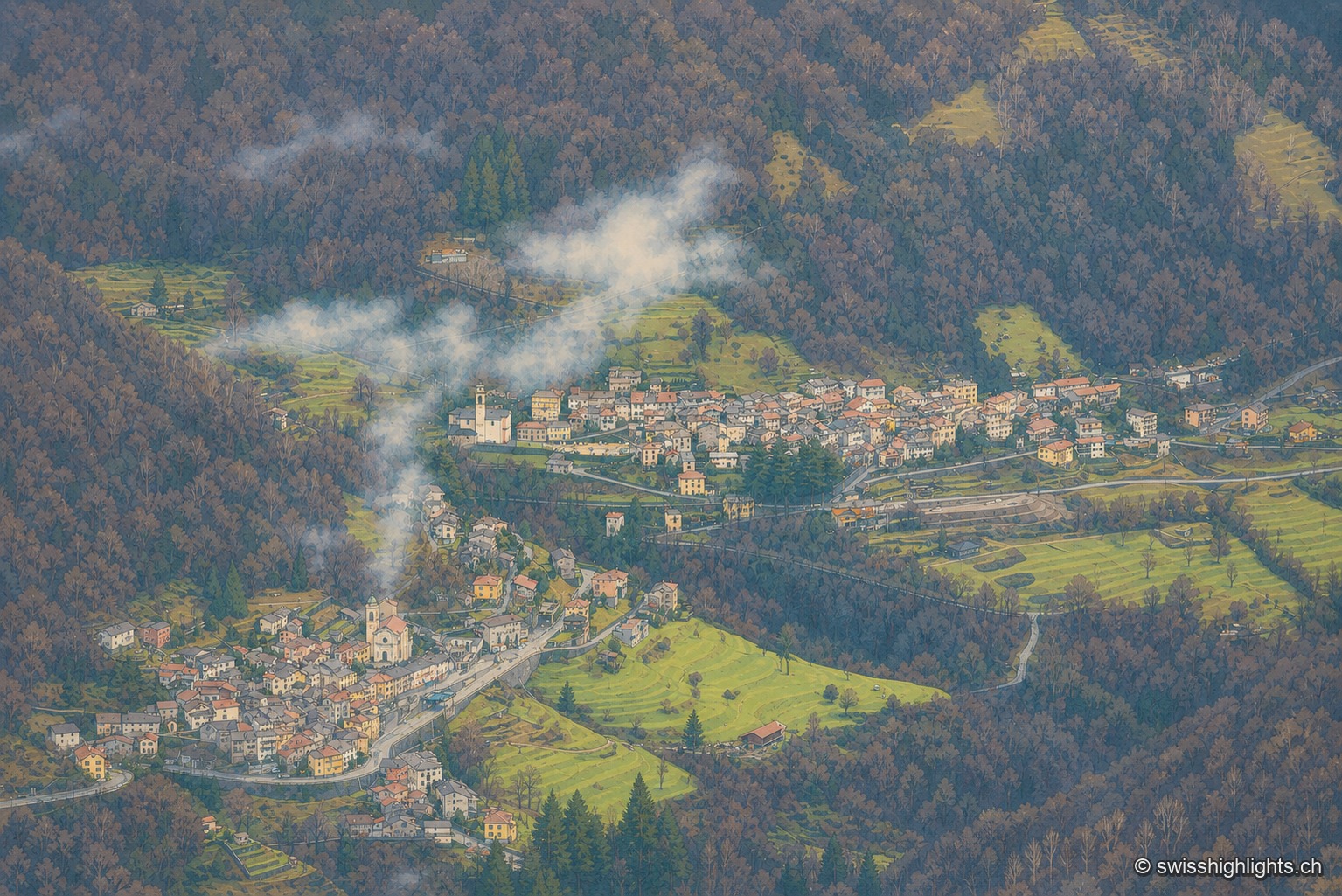
Village · Valle di Muggio, Ticino · 8 km as the crow flies
Muggio
Recorded in 852, it gave its name to the Valle di Muggio. In the fifteenth century its craftsmen cut the long oars of the Duchy of Milan's fleet; its church of San Lorenzo was rebuilt in 1760.
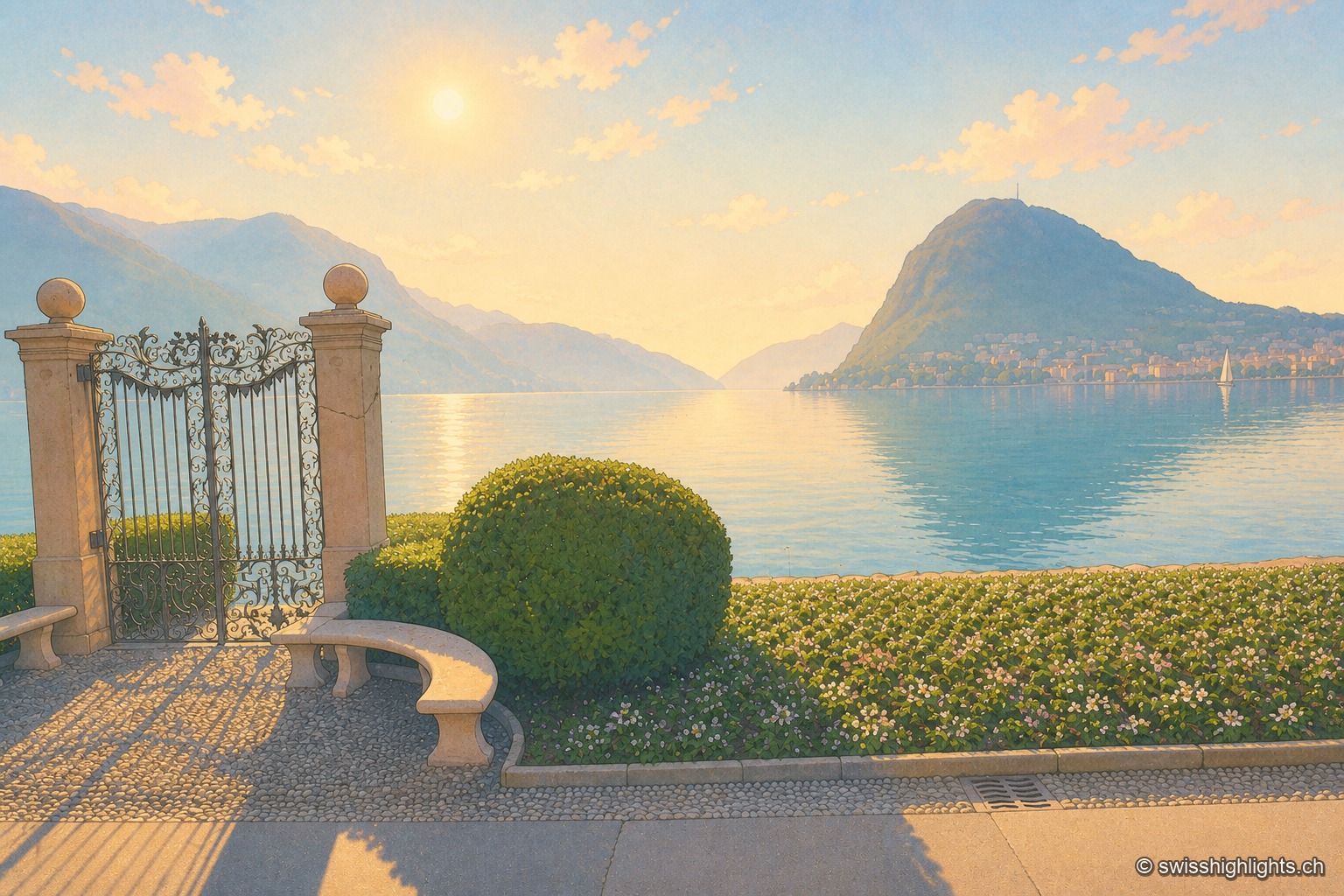
Lakeside city · Ticino · 13 km as the crow flies
Lugano
The country's third financial centre, Lugano hosted the first Eurovision Song Contest in 1956 and has, since the mergers of 2004, 2008 and 2013, an agglomeration of about 150,000 inhabitants on the shore of Lake Lugano.