Italian-speaking town · Grisons
Poschiavo
A Grisons town facing the Valtellina: Italian-speaking, split between Catholics and Reformed, strung along the Poschiavino at 1,014 metres.
Poschiavo occupies a valley that crosses the Alpine watershed and runs south: the Bernina pass separates it from the rest of Switzerland, its water joins the Adda in the Valtellina, and Italian is spoken here — the Val Poschiavo is one of the Italian-speaking parts of Grisons. The town stretches at 1,014 metres along the Poschiavino, crossed by three bridges, from the Alta Vila in the north to the ima Vila in the south. At its centre stand the collegiate church of San Vittore, Gothic raised on a Romanesque base, the square with the town house, and the communal tower, once the tower of the bailiffs of the duke of Milan.
The street running south, the Via d'i Palazz, tells another story. On one side, gardens with their gazebos, kitchen plots and fruit trees; on the other, a row of houses built by people who left to make their fortune across Europe — from Russia to Spain, from Denmark to Sicily — and came back to end their lives at home. A little lower, the Baroque church of Santa Maria, flanked by poplars, serves as the goal of processions; the Corpus Domini procession covers the town with small altars of flowers, candles, moss and fir branches.
The Reformation cut the town in two without breaking it. The converts turned to trade and made the community prosperous; the noble families, Catholic for the most part, kept their influence in Chur as in Milan and the Valtellina; and the farmers of the cuntradi, the hamlets north and south of the town, remained Catholic, each with its richly decorated Baroque chapel, the one at San Carlo holding a Way of the Cross with figures at almost life size. In April 1623 a band from the Valtellina, in the wake of the massacre of 1620, reached Poschiavo and killed some twenty Reformed; the survivors took refuge in the Engadine, at Zurich and Bern. They brought back Ladin words, and the speech of the Reformed has differed from that of the Catholics ever since.
Why this place is remarkable
Poschiavo owes its character to a hinge position: Swiss in law, Italian in language, the valley looks towards Milan and the Valtellina rather than north. The town keeps the trace of it — a Gothic collegiate church set on a Romanesque base, the tower of the former bailiffs of the duke of Milan, the old Massella palace built in 1682 and turned into a hotel. The confessional split, for its part, is not read only in the churches: it left two ways of speaking the same dialect, the Reformed one carrying the Ladin words brought back from the Engadine after 1623.
History and origin
In the sixteenth and seventeenth centuries Poschiavo was among the most populous towns of Grisons and the Valtellina. The Grisons had conquered the Valtellina in 1512 and shared out its offices; the resentment that built up broke out in 1620 with the massacre of the Protestants and reached Poschiavo in April 1623. The valley came out of that fracture with two communities living side by side, trade turned southwards and an architecture owing as much to Milan as to Chur. The town has belonged since 2017 to the association of the most beautiful villages of Switzerland.
What to do and see
- Visit the collegiate church of San Vittore, Gothic built on a Romanesque base, at the centre of the town.
- Follow the Via d'i Palazz, which contrasts gardens with gazebos and fruit trees against houses built by emigrants returning from Russia, Spain, Denmark or Sicily.
- Stop at the baroque church of Santa Maria, flanked by poplars, the endpoint of the town's processions.
- Note the town tower, formerly the tower of the reeves of the Duke of Milan, a reminder of the valley's historic orientation toward Milan and the Valtellina.
As a couple
- Cross the three bridges spanning the Poschiavino, from the Alta Vila in the north to the Ima Vila in the south.
- Walk along the Via d'i Palazz observing the houses built by residents who left to seek their fortune in Europe.
- Stop in front of the former Palazzo Massella, built in 1682 and now a hotel.
Location
Loads an interactive Google Maps view on demand, from the place's verified coordinates.
The embedded map will be enabled once an authorized Google Maps key is configured. Use the link above in the meantime.
The map could not load. Check your connection or use the link above to open the place in Google Maps.
Related places
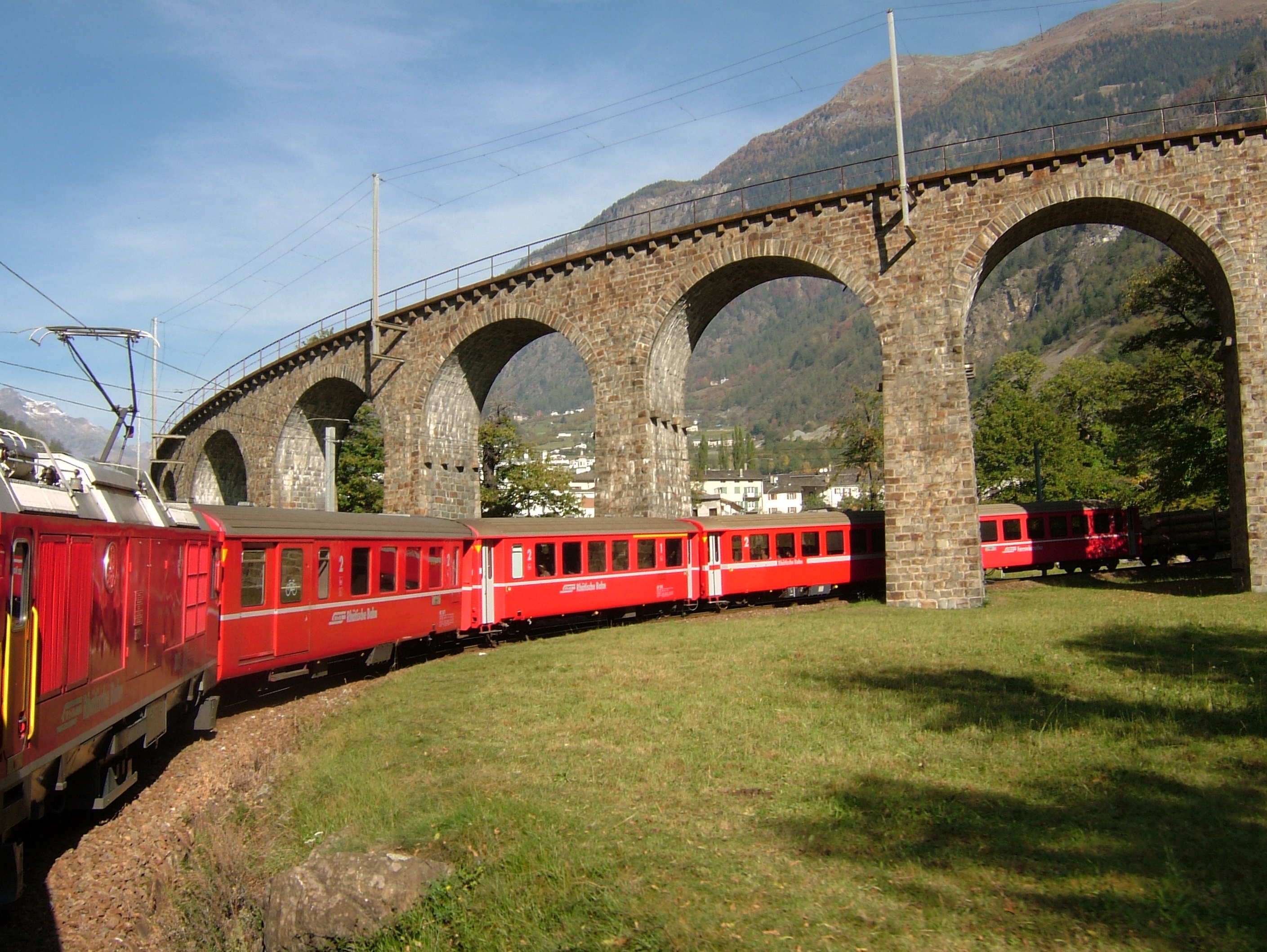
Graubünden · UNESCO World Heritage · 9 km as the crow flies
Bernina Railway
From St. Moritz to Tirano, 60.688 metre-gauge kilometres cross the Bernina Pass at 2,253 metres. No rack rail: adhesion alone, on gradients reaching 7%.
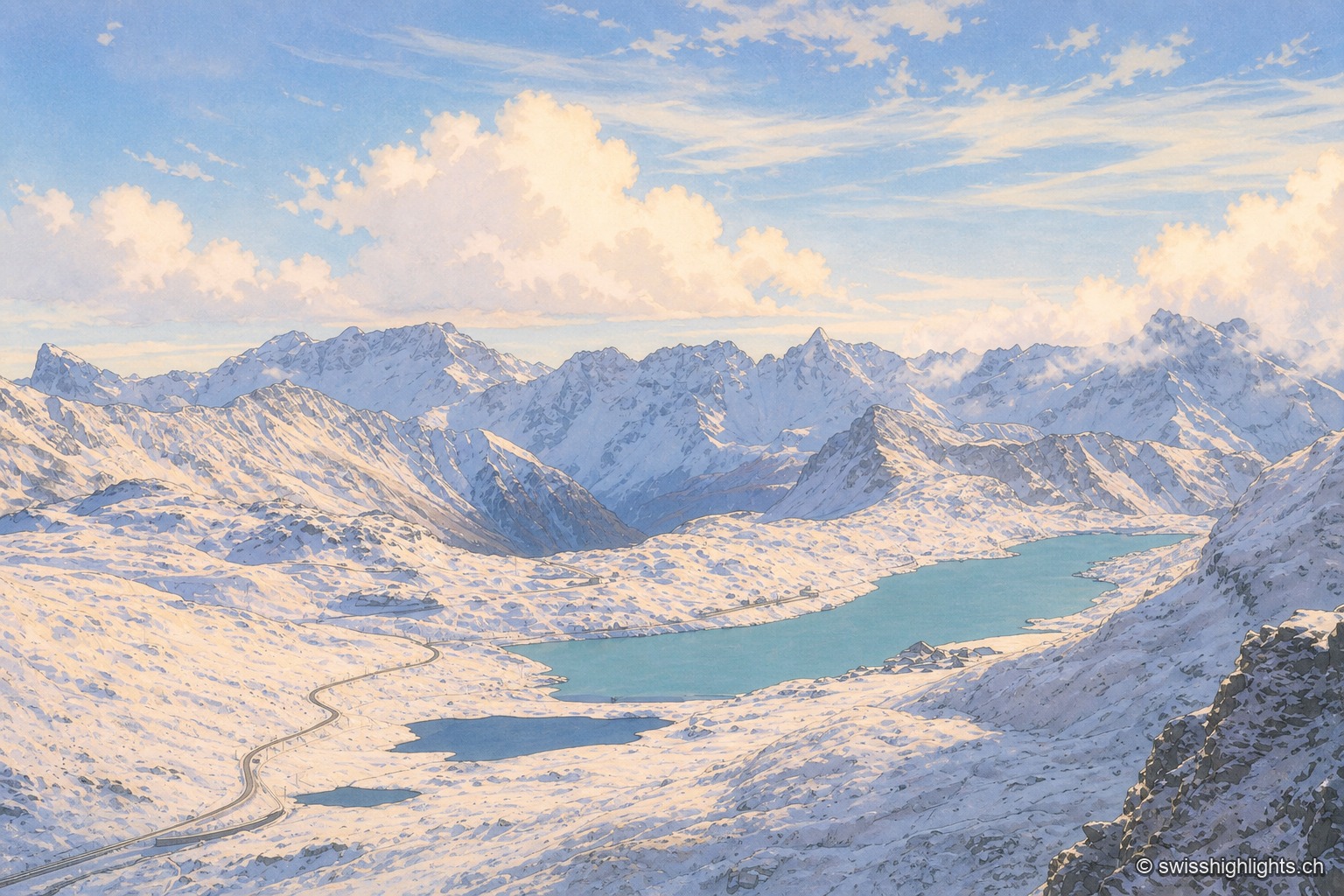
Alps' highest year-round pass · 9 km as the crow flies
Bernina Pass
Sitting on the watershed between the Black Sea and the Adriatic, the pass holds a hospice and two lakes, the Lej Nair and Lago Bianco. The road opened 1842-1865 (38 km); the Rhaetian Railway line was built in 1908-1910.
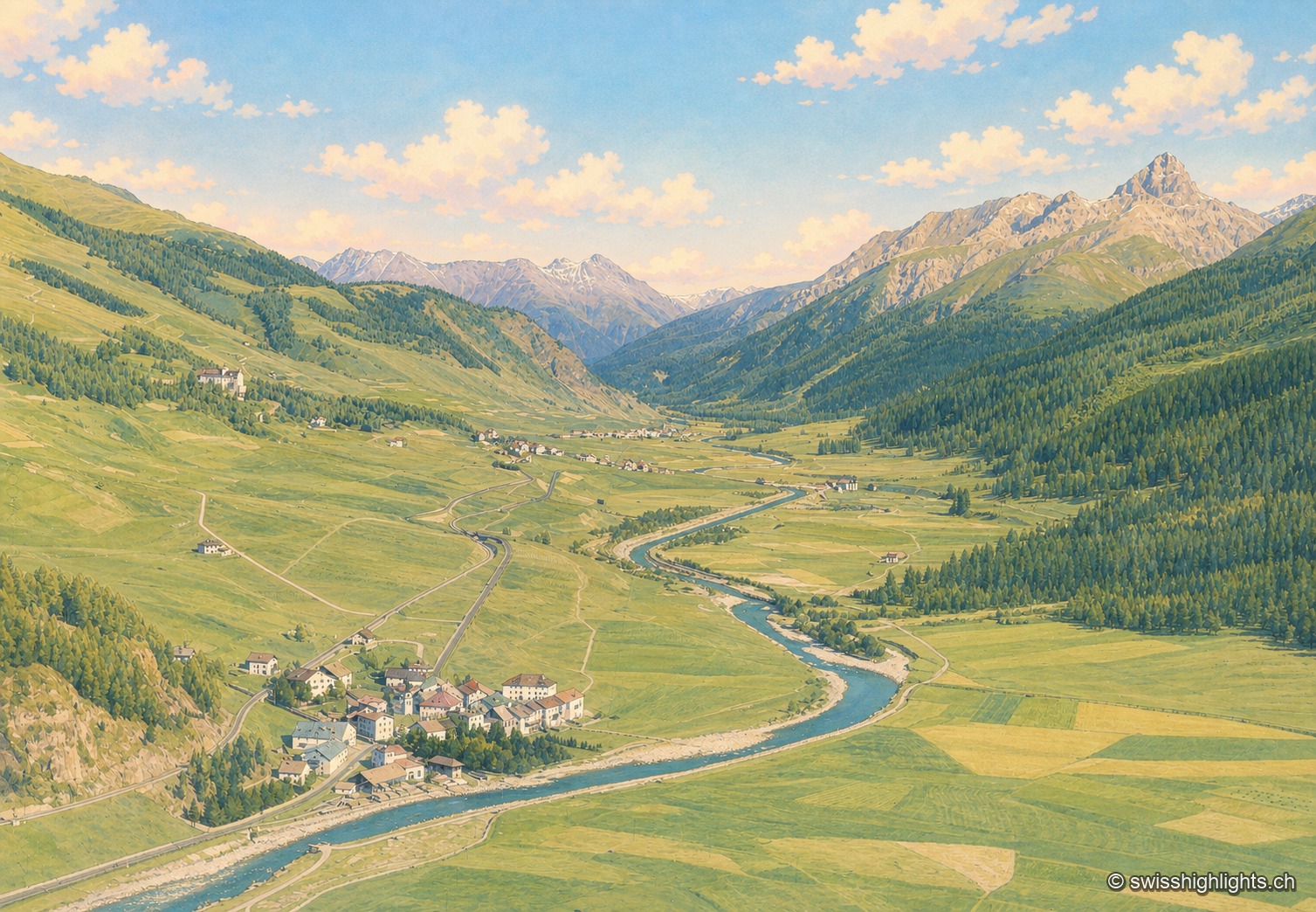
Village · Upper Engadine, Grisons · 29 km as the crow flies
Madulain
First recorded in 1137-1139 as Madulene, the village is overlooked by the ruins of Guardaval Castle, built in 1251 for the Bishop of Chur. Madulain joined the Les Plus Beaux Villages de Suisse association in 2018.