City of ambassadors
Solothurn
Capital of Solothurn canton, its old town was rebuilt between 1520 and 1790; known as the 'city of ambassadors', it housed France's embassy (1530-1792).
Solothurn, capital of the canton of the same name, covers 6.28 square kilometres between the Weissenstein massif and the Aare, which flows through the town. Roman legions founded the colony of Salodurum there around the year 20; around 330 the site was turned into a fortified castrum, remains of which survive in the old town. Admitted to the Swiss Confederation in 1481, the town remained loyal to the Catholic faith during the Reformation. It had 16,847 inhabitants at the end of 2024, with an urban area of more than 70,000 people.
The present old town was built for the most part between 1520 and 1790, earning it the nickname 'the most beautiful baroque town in Switzerland'. Its fortifications include the Nydeck tower (1454), the Krummturm tower (1462) and the Basel gate (1504-1508); the town hall, begun in 1467, was not completed until 1711. The town also holds the Cathedral of St Ursus and St Victor, the Jesuit church (1680-1689), the Arsenal (1610-1619) and the Besenval Palace (1703-1706), described as the first private mansion built on Swiss territory.
From 1530 to 1792 Solothurn was the seat of the French kingdom's embassy to Switzerland, which gave it its traditional nickname 'city of ambassadors'. The Polish national hero Tadeusz Kościuszko died there on 15 October 1817. The town holds a carnival every year and the Solothurn Film Festival, devoted to Swiss cinema; its art museum, opened in 1902, displays works by Ferdinand Hodler and Cuno Amiet, among others. Solothurn received the Wakker Prize in 1980.
Why this place is remarkable
Solothurn owes its character to the two and a half centuries during which the French kingdom's embassy to Switzerland resided there, from 1530 to 1792: this diplomatic proximity fed the almost complete rebuilding of the old town between 1520 and 1790, in a style held to be baroque, behind ramparts and towers several of which date back to the 15th century.
History and origin
Roman legions founded the colony of Salodurum around the year 20, at the point where the road from Aventicum (Avenches) to Vindonissa (Windisch) crossed the Aare. Around 330 the site was turned into a fortified castrum, remains of which are still visible in the old town. Solothurn was admitted to the Swiss Confederation in 1481, then hosted the French kingdom's embassy from 1530 to 1792.
What to do and see
- Walk through the old town, rebuilt between 1520 and 1790, nicknamed "Switzerland's most beautiful Baroque town."
- See the fortifications: the Nydeck tower of 1454, the Krummturm of 1462, and the Basel gate of 1504-1508.
- Visit St Ursus Cathedral, the Jesuit Church, and the Besenval Palace, presented as the first private mansion built in Switzerland.
- Look at the art museum, opened in 1902, for works by Ferdinand Hodler and Cuno Amiet.
As a couple
- Stroll between the Aare and the Weissenstein through the old town, rebuilt over two and a half centuries.
- Search together for traces of the Roman castrum from around 330 AD, still visible in the town.
- Stop at the Besenval Palace, presented as the first private mansion in Switzerland.
- As you walk through the town, tell each other about the two centuries when Solothurn hosted the embassy of the Kingdom of France, from 1530 to 1792.
Location
Loads an interactive Google Maps view on demand, from the place's verified coordinates.
The embedded map will be enabled once an authorized Google Maps key is configured. Use the link above in the meantime.
The map could not load. Check your connection or use the link above to open the place in Google Maps.
Related places
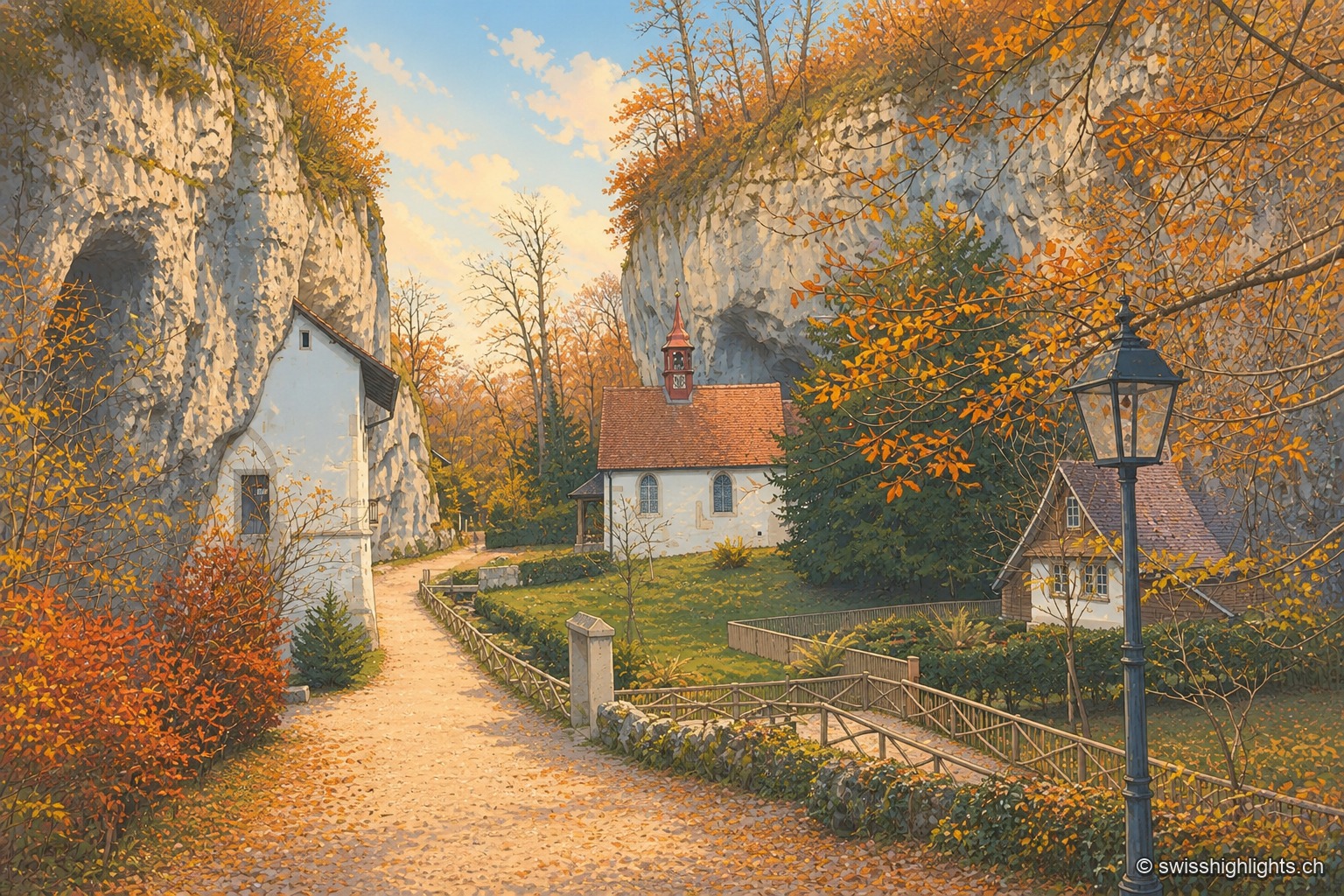
Gorge hermitage · Solothurn · 2 km as the crow flies
Gorges de Sainte-Vérène
Landscaped as a Romantic garden in the late 18th century by the French diplomat Louis Auguste Le Tonnelier de Breteuil, the gorge is ISOS-listed, and its hermitage is a class A Swiss cultural property.
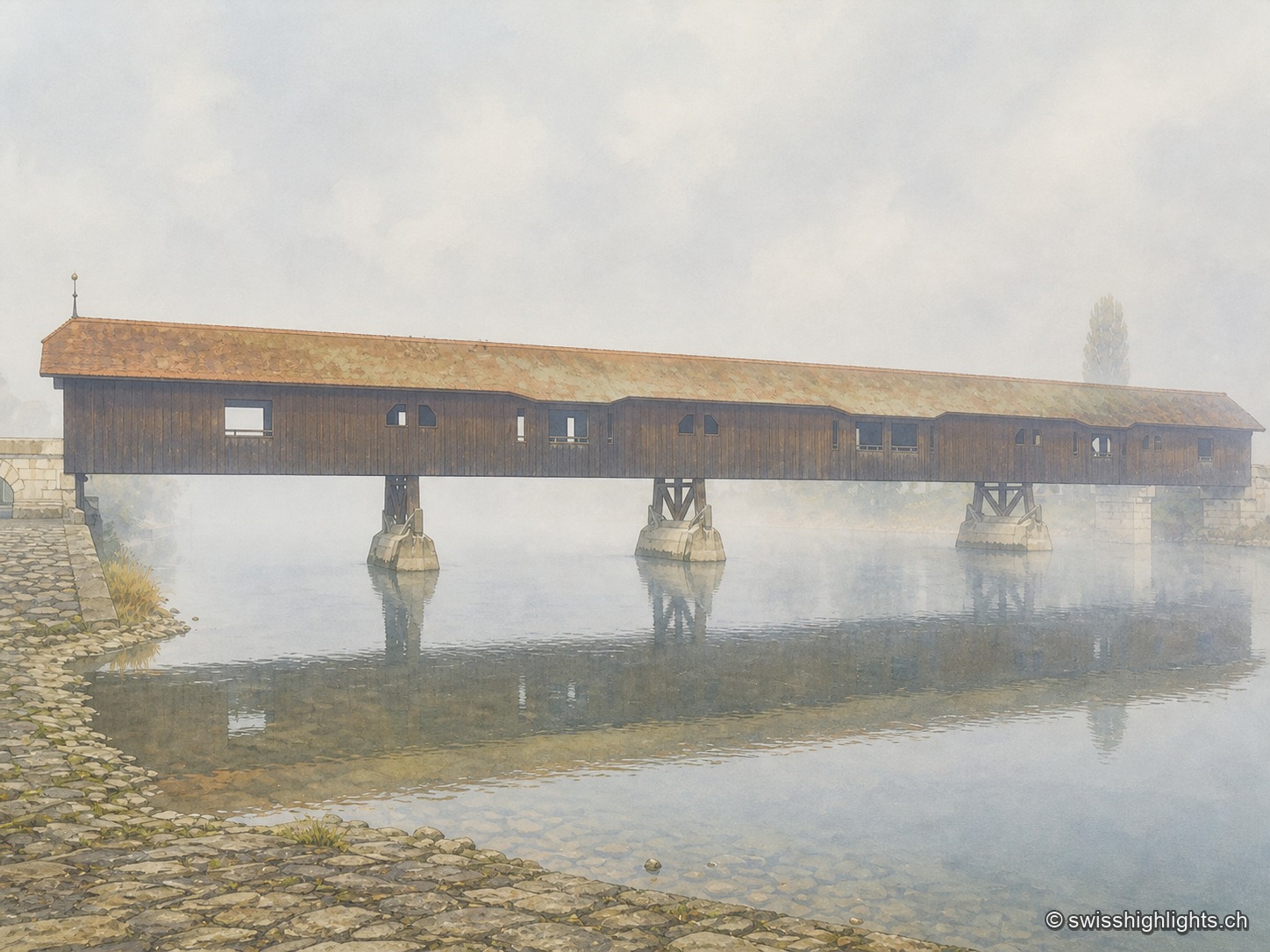
Medieval small town · Seeland · 15 km as the crow flies
Büren an der Aare
A timber crossing has linked the two banks since the 13th century. Destroyed eight times by floods, ice or fire, it is now in its ninth version, opened in 1991 after the arson of 1989.
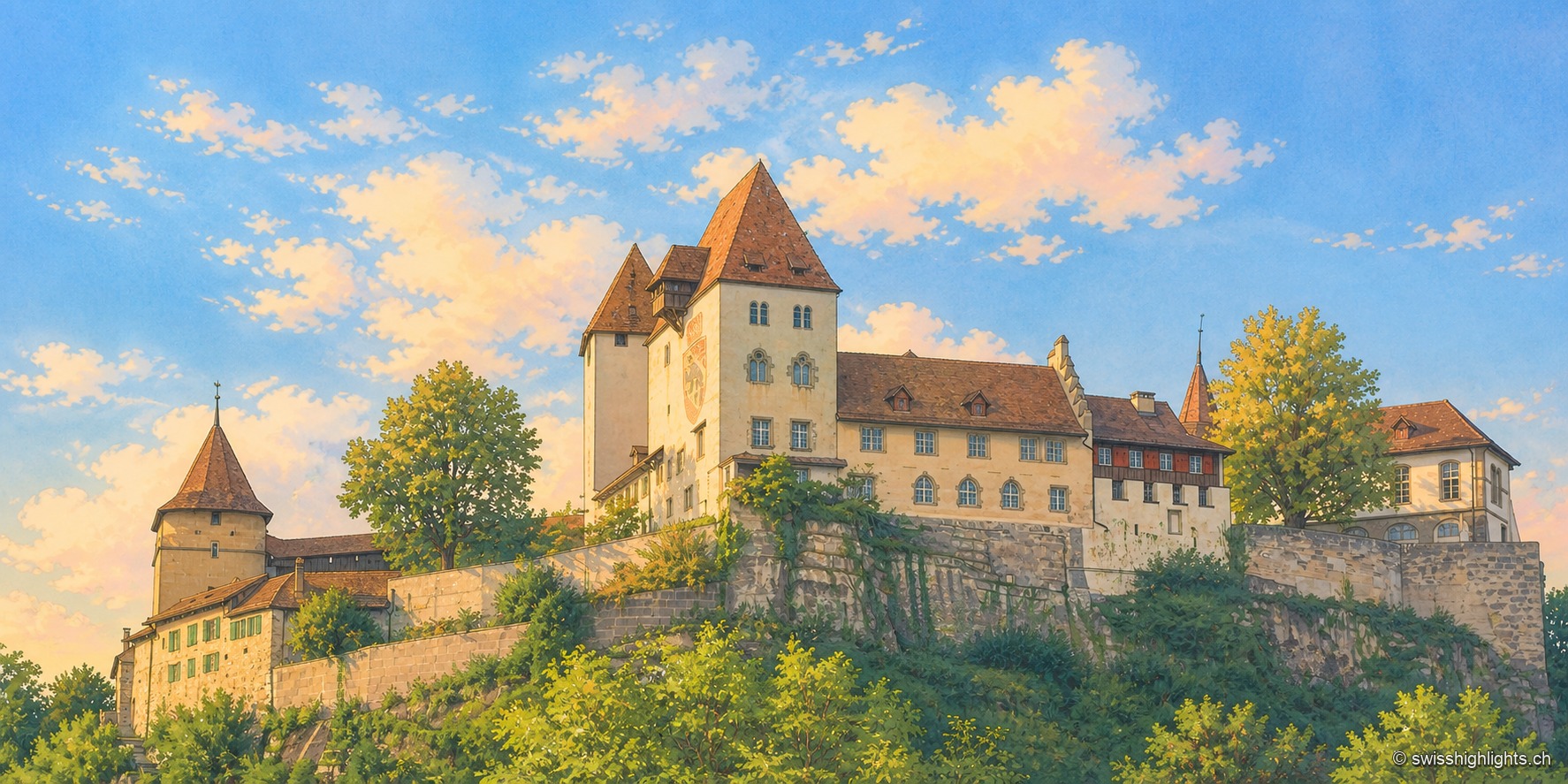
Emmental town · Bern · 18 km as the crow flies
Berthoud (Burgdorf)
The castle holds the sandstone spur above the town; its name appears as early as 1084. In 1273 the Goldene Handfeste set the town's law in writing, in force for five centuries. In 1899 the line to Thun made it a laboratory of electric traction.