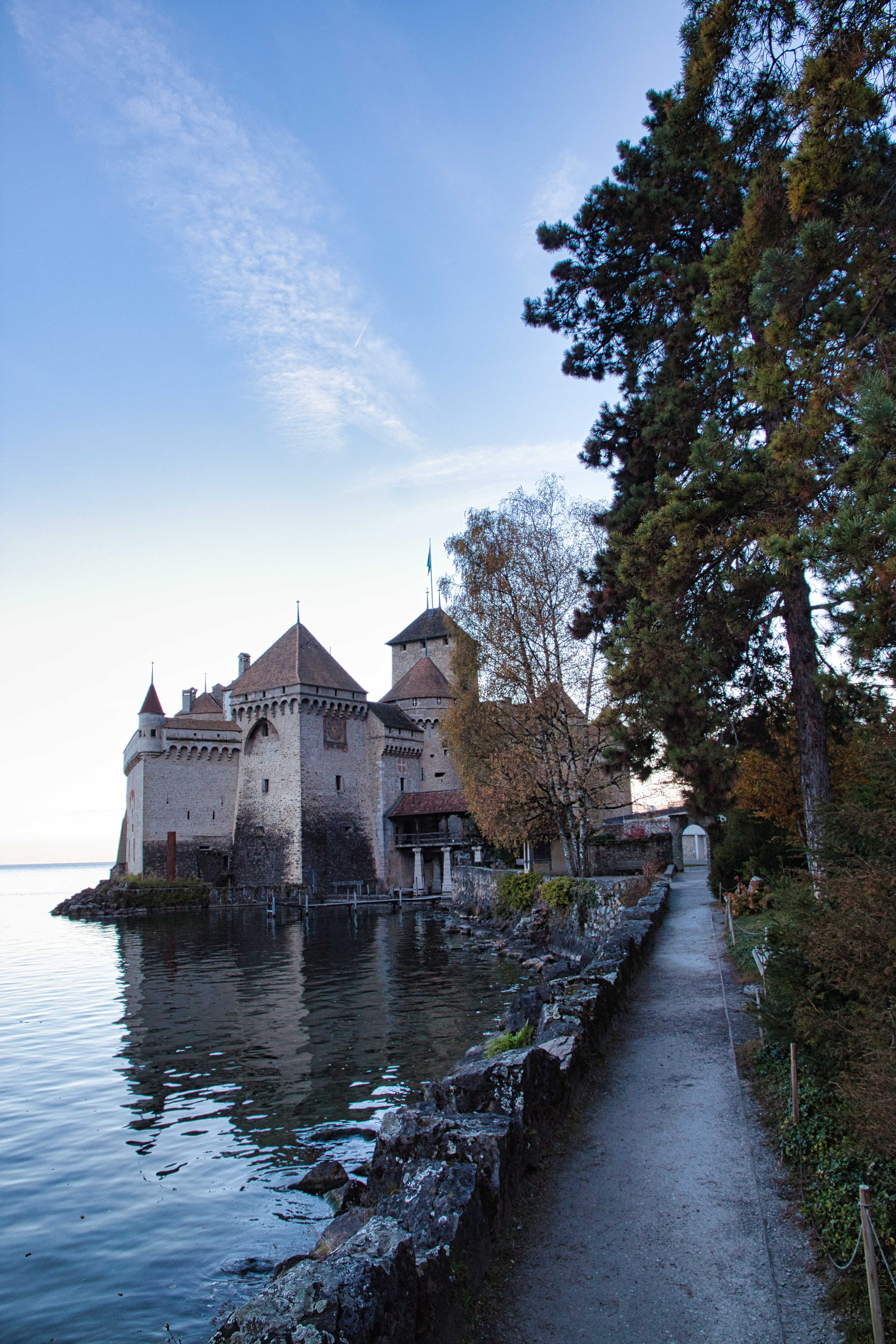
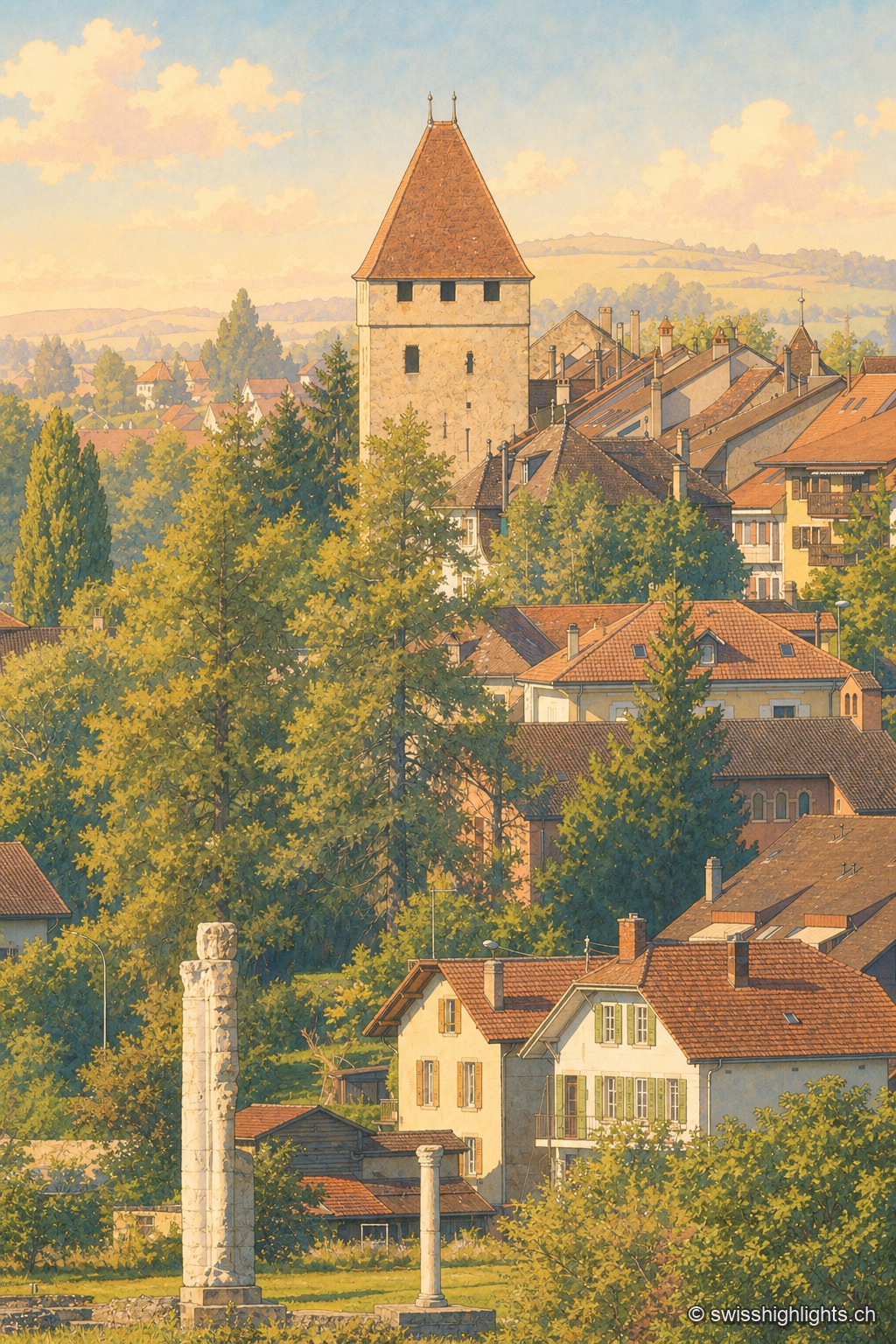
Late afternoon view of the old town of Avenches: in the foreground, two Roman columns standing in the grass, remnants of the Cigognier sanctuary; beyond the rooftops, the Tornallaz, a square tower with a pointed roof from the ancient wall, rises above the Vaud houses with light-colored facades and colorful shutters.

Vaud

Regions

The canton of Vaud brings together 18 places referenced on Swiss Highlights: 4 natural sites, 2 heritage or cultural sites, 9 villages and 3 towns.

Not to miss

Chillon Castle seen from the south: its towers and main building, covered with tiled roofs, stand on a rock at the edge of Lake Geneva, bordered by a tree-lined lakeside path.

Medieval castle · Vaud

Chillon Castle

On a limestone rock at the edge of Lake Geneva, Chillon layers eight centuries of occupation: seat of the counts of Savoy, Bernese bailiwick for some two hundred and sixty years, cantonal monument since 1798.
Related collections

Best Swiss Villages members · “The 50 most beautiful sites” (Switzerland Tourism)

AvenchesBursinsChillon CastleGoldenPass ExpressGrande CariçaieGrandsonGrottes de VallorbeLake GenevaLausanneLe PontMoudonRomainmôtierRossinièreRougemontSaint-SaphorinTaveyanneTine de ConflensYvorne
Interactive map — schematic view of Switzerland.
Late afternoon view of the old town of Avenches: in the foreground, two Roman columns standing in the grass, remnants of the Cigognier sanctuary; beyond the rooftops, the Tornallaz, a square tower with a pointed roof from the ancient wall, rises above the Vaud houses with light-colored facades and colorful shutters.

Roman capital · Vaud

Avenches

Aventicum had more than 20,000 inhabitants under the High Empire before the Alamanni devastated it in 258. The town hall, rebuilt in 1753, stands over the square; the IENA, opened in 1999, made it Switzerland's horse town.
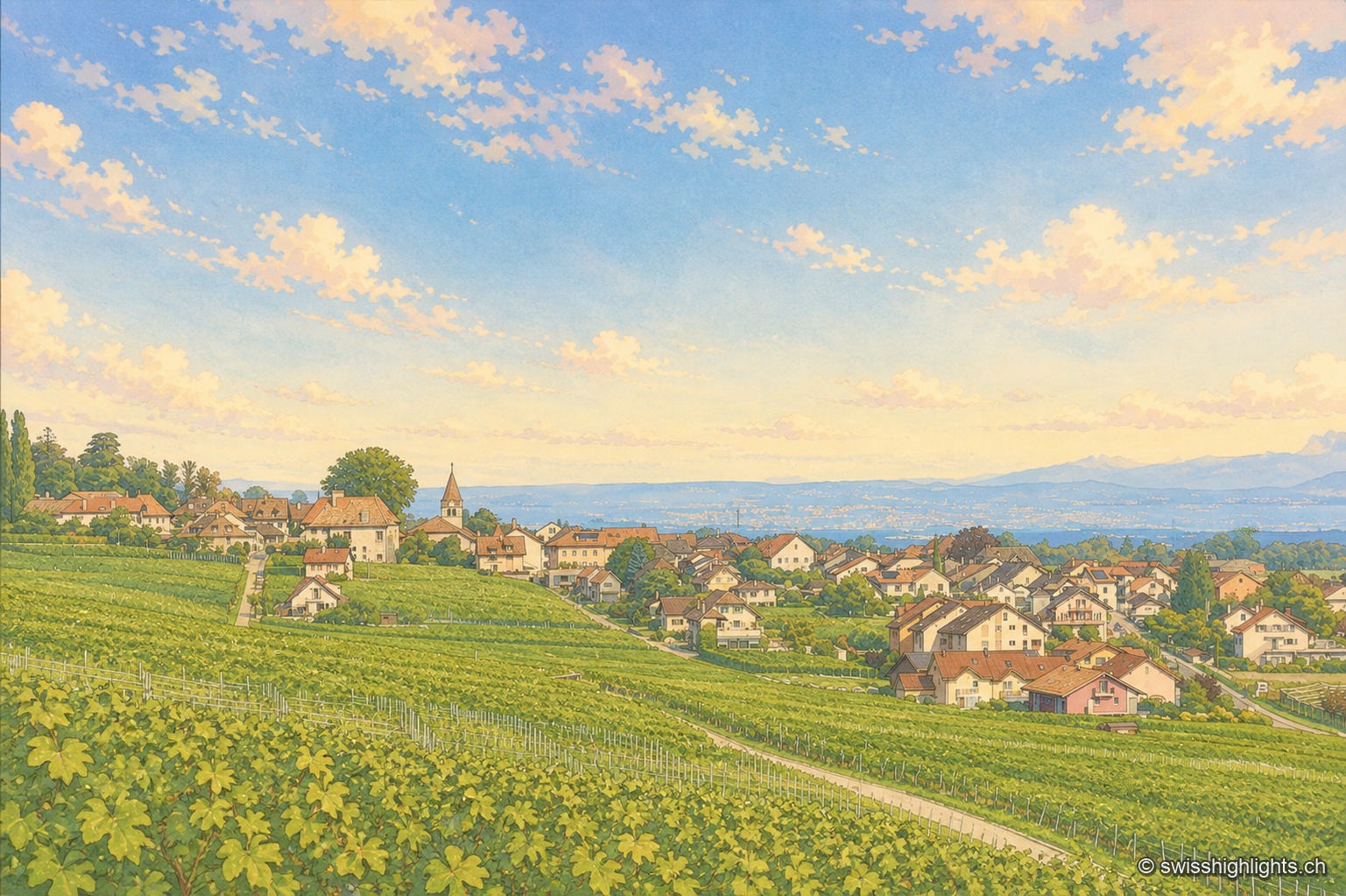
The village of Bursins seen from the vineyards at the end of the day: rows of vines fill the entire foreground, the houses and bell tower huddle in the middle of the hillside, and behind them the plain, Lake Geneva and the opposite shore fade into the heat haze.

Wine village · La Côte, Vaud

Bursins

The church of Saint-Martin, built in the 11th century and a priory of Romainmôtier from 1238, holds the upper end of the village. Below it the vines run down towards the plain and the lake.

Chillon Castle seen from the south: its towers and main building, covered with tiled roofs, stand on a rock at the edge of Lake Geneva, bordered by a tree-lined lakeside path.

Medieval castle · Vaud

Chillon Castle

On a limestone rock at the edge of Lake Geneva, Chillon layers eight centuries of occupation: seat of the counts of Savoy, Bernese bailiwick for some two hundred and sixty years, cantonal monument since 1798.
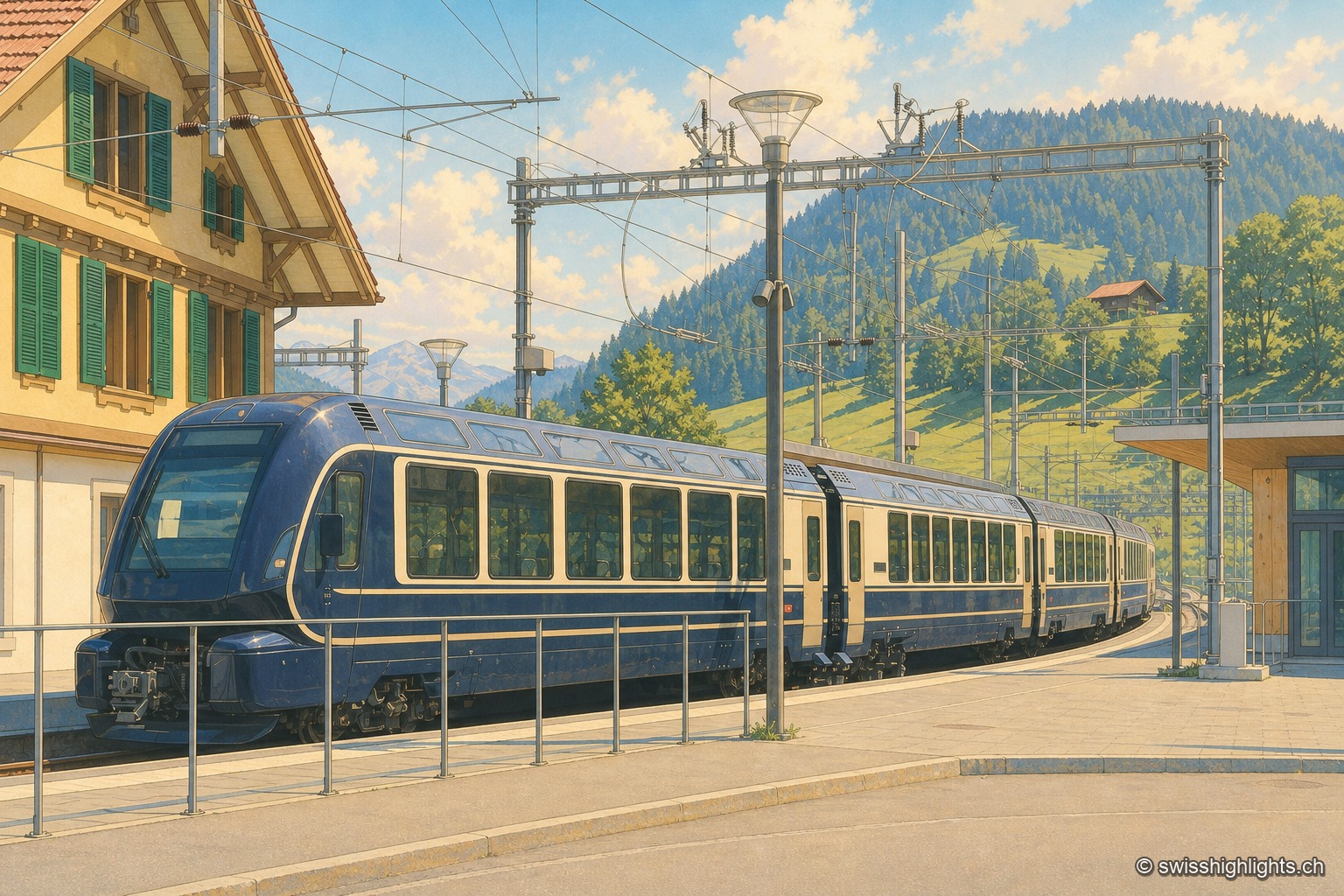
At the platform in Zweisimmen station, the GoldenPass Express train shows off its rounded midnight-blue nose and cream body outlined with a golden stripe, with wide windows running its full length. On the left, a wooden chalet with green shutters bears the station's name; behind the train, mown meadows and woods rise toward the ridges of the Simmental under a summer sky with cumulus clouds.

Railway line · Vaud–Bern

GoldenPass Express

Between Lake Geneva and the Bernese Oberland the train moves from 1,000-millimetre track to 1,435: the wheels spread apart and the body adjusts to platforms that rise from 300 to 560 millimetres.
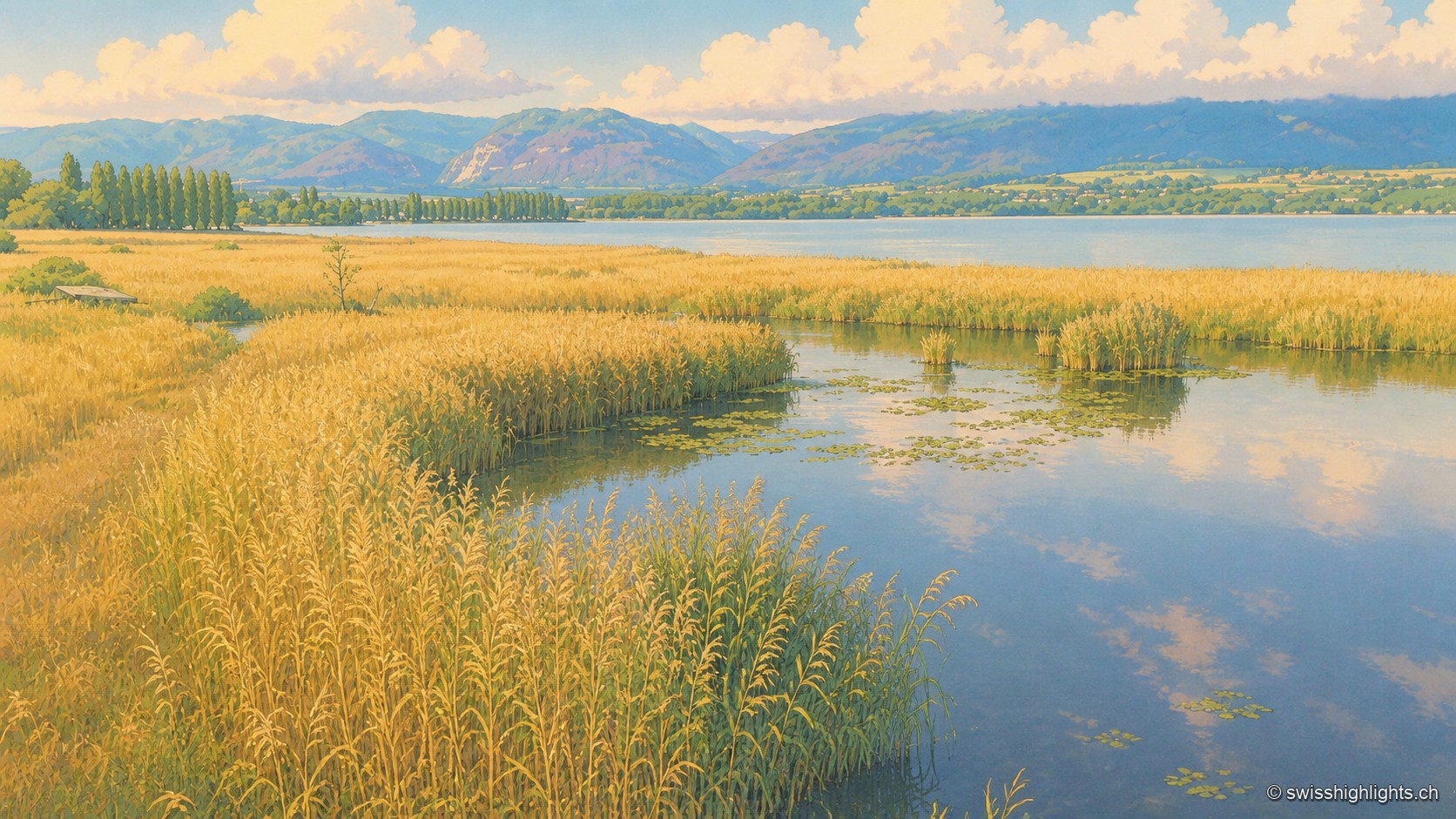
A vast golden reed bed of the Grande Cariçaie crossed by a calm water channel dotted with water lilies, which joins Lake Neuchâtel lined with a row of poplars; on the horizon, the hills of the Jura rise in tiers under a summer sky heavy with cumulus clouds.

Lakeshore marsh · Lake Neuchâtel

Grande Cariçaie

Eight intercantonal nature reserves cover about 3,000 hectares of reedbed, marsh and flooded forest. The landscape only exists because the Jura water correction lowered the lake by 2.7 metres between 1868 and 1891.
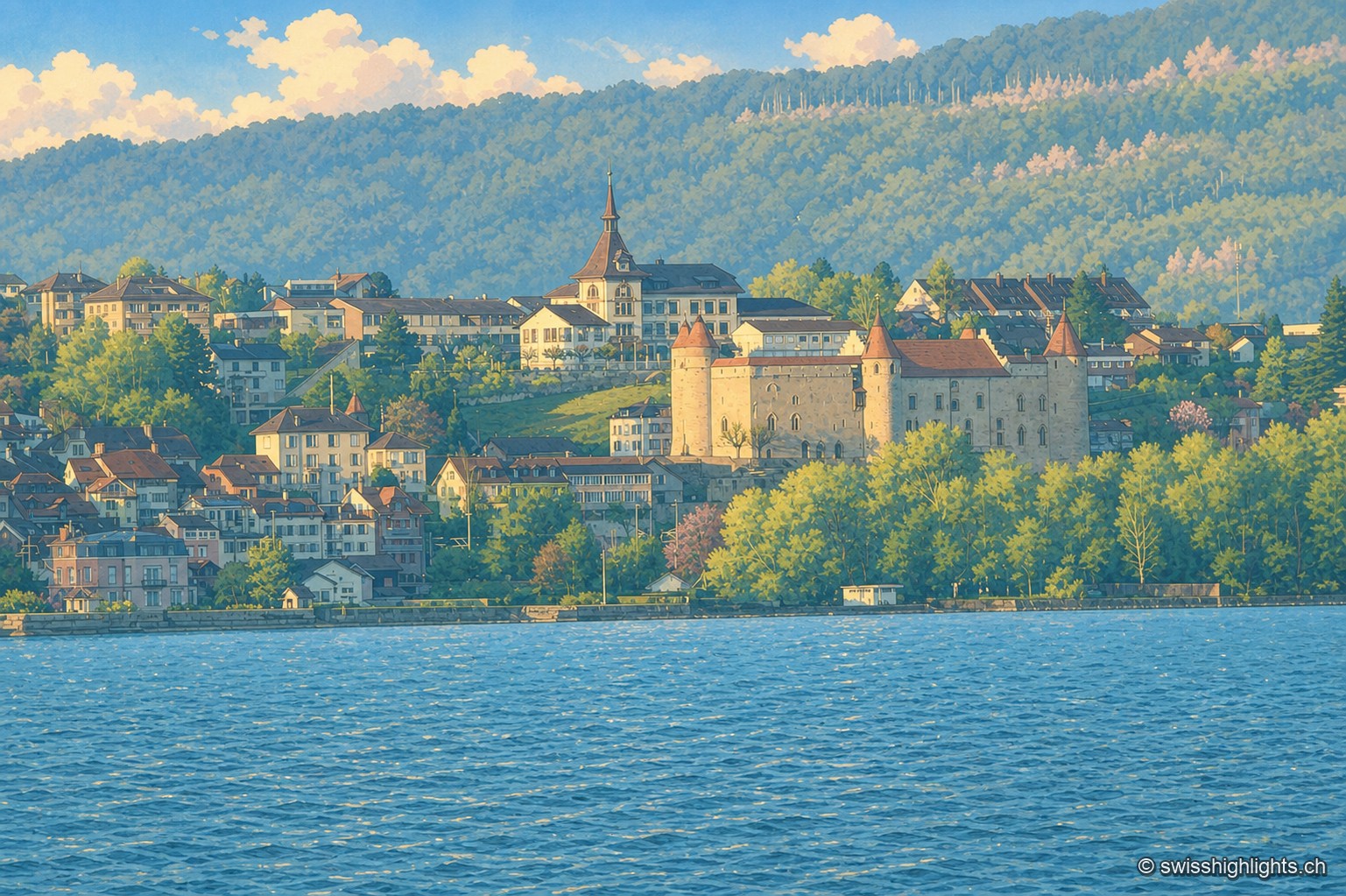
View of the town of Grandson from the opposite shore of Lake Neuchâtel, at the end of the day: the medieval castle, with round turrets and a red roof, overlooks the shore, surrounded by the village rooftops and the pointed spire of the church; in the background, a wooded hillside extends under golden light, and a bird flies over the calm water in the foreground.

Historic town · Vaud

Grandson

The castle of Grandson, at the centre of the town, overlooks the shores of Lake Neuchâtel where the Confederates defeated Charles the Bold on 2 March 1476; Grandson has belonged since 2016 to the Most Beautiful Villages of Switzerland.
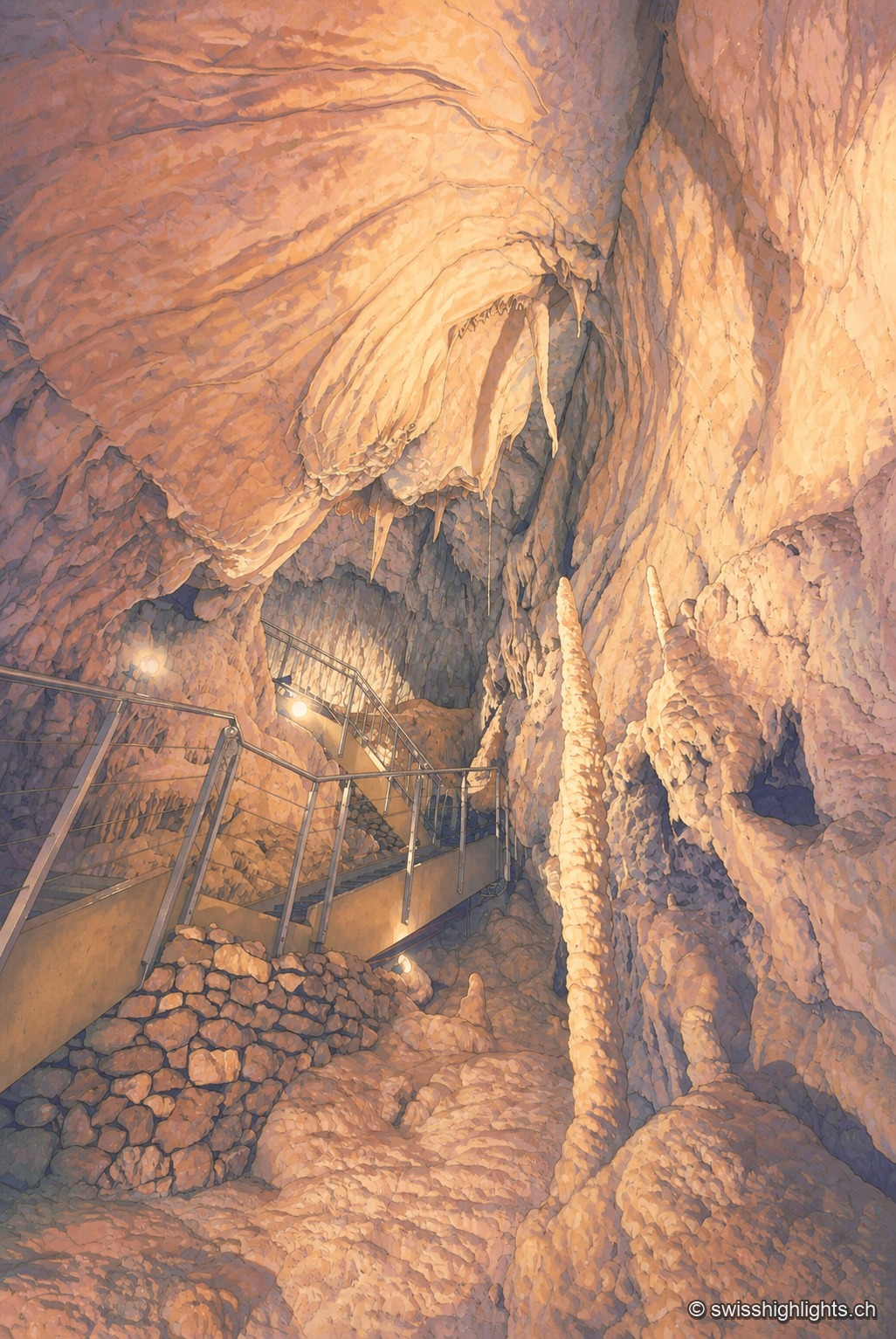
In a narrow gallery of the Vallorbe caves, stalactites hang from the rocky vault above a visitor wearing a headlamp, bending close to the formations; the floor features a concrete path running along the wall, under warm lighting.

Karst cave · Vaud

Grottes de Vallorbe

The Orbe leaves Lake Joux, vanishes into the limestone and comes back out 4.8 kilometres away at Vallorbe. Its underground course runs 2,980 metres with a drop of 228 metres; a third of the known network is walked in an hour.
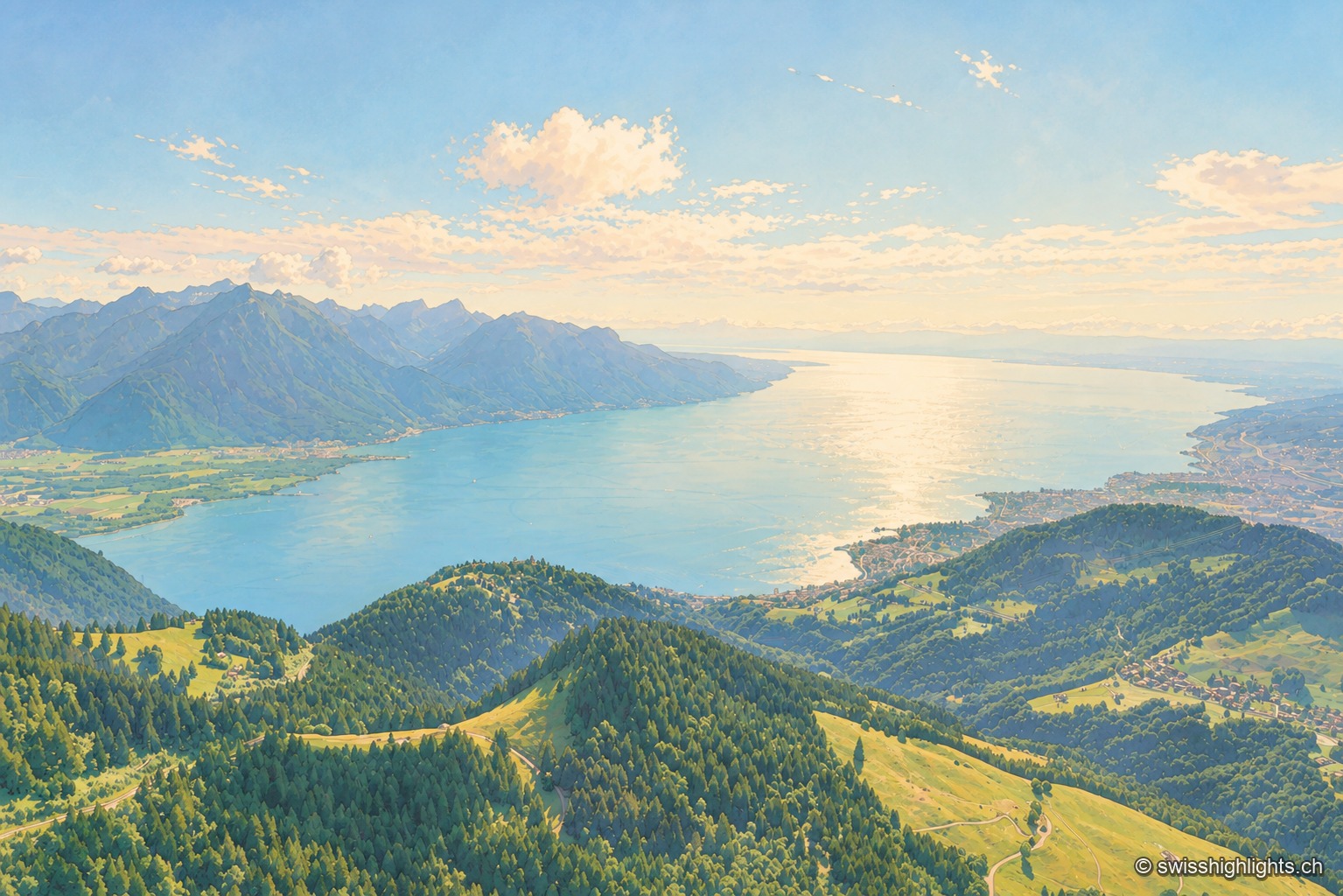
High-angle view over the upper lake from the heights of the north shore: in the foreground, wooded ridges and alpine meadows descend toward the shoreline, Lake Geneva's expanse stretches toward the horizon, growing lighter in the backlight, and the Prealps chain closes off the far shore in a blue haze, under a summer sky heavy with cumulus clouds.

Glacial lake · Vaud, Geneva, Valais

Lake Geneva

72.8 km long and 309.7 m deep, Lake Geneva draws 75% of its inflow from the Rhône. The northern shore is Swiss, the southern shore French, and the border runs through the water.
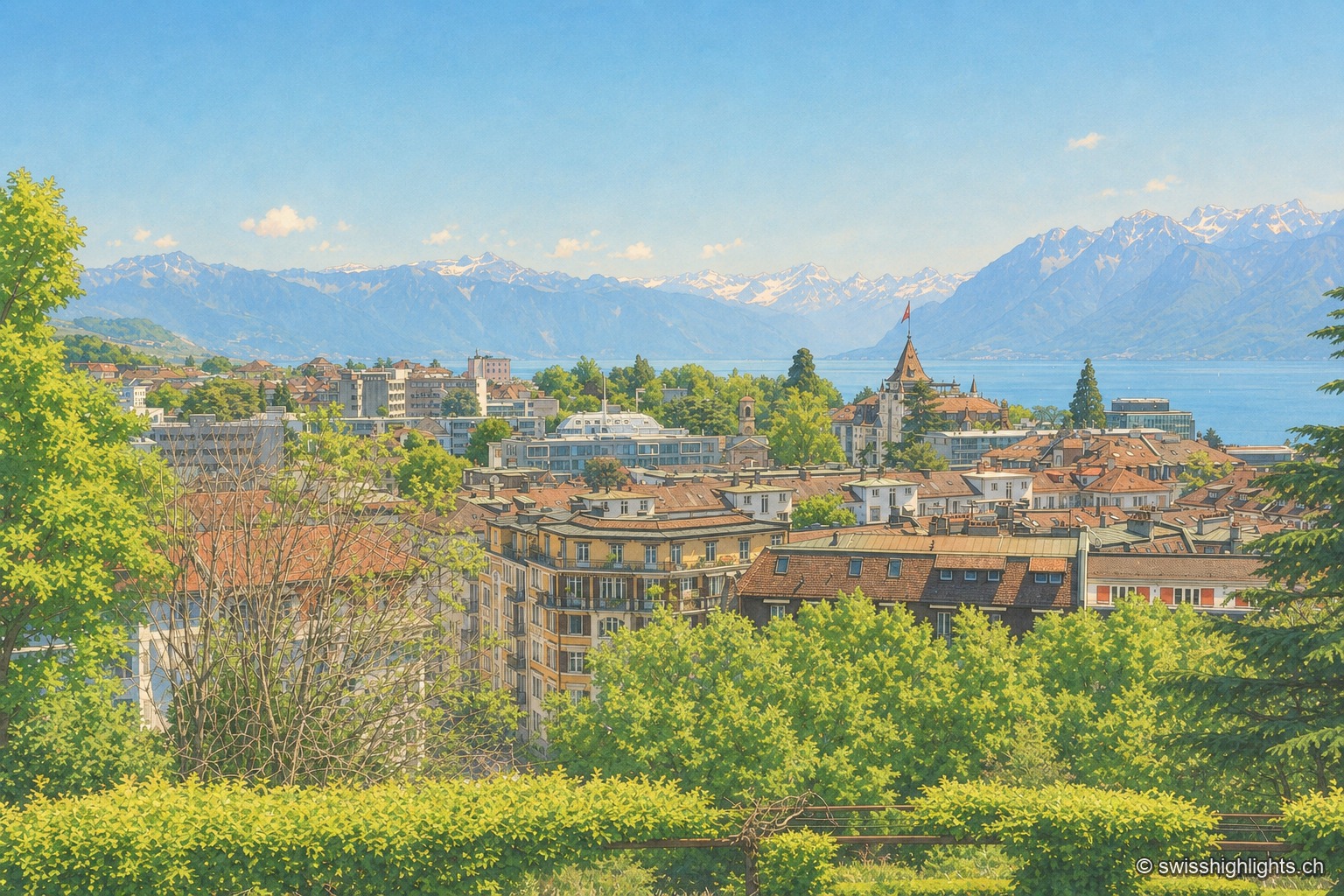
Overlooking view of Lausanne from the crêt de Montriond: the city's tiled roofs cascade downhill toward Lake Geneva, its shoreline glittering in the distance before the Alps, under a clear sky.

City on a slope · Lake Geneva

Lausanne

Built on three hills above Lake Geneva, Lausanne climbs without pause. Its cathedral, raised between 1170 and 1230, is the most important Gothic one in Switzerland, and the International Olympic Committee has sat here since 1915.
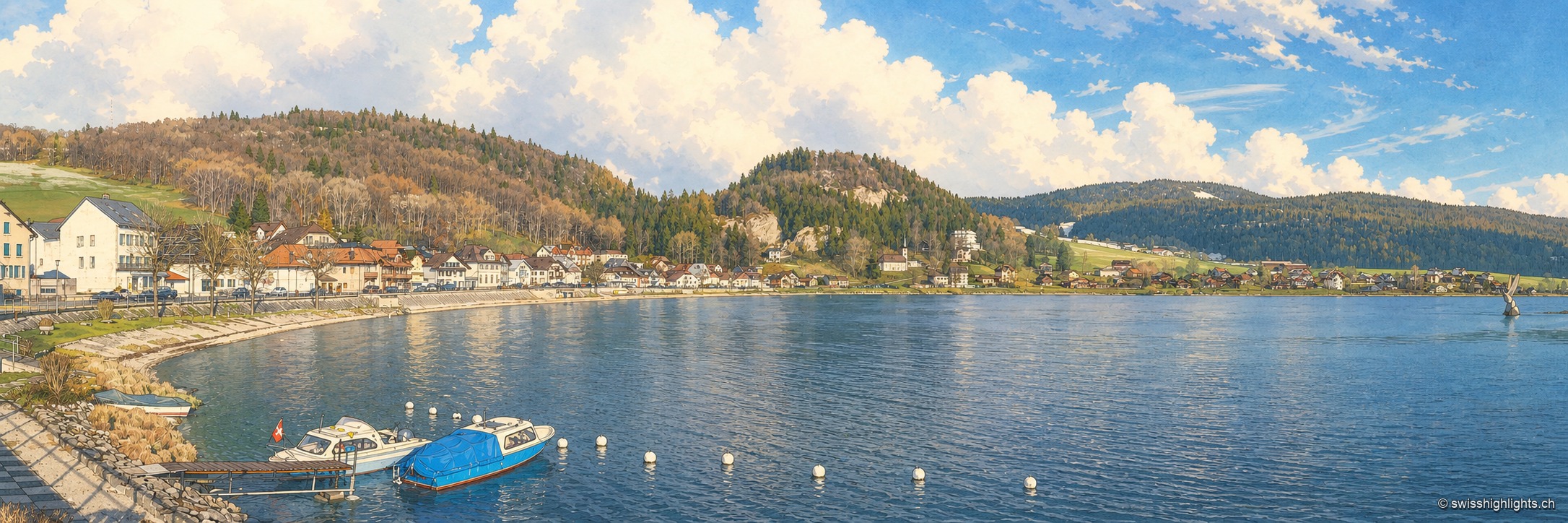
Panorama of the hamlet of Le Pont from the shore, at the northern end of Lac de Joux: a row of white and brown houses lines the pebbly shore, two boats moored to buoys in the foreground, a wooded hill and then a bare summit close off the horizon under a blue sky with scattered clouds.

Hamlet on Lac de Joux · Vaud

Le Pont

On an estate once named Champ du Port, a bridge built in the 17th century by Le Lieu and Le Chenit gave the hamlet its name. The railway brought French families; the Grand Hôtel rose in 1900-1901.
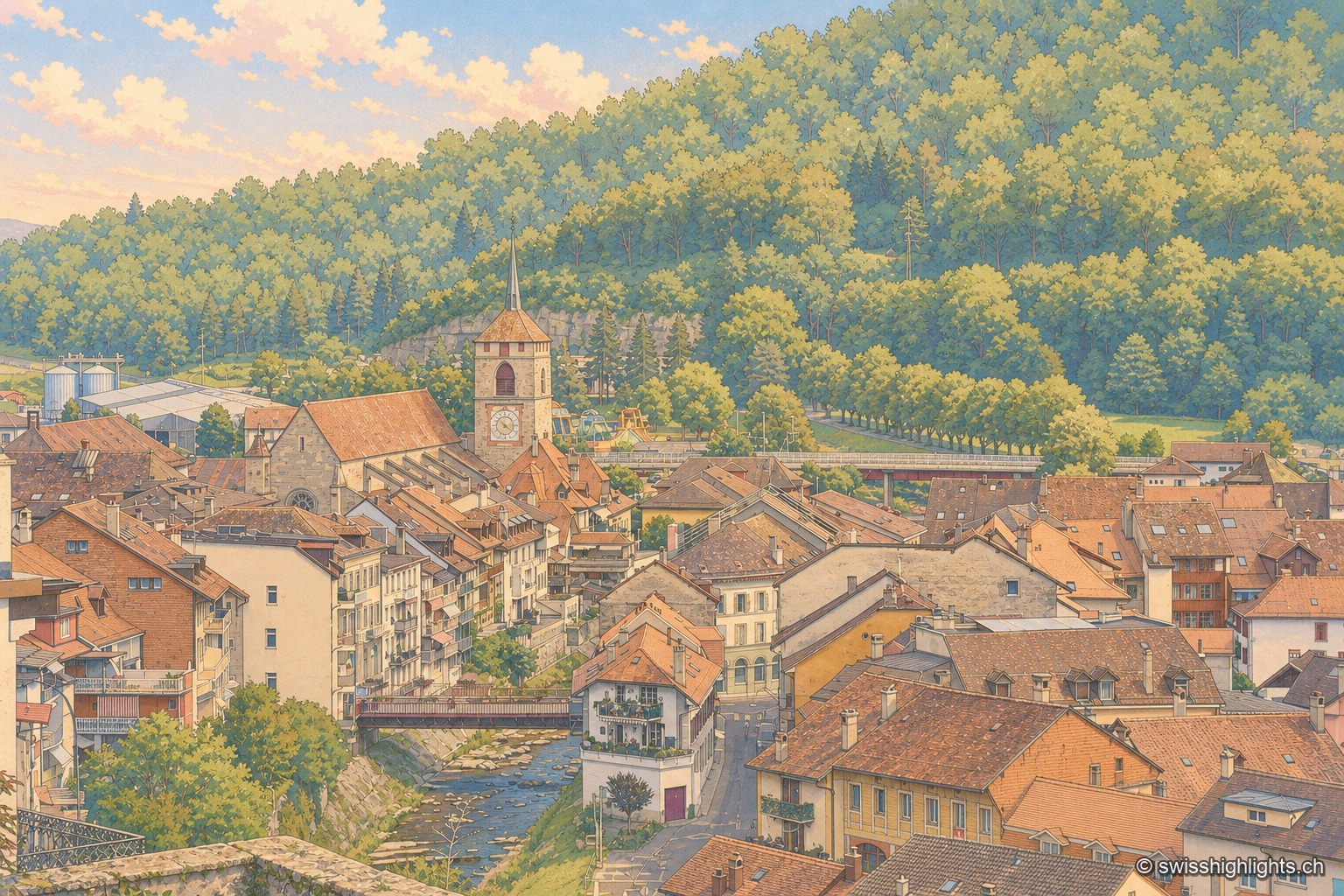
High-angle view over the old town of Moudon from the heights of the castle: the pointed spire of the Church of Saint-Étienne rises above the brown-tiled roofs of the medieval town, nestled against a wooded hillside; in the foreground on the left, a section of castle wall and a wrought-iron railing; below, the Broye river runs alongside the lower town with its more recent buildings, spanned by a road bridge.

Fortified town on the Broye · Vaud

Moudon

Amadeus I of Geneva built a castrum here around 1127; the Savoys installed the Vaud bailiwick around 1260. Under Bern from 1536, the town keeps its medieval old quarter, now an ISOS heritage site, above the river.
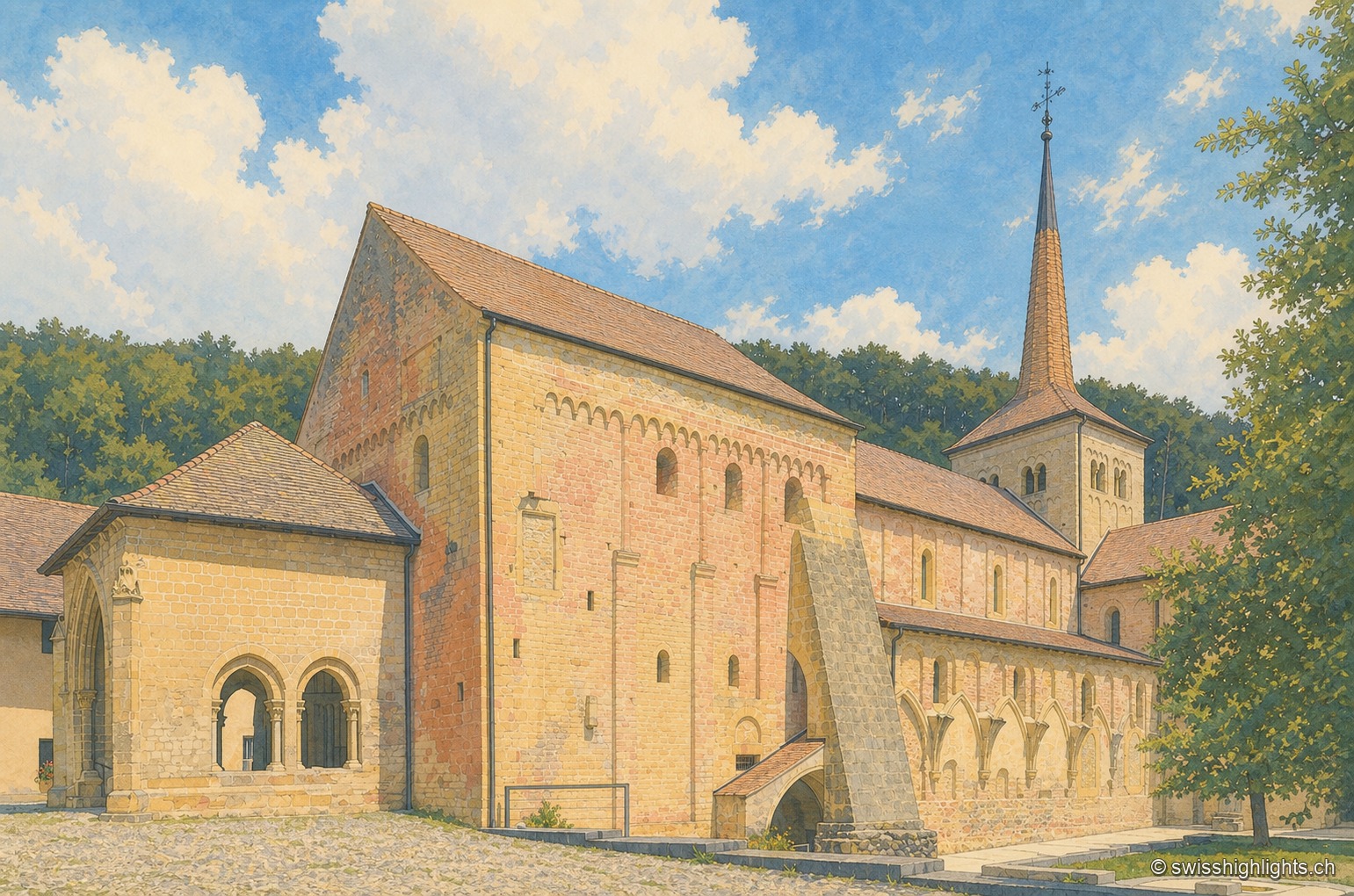
The former abbey church of Romainmôtier seen from the southwest on a summer afternoon: the tall gable of golden stone, marked by a frieze of blind arcades, is buttressed by a long slanting support; behind it stand the low nave, the gallery of Gothic arches and the square bell tower with twin bays topped by a slate spire, against a blue sky filled with large white clouds and a wooded hill.

Cluniac village · Vaud

Romainmôtier

The former abbey church of Saint Peter and Paul towers over a few sloping streets in the bottom of the Nozon valley. Handed to Cluny around 929, the Romanesque church is now a Reformed temple and a cultural property of national importance.
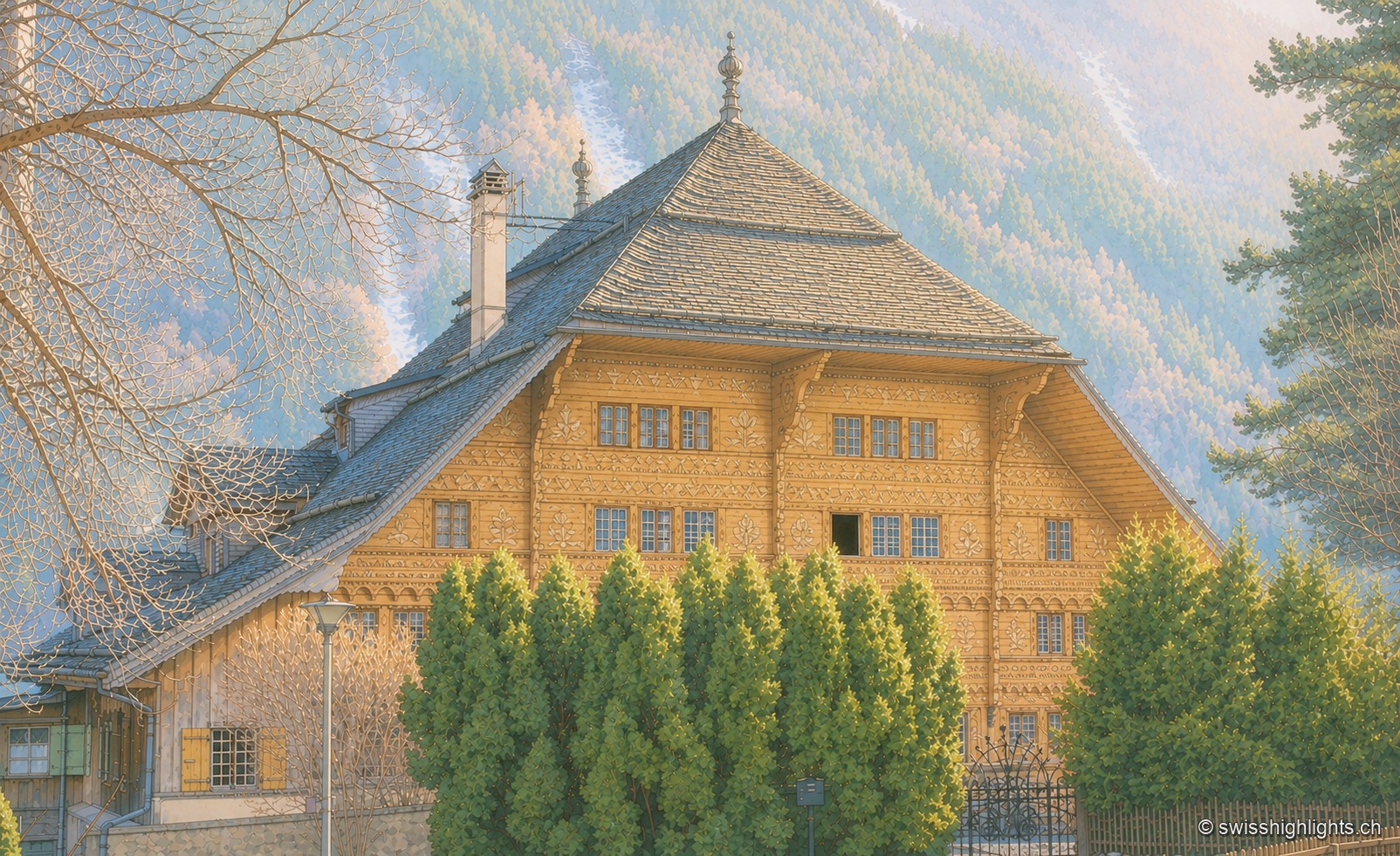
The Grand Chalet of Rossinière, a vast brown wooden building with a grey roof of wide sloping panels, its façades pierced by rows of windows with yellow shutters, surrounded by fir trees against a mountain backdrop.

Village in the Pays-d'Enhaut · Vaud

Rossinière

The Grand Chalet, 113 windows built for David Henchoz between 1752 and 1756, housed the painter Balthus until his death in 2001. Rossinière has 499 residents at the end of 2024; its population grew 4.1% since 2010, against 18.6% in Vaud.
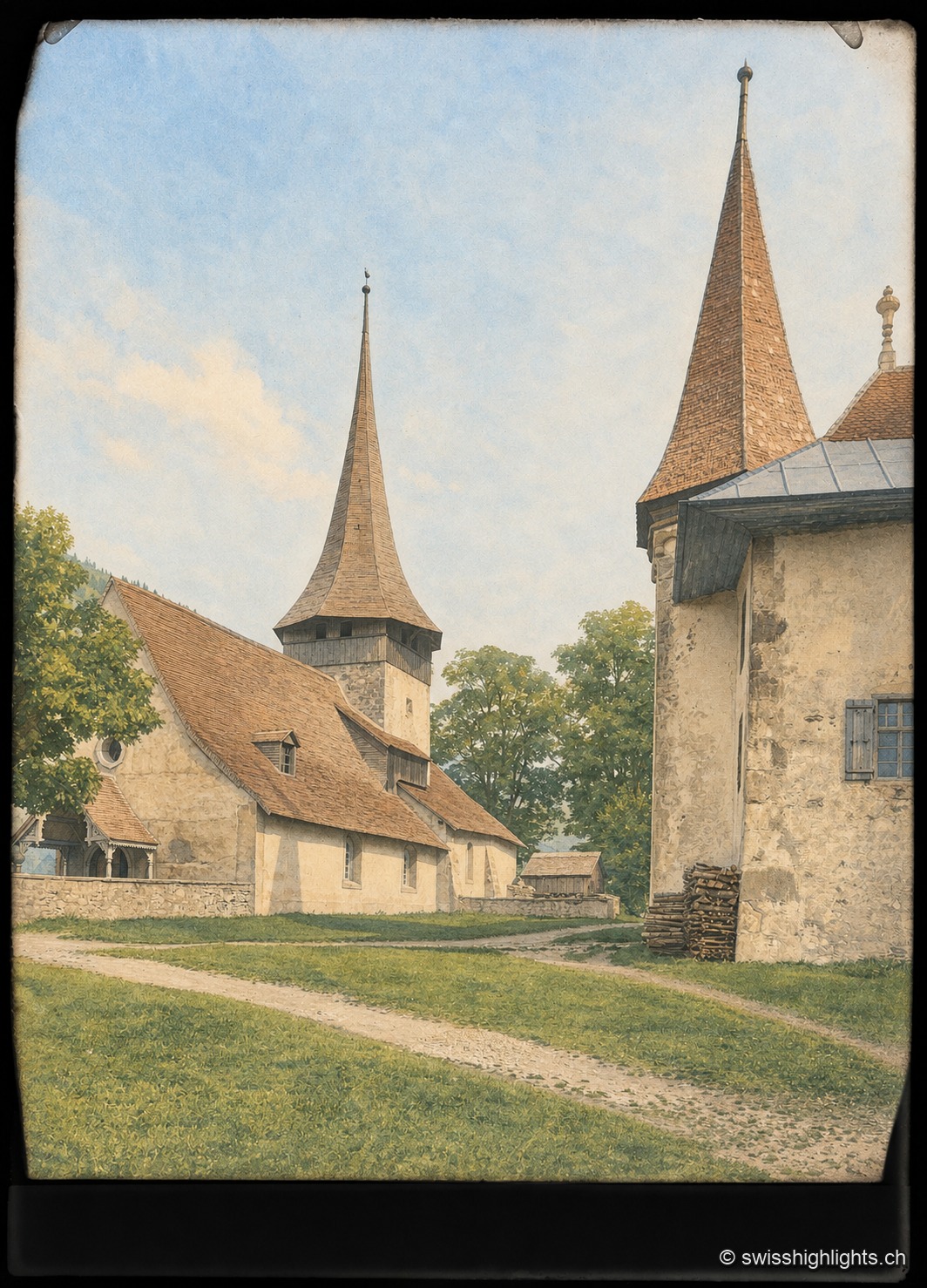
The Romanesque church of Rougemont: the octagonal bell tower, with its sawtooth cornice and pointed spire, rises above the brown-tiled nave, adjoined by a neighbouring farm building, under a pale blue sky.

Pays-d'Enhaut village · Vaud

Rougemont

Founded around 1073-1085 around a Cluniac priory, Rougemont keeps an 11th-century Romanesque church and chalets with carved façades; a member since 2017 of the Most Beautiful Villages of Switzerland.
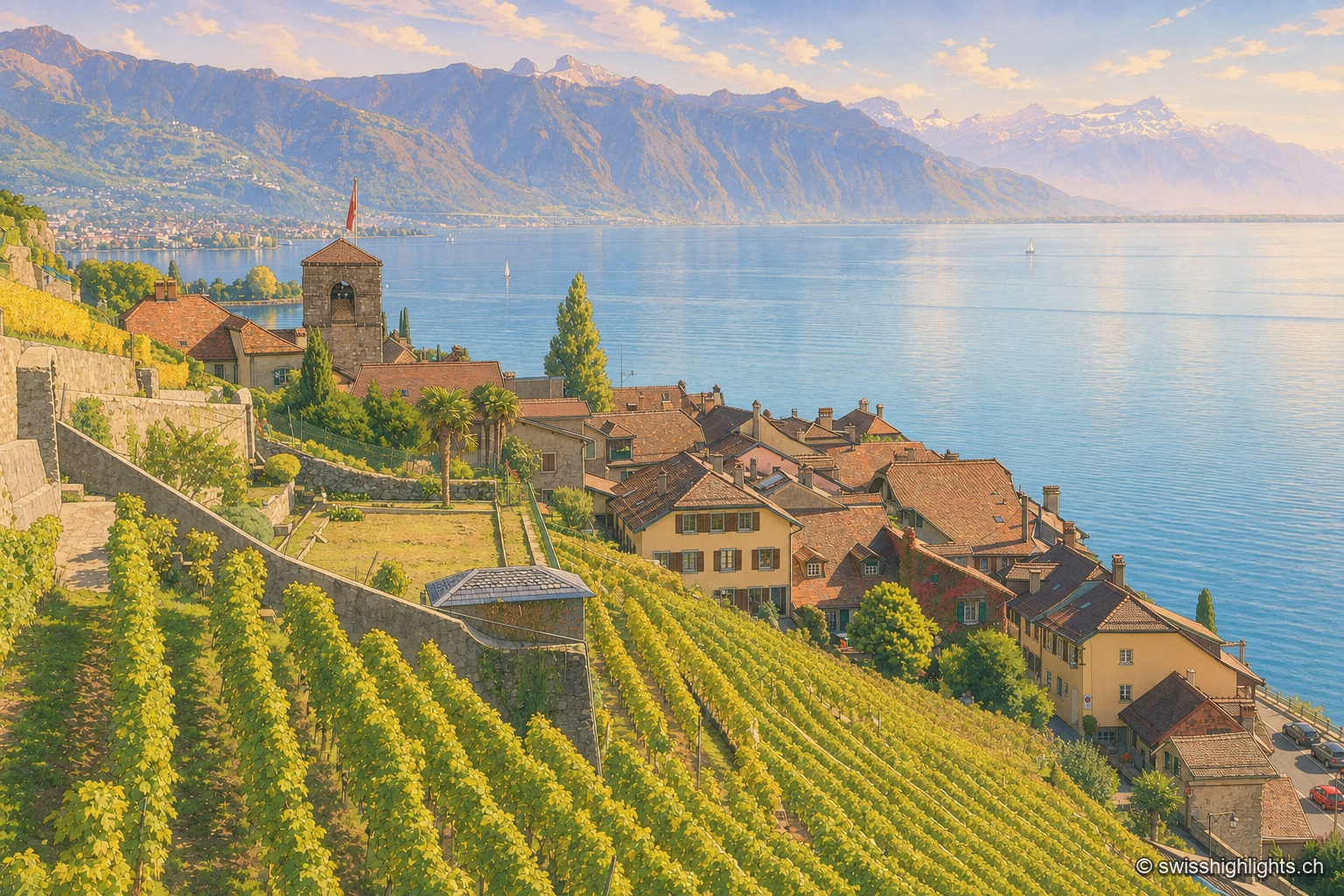
The village of Saint-Saphorin nestled between the terraced vineyards of Lavaux and Lake Geneva, gathered around its church bell tower, with the Alpine range rising in the background beyond the lake.

Wine village · Vaud

Saint-Saphorin

The original village, at the water's edge, was destroyed by the Tauredunum landslide in 563. Rebuilt higher up, it gathered around a church raised between 1517 and 1521, whose floor still covers Roman remains.
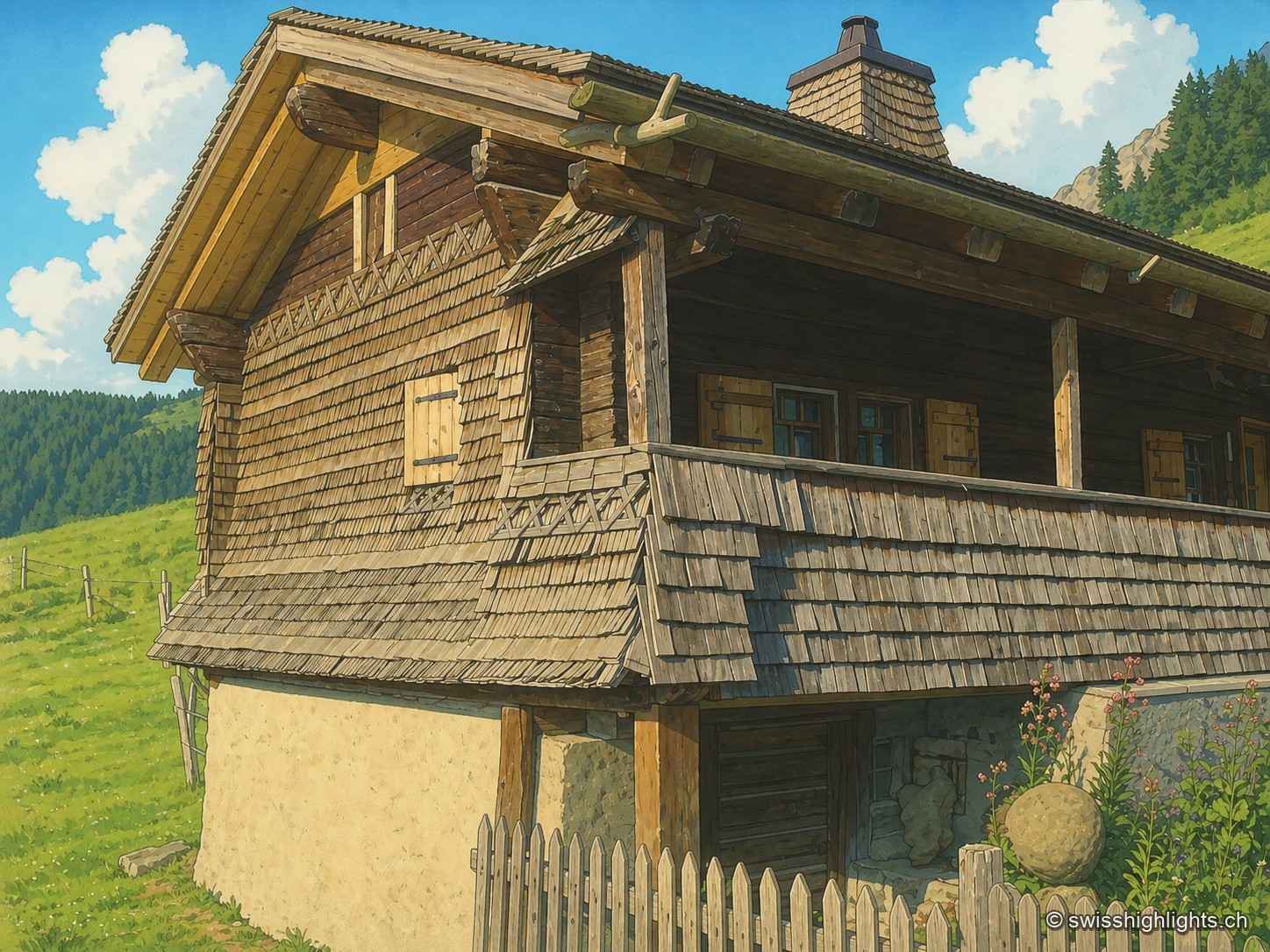
The Taveyanne alpine chalet, entirely clad in weathered grey wood shingles, with its gallery on posts and its whitewashed base, at the edge of a green meadow bordered by a wooden fence.

Alpine pasture hamlet · Vaud Alps

Taveyanne

The hamlet, attested from 1270, burned down with Gryon in 1719; 57 chalets were rebuilt, of which about thirty remain. Not connected to the power grid, it is listed in ISOS and protected by a nature-reserve covenant signed by the commune in 1970.
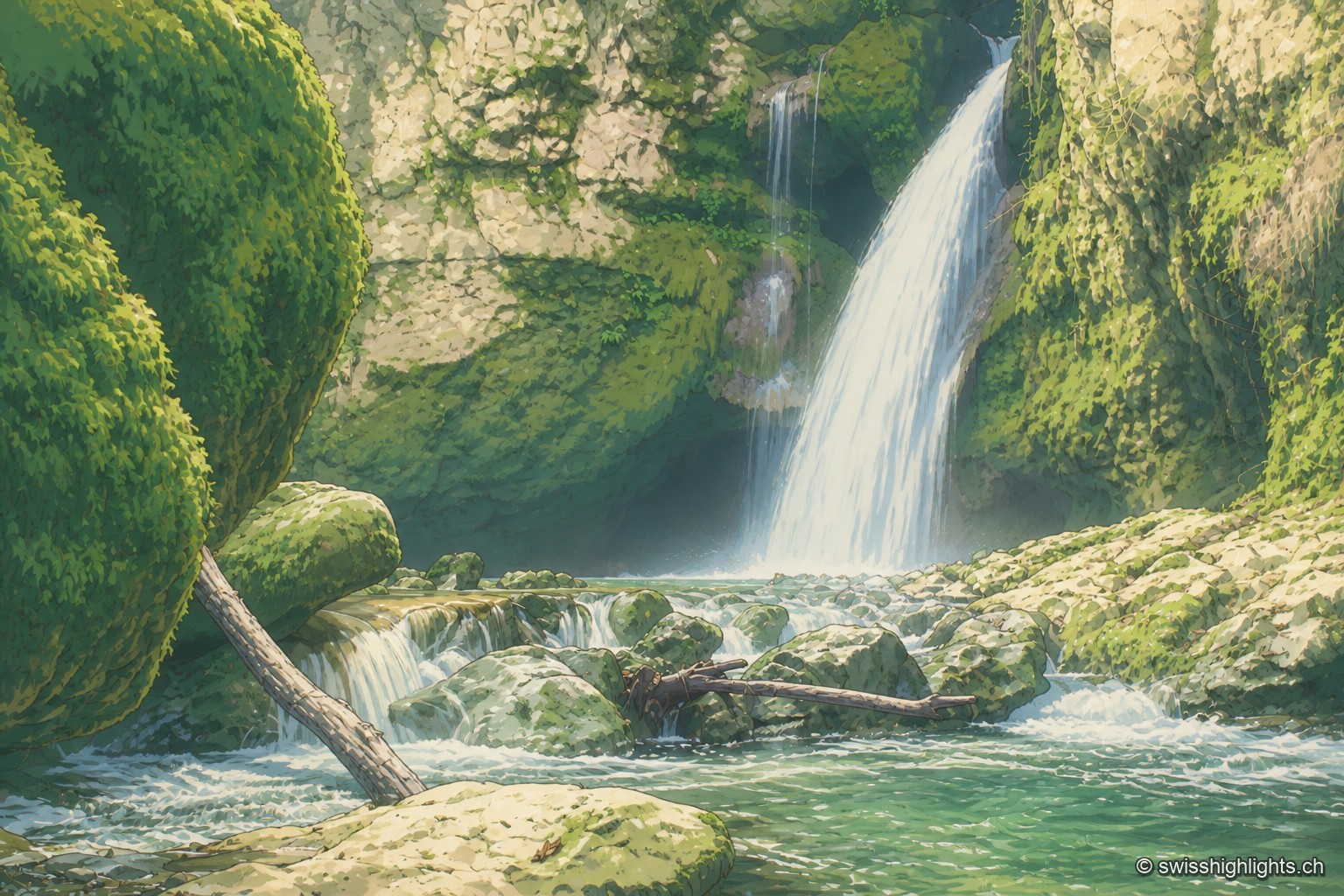
The Tine de Conflens waterfall pours down between moss-covered walls, in the hollow of a deep-cut cirque where the white water stands out sharply against the rock and dark vegetation.

Rock cirque · Vaud Jura

Tine de Conflens

Named after a Vaud patois phrase meaning 'confluence falls', the Tine de Conflens brings together two waterfalls: the Veyron's and the Venoge's, which it swells. A steep but maintained path leads to their foot.
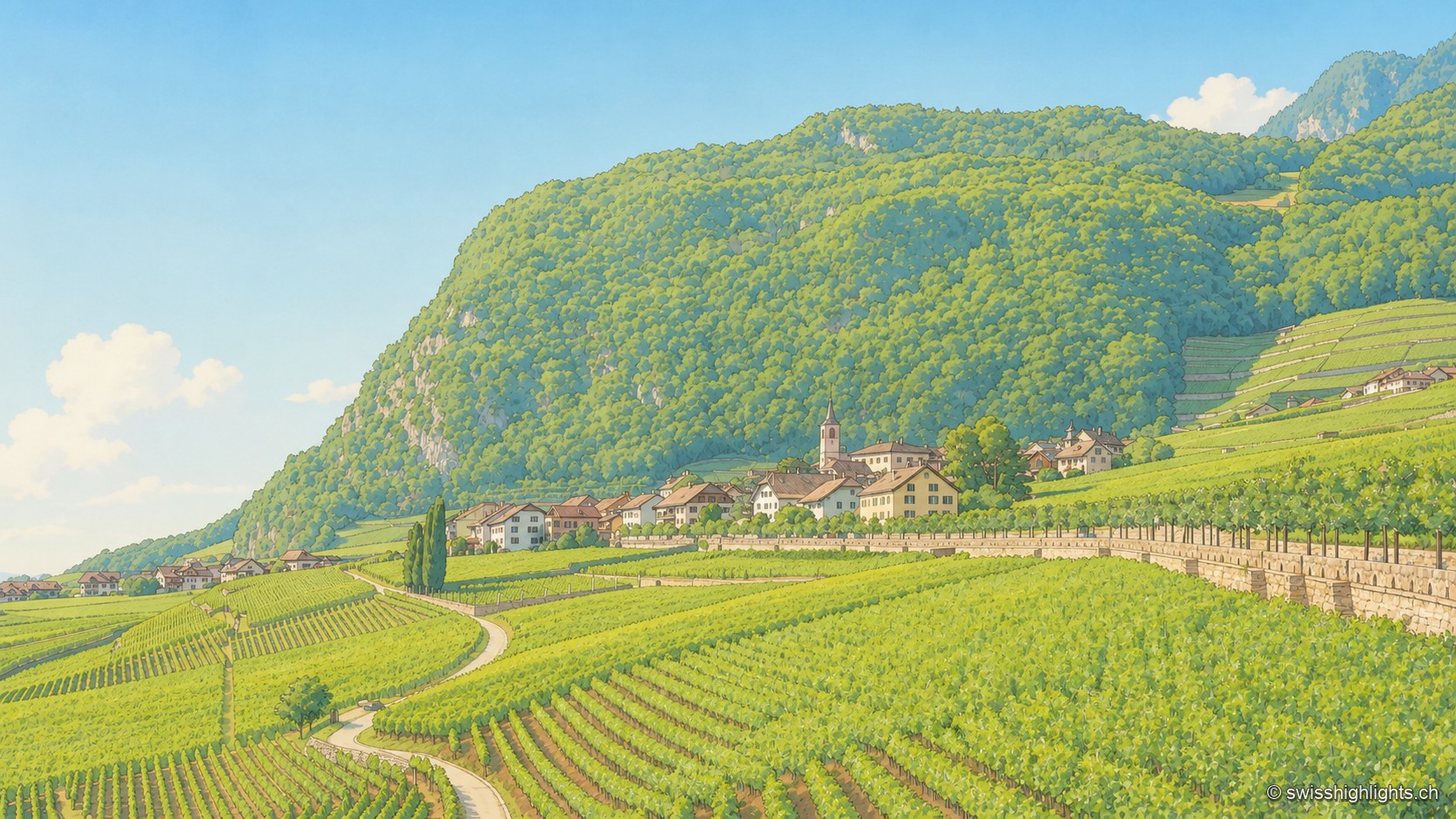
Rows of terraced vines cover the hillside in the foreground, leading to the village of Yvorne nestled at the foot of a rounded, wooded hill, seen from the Ciclet viewpoint under a blue sky with a few clouds.

Wine village · Vaud

Yvorne

A rockslide destroyed the village in 1584; rebuilt further east from 1607, it planted its vines on the rubble. The Truchefardel quarry, active from the 17th century to 1921, supplied the marble for Lausanne's town hall in 1674.